Top sensory wall toys for classrooms in 2026
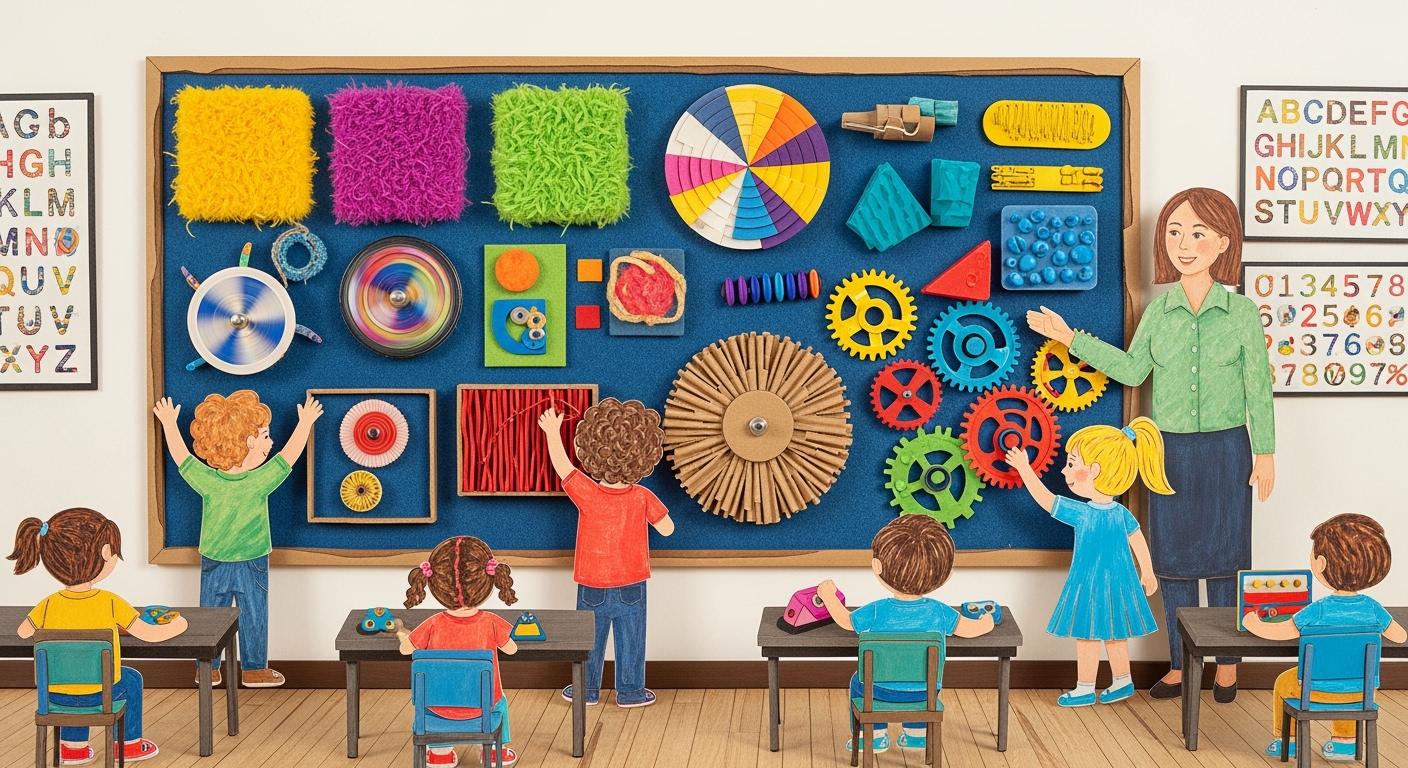
You can see students get excited when they use sensory wall toys. These hands-on panels are not just for looks. They help kids learn and grow. Sensory activities help all students, but they are extra helpful for kids who need more support.
Sensory wall toys can help students feel less worried and pay better attention.
Teachers see fewer meltdowns in autistic students.
Sliders, beads, and buttons help build fine motor skills. They make small hand muscles stronger.
Schools say students behave better and join in more after using sensory wall panels.
Key Takeaways
Sensory wall toys help kids pay attention and feel calm.
These toys improve small hand movements with sliders, beads, and buttons.
Teachers notice students act better and join in more with sensory panels.
Pick toys that match your classroom space and what students need.
DIY sensory boards are cheap and can be changed to fit your class.
Best sensory wall toys for classrooms
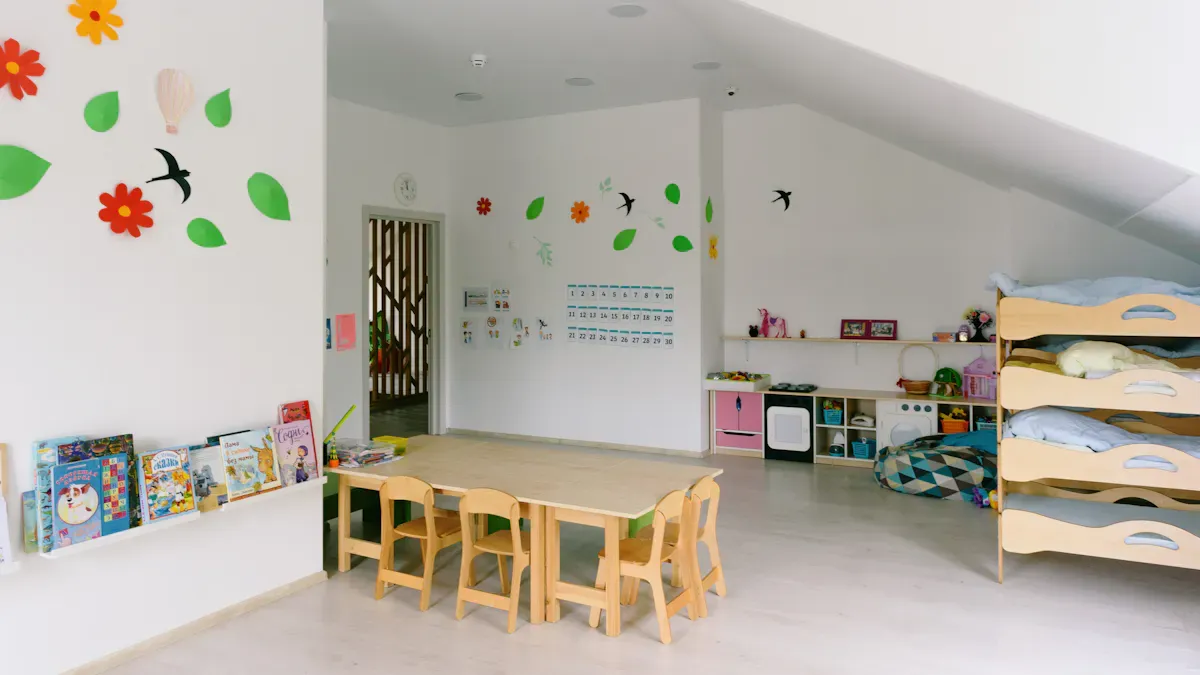
HABA Pro Sensory Wall Panel
The HABA Pro Sensory Wall Panel is a good choice for classrooms. It meets strict safety rules and quality checks. You can trust it because it follows DIN EN ISO 9001. This means each panel is checked for quality.
Certification/Standard | Description |
|---|---|
DIN EN ISO 9001 | HABA Pro uses a quality control system. This keeps product quality steady for classroom use. |
The panel has bright colors and smooth textures. It is strong and built to last. Kids like to touch, slide, and spin the parts. The panel helps students build fine motor skills. It also supports sensory regulation. It works for kids ages 3 and up. You can use it in classrooms, therapy rooms, or hallways. Teachers in 2026 pick this panel for its safety and durability. It keeps all students interested.
Wooden Sensory Wall Panel with Lights (Etsy)
This wooden sensory wall panel makes classrooms exciting. It has 35 interactive parts like switches, gears, and lights. The space theme grabs attention and helps kids focus. Each piece lets kids explore and solve problems.
Interactive Elements | Benefits |
|---|---|
35 interactive sensory elements | Builds fine motor skills and finger control |
Space-themed design concept | Helps kids concentrate and pay attention |
Wood and metal parts | Supports thinking and memory skills |
Handmade & hand-finished | Improves hand–eye coordination |
Child-safe, non-toxic paints | Encourages kids to keep trying |
Smooth edges | Promotes sensory integration with touch |
Wall mounting hardware included | Made for busy classrooms and therapy rooms |
Kids ages 3 to 8 can use this panel. It is handmade and safe for classrooms. Teachers like how it supports sensory wall toys activities. It keeps kids busy and learning.
Unicorn Activity Wall Busy Board
Kids smile when they see the Unicorn Activity Wall Busy Board. The board uses safe paints and natural wood. There are no sharp edges or loose parts. Every piece is attached tightly, so it is safe.
Feature | Description |
|---|---|
Materials | Safe paints and natural wood finishes |
Edges | Smooth, rounded wooden edges |
Components | No small parts that can come off |
Design | Tested for toddlers and strong structure |
This board is best for ages 2 to 6. It helps kids build hand strength and coordination. It also teaches early problem-solving skills. You can use it in preschool classrooms or therapy rooms. In 2026, teachers like its magical look and strong safety features.
2 Wire and Beads Wall Activity Toy
The 2 Wire and Beads Wall Activity Toy is a classic. Kids move beads along twisty wires. This helps them practice hand-eye coordination and finger control. The toy is simple but very helpful. It works for ages 2 and up. Kids can play alone or in small groups. Teachers like it because it is easy to clean and lasts a long time. Students always enjoy using it.
Really Good Stuff Sensory Wall Panel
The Really Good Stuff Sensory Wall Panel does more than look nice.
It builds fine motor skills.
It supports sensory regulation.
It gives hands-on learning.
It teaches cause-and-effect.
It helps students stay calm and focused.
It lowers anxiety and gives hands something to do.
This panel is strong and easy to use. It comes from a trusted brand. It works for ages 3 to 10. In 2026, teachers choose it for its proven benefits and tough build.
BumblebeeSmart Montessori Wall Panel
The BumblebeeSmart Montessori Wall Panel follows Montessori ideas. Kids play with their hands and learn by themselves. They build real-world skills and become more independent. Students explore, move, and solve problems on their own.
Kids explore with their hands and lead their own play.
They build real-world skills and independence.
The panel supports natural thinking and growth.
Sensory walls help movement, curiosity, problem-solving, and language.
This panel fits ages 2 to 8. It works well in many classrooms. It uses touch, movement, color, and texture to meet different needs. The simple design keeps things from being too much. All students can join in the play.
Interactive Wall Game for Kids
The Interactive Wall Game for Kids helps group play and teamwork. Up to 10 kids can play at once. It is great for classrooms and therapy rooms.
Interactive Element | Description |
|---|---|
Multiplayer Accessibility | Up to 10 kids can play together. |
Teamwork and Collaboration | Kids work together and compete in a friendly way. |
Instant Feedback | Kids get feedback right away, which builds confidence. |
Immersive Experience | Fun animations and sounds make play exciting. |
Customizable Play | You can change game modes for age or skill level. |
Students work together, solve puzzles, and compete in challenges. This play builds communication and emotional skills. Teachers see more student engagement and better memory. You can change the difficulty for any age group. It is a flexible choice for 2026.
DIY Interactive Sensory Board
You do not need a lot of money for sensory wall toys. A DIY Interactive Sensory Board lets you be creative and make it fit your students. You can use cardboard, bottle caps, felt, sandpaper, fabric scraps, and recycled items.
Material | Benefits |
|---|---|
Cardboard | Cheap and good for many designs. |
Bottle Caps | Great for tactile alphabet boards and spelling. |
Felt | Good for textured flashcards and helps kids with vision problems. |
Sandpaper | Useful for touch learning tools. |
Fabric Scraps | Perfect for sensory mats and helps kids focus. |
Recycled Objects | Promotes creativity and sustainability. |
DIY materials cost less and use everyday items.
They are a green choice for schools with less money.
Making materials yourself lets you meet each student’s needs.
You must follow safety rules. Make sure there are no sharp edges. Use safe materials and avoid small parts. This option works for all ages. You can change the board to fit your classroom.
Tactile Wall Panel (Pinterest-inspired)
A tactile wall panel lets students safely explore textures and shapes. It helps kids with autism or sensory needs. The panel gives steady multisensory input. This supports brain growth and emotional control.
Tactile wall panels help kids with autism explore sensory input. This improves sensory integration.
They give steady multisensory input. This helps brain growth and emotional control.
The panels build fine motor skills and thinking abilities. These are important for sensory integration.
They give a safe place for kids to explore their senses. This helps sensory regulation and lowers overwhelm.
You can make your own or buy one. The panel works for ages 3 and up. Teachers like it because it helps students calm down and focus.
Light-Up Sensory Board (BumblebeeSmart)
The Light-Up Sensory Board from BumblebeeSmart adds glowing lights to classrooms. Kids press buttons and watch lights flash. This board helps visual tracking and hand-eye coordination. It also teaches cause-and-effect. You can use it for ages 2 to 7. It is great for dark corners or calming spaces. In 2026, teachers like its bright lights, strong build, and how it keeps kids busy with sensory wall toys activities.
Comparison table of sensory wall toys
Features overview
When you choose sensory wall toys, you want them to last. They should work for many activities and fit all students. You also need to think about where to store them. Here’s a quick look at each toy:
Toy Name | Durability | Flexibility | Accessibility | Storage/Space |
|---|---|---|---|---|
HABA Pro Sensory Wall Panel | ⭐⭐⭐⭐⭐ | ⭐⭐⭐⭐ | ⭐⭐⭐⭐⭐ | Wall-mounted |
Wooden Sensory Wall Panel with Lights | ⭐⭐⭐⭐ | ⭐⭐⭐⭐ | ⭐⭐⭐⭐ | Wall-mounted |
Unicorn Activity Wall Busy Board | ⭐⭐⭐⭐ | ⭐⭐⭐ | ⭐⭐⭐⭐ | Wall-mounted |
2 Wire and Beads Wall Activity Toy | ⭐⭐⭐⭐ | ⭐⭐⭐ | ⭐⭐⭐⭐ | Wall-mounted |
Really Good Stuff Sensory Wall Panel | ⭐⭐⭐⭐⭐ | ⭐⭐⭐⭐ | ⭐⭐⭐⭐⭐ | Wall-mounted |
BumblebeeSmart Montessori Wall Panel | ⭐⭐⭐⭐ | ⭐⭐⭐⭐⭐ | ⭐⭐⭐⭐⭐ | Wall-mounted |
Interactive Wall Game for Kids | ⭐⭐⭐⭐ | ⭐⭐⭐⭐⭐ | ⭐⭐⭐⭐⭐ | Wall-mounted |
DIY Interactive Sensory Board | ⭐⭐⭐ | ⭐⭐⭐⭐⭐ | ⭐⭐⭐⭐ | Customizable |
Tactile Wall Panel (Pinterest-inspired) | ⭐⭐⭐ | ⭐⭐⭐ | ⭐⭐⭐⭐ | Wall-mounted |
Light-Up Sensory Board (BumblebeeSmart) | ⭐⭐⭐⭐ | ⭐⭐⭐⭐ | ⭐⭐⭐⭐ | Wall-mounted |
Tip: Wall-mounted toys help save space in your classroom. If your room is small, pick panels that go on the wall. You will not need extra bins for storage.
Educational benefits summary
Each sensory wall toy gives your classroom something special. Here is what you can expect:
Fine Motor Skills: Most panels help kids get stronger hands and better finger control.
Sensory Regulation: Toys with textures, lights, or sounds help students calm down and focus better.
Problem-Solving: Boards with switches, gears, or puzzles help kids think and solve problems.
Teamwork: Interactive wall games help kids play together and learn social skills.
Independence: Montessori panels and DIY boards let kids learn and explore by themselves.
Age group recommendations
You want to pick toys that match your students’ ages. Here is a quick guide:
Toy Name | Recommended Ages |
|---|---|
HABA Pro Sensory Wall Panel | 3+ |
Wooden Sensory Wall Panel with Lights | 3–8 |
Unicorn Activity Wall Busy Board | 2–6 |
2 Wire and Beads Wall Activity Toy | 2+ |
Really Good Stuff Sensory Wall Panel | 3–10 |
BumblebeeSmart Montessori Wall Panel | 2–8 |
Interactive Wall Game for Kids | 3–10 |
DIY Interactive Sensory Board | All ages |
Tactile Wall Panel (Pinterest-inspired) | 3+ |
Light-Up Sensory Board (BumblebeeSmart) | 2–7 |
Note: Always check the age guidelines from the maker before you put up a new sensory wall toy.
How to choose sensory wall toys for your classroom
Classroom size and layout
Start by looking at your classroom setup. You want to make sure every student can reach and use the sensory wall toys. If you have a small space, wall-mounted panels save room and keep the floor clear. In a bigger classroom, you can add more panels or even create a sensory corner. Think about where students gather most. Place toys where they can use them during learning time or breaks. Good placement helps students move around and keeps the classroom safe.
Student needs and abilities
Every student learns in a different way. Some kids need more movement. Others like quiet, hands-on learning. Watch how your students play and learn. Pick sensory wall toys that match their needs. If you have students with autism or sensory processing needs, look for panels with different textures and calming features. For younger kids, choose toys that build fine motor skills. Older students might enjoy puzzles or interactive games. The right toys help everyone join in the learning.
Quality, safety, and budget
You want toys that last through lots of learning. Check for strong materials and smooth edges. Make sure all parts stay attached. Look for non-toxic paints and easy-to-clean surfaces. Safety always comes first. When you plan your budget, remember that sensory wall toys can cost anywhere from $76.99 to $1,053.75. Most schools spend about $252.38 for a good panel. Choose the best quality you can afford. Good toys support learning for years.
Versatility and installation
Pick sensory wall toys that fit many learning activities. Some panels let you change the parts or add new features. This keeps learning fresh and fun. Easy installation matters too. Wall-mounted panels work well in most classrooms. Some toys need special tools or help from maintenance staff. Before you buy, check if you can install the toy yourself. Versatile toys grow with your students and support learning in every lesson.
Tip: Involve your students in choosing new sensory wall toys. When kids help pick, they feel excited about learning and take care of the toys.
Sensory wall toys for waiting rooms and versatile spaces
Waiting room toys for group play
It is hard to keep kids calm in waiting rooms. Sensory wall toys help a lot. These toys make group spaces more relaxing. Kids touch, spin, and slide the pieces. They start playing together instead of just waiting.
Schools and therapy centers notice big changes with these toys. Kids behave better and join group activities more. Students with special needs feel included. Planning your space with other professionals helps you get the best results.
Multi-sensory spaces help kids feel less worried. They help kids pay attention and feel welcome.
Here’s how sensory wall toys help in group settings:
Benefit Description | Impact on Group Play |
|---|---|
Careful planning and teamwork | More therapy benefits |
Better behavior and engagement | More group participation |
Control over sensory input | Kids focus better during play |
Multi-sensory environment | Less worry, more group fun |
If you want good waiting room toys, pick panels that let kids play together and explore.
Space-saving solutions
You may not have much room in your waiting area. Wall-mounted sensory toys are great for small spaces. Peg maze boards, sensory wall panels, and interactive LED panels fit right on the wall. This saves floor space and keeps things neat.
Here are some space-saving options:
Toy Type | Features | Benefits for Your Space |
|---|---|---|
Peg Maze Boards | Wall or handheld, Montessori style | Good for any room, easy to move |
Sensory Wall Panels | Tactile, visual, twist, slide, spin | Calms kids, fits many sensory needs |
Interactive LED Panels | Touch lights, color changes | Fun for visual tracking, calming effect |
Complete Sensory Room | Light, sound, movement, touch, aroma | Helps with focus, relaxation, motor skills |
Classroom Sensory Panels | Tactile and visual play | Builds fine motor skills, easy to install |
You can use these toys in classrooms, therapy centers, or at home. They help you make a flexible space for everyone. Choosing waiting room toys that save space makes your area more fun and welcoming for kids.
Montessori toys and sensory wall panels
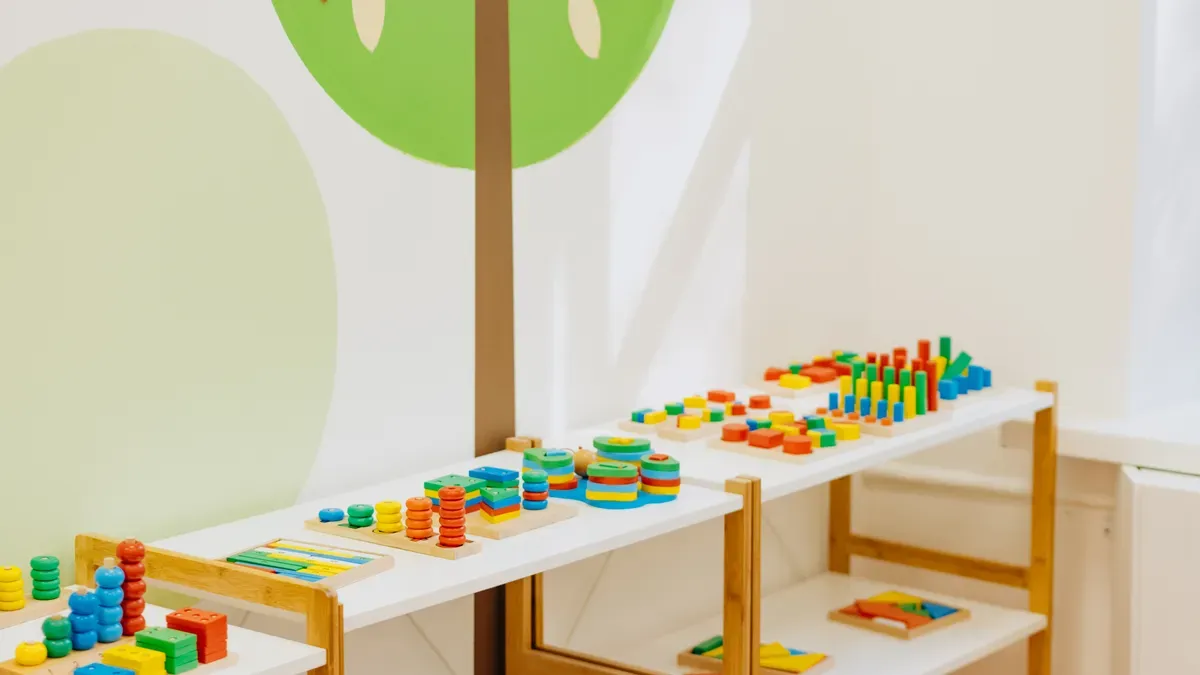
Montessori principles in sensory wall toys
Kids do well when you add montessori toys to class. These toys let students explore and learn at their own speed. When you use real montessori materials, kids become more sure of themselves. They also learn to do things on their own. The control of error feature helps kids fix mistakes by themselves. This makes them better at solving problems. It also lets them try new things without limits.
Montessori toys help kids use their hands and practice stem skills. You see students sort shapes, spin gears, and build with loose parts play. These activities show how things work in real life. They also help kids grow and learn new skills. You can use montessori toys for open-ended play. This helps kids be creative and learn in a fun way.
Here’s what research says about montessori toys:
Montessori-style play makes the classroom calm and respectful.
Kids get feedback right away, so they can fix problems alone.
Parents who use montessori toys talk more about shapes and how things work. This helps kids get better at thinking about space.
You can add montessori toys like building toys, tactile panels, and sensory boards. These toys help kids explore and learn stem skills. You see students use loose parts play to make up new games and practice stem behaviors. Real montessori toys make your classroom fun and open to everyone.
Autism-friendly sensory panels
Montessori toys are good for students with autism. These panels have simple looks and clear uses. They do not have too many bright colors or loud sounds. You can use montessori toys to help students focus and feel calm. Autism-friendly sensory panels use montessori ideas to help with sensory needs and learning.
Students with autism like open-ended play with montessori toys. They use building toys and loose parts play to make their own games. These panels help students practice stem skills and fine motor engagement. Real montessori toys give every child a chance to join and learn.
If you want your classroom to include everyone, pick montessori toys and sensory panels. You help all students grow, explore, and build skills for life.
When you add sensory wall toys to your classroom, you give children more than just fun. You help children build fine and gross motor skills. Children learn to control their emotions and work with others. Children get sensory feedback that sharpens movement and hand-eye coordination. Children can play side by side and start to connect with friends. These toys boost engagement and help children feel calm. Think about your space and what your children need. When you choose safe, creative toys, you help all children grow and learn together.
FAQ
What age group benefits most from sensory wall toys?
You can use sensory wall toys with kids ages 2 to 10. Younger children build fine motor skills. Older students enjoy puzzles and teamwork. Always check the age guide from the maker before you add a new toy.
How do I clean and maintain sensory wall panels?
Wipe panels with a damp cloth and mild soap. Avoid harsh cleaners. Check for loose parts each week. Tighten screws if needed. Clean surfaces often to keep germs away. Your panels will last longer with regular care.
Are sensory wall toys safe for children with autism?
Yes! Sensory wall toys help children with autism feel calm and focused. Choose panels with gentle textures and soft lights. Avoid toys with loud sounds or flashing lights if your students are sensitive. Always supervise play for safety.
Can I make my own sensory wall board?
You sure can! Use safe materials like cardboard, felt, and fabric. Avoid sharp edges and small parts. Get creative with textures and colors. Involve your students in the process. Homemade boards can fit your classroom needs and budget.
See Also
Best Chewable Sensory Toys for All Ages in 2025
Effective Sensory Room Concepts for Schools That Succeed
Reviewed Sensory Space Concepts for Homes and Classrooms

