Sensory activity ideas for kids at home made easy
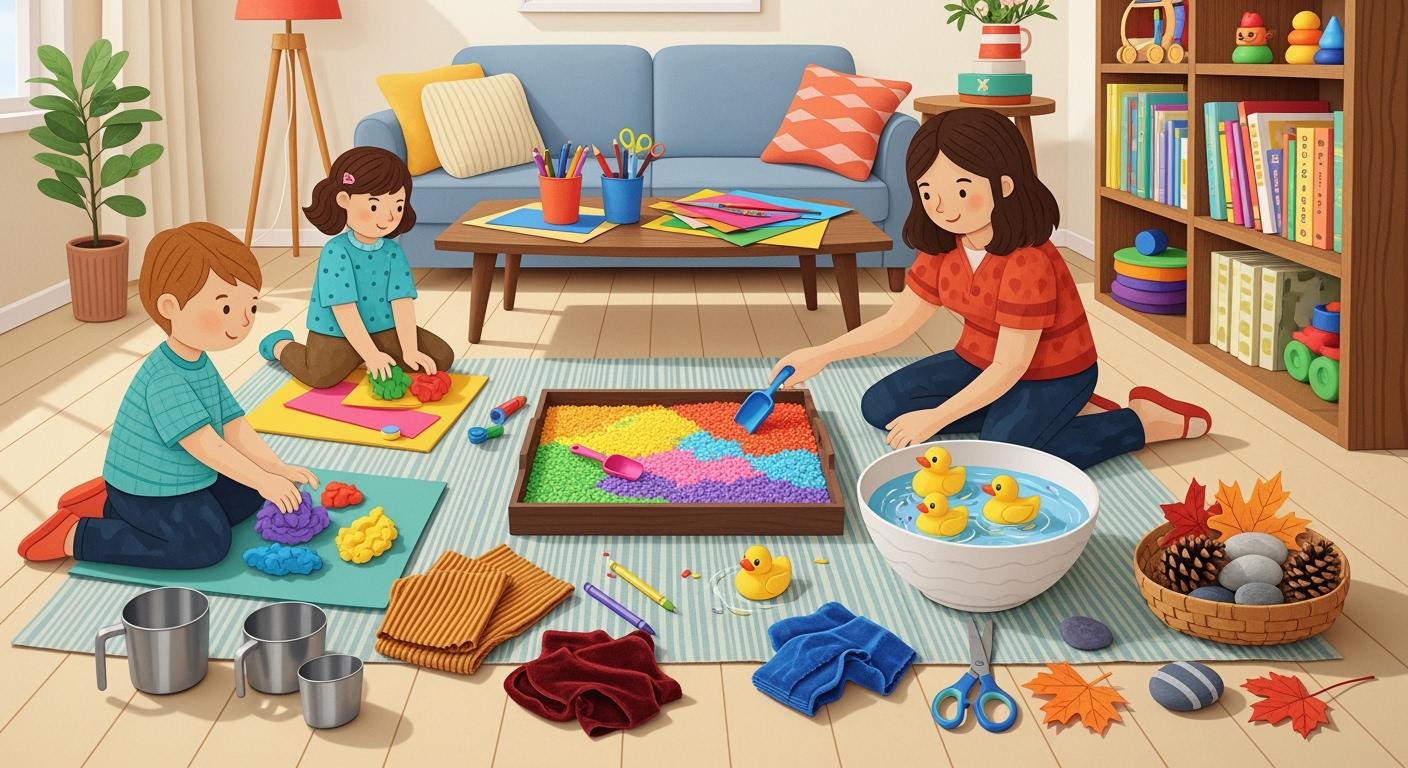
Setting up a sensory activity at home is simple and fun. You can use things like dry rice, sponges, or pom-poms. These items help start sensory activities for kids. Anyone can make their home sensory-friendly. Look at these benefits and safety tips:
Developmental Area | Benefits |
|---|---|
Better brain growth, helps memory | |
Social Skills | Improves language, lets kids practice social skills |
Emotional Regulation | Helps kids feel calm, supports self-control |
Motor Skills | Makes fine motor skills better, helps kids explore |
Guidelines | |
|---|---|
Physical Safety | Remove dangers and check for soft corners |
Material Safety | Pick safe materials and keep away choking risks |
Supervision | Stay nearby and watch for signs of stress |
Key Takeaways
It is easy to set up sensory activities at home. You only need simple things like rice, sponges, or pom-poms. These things help kids learn and play more.
You can make a calm-down corner with soft lights and comfy things. This helps kids control their feelings and pay attention better. A clean space with labeled bins helps kids find things they need.
Using sensory play with touch, sound, and smell helps kids grow. DIY sensory bins and music games help kids use their hands and talk with others.
Creating a sensory-friendly home
Setting up quiet corners for kids
You can make a calm-down corner at home. Pick a quiet spot away from noise. Put down a soft rug or some pillows. You can also use a bean bag chair. Add a basket with fidget toys or weighted blankets. This space gives your child a safe place to relax. Fewer distractions help your child with sensory processing difficulties.
Less noise and less clutter means less stress for kids.
Kids can focus better and feel more at ease.
Your child may handle emotions better in this space.
Tip: Label bins and keep things tidy. This helps your child find what they need easily.
Using soft lighting and calming spaces
Lighting can change how your home feels. Use soft, warm bulbs or let sunlight in. Sensory lamps, bubble tubes, and fiber optic lights make the room calm. These lights help kids with sensory processing difficulties feel safe.
Sensory light boards and projectors give gentle visuals.
Natural light can boost mood and help kids focus.
Description | Benefits | |
|---|---|---|
Fiber Optics | Strands with soft, tactile light | Gentle stimulation |
Bubble Tubes | Tubes with colored bubbles | Visual soothing |
Natural Lighting | Sunlight in the sensory space | Improves mood and focus |
Keep the sensory space simple and cozy. Stay away from busy patterns and bright colors. Cool colors and soft things help your child feel calm. You make a sensory-friendly home that is good for sensory play and helps kids with sensory processing difficulties do well.
Sensory activity ideas for kids
You can make your home a fun place for sensory play. Use things you already have at home. These ideas make sensory play simple and fun for kids. You do not need special supplies. Just use your imagination and try new things. Here are some easy sensory activities. They help your child learn and have fun.
DIY touch activities (playdough, sensory bins)
Touch helps kids learn about their world. Sensory play with touch builds fine motor skills. It also makes kids curious. You can make sensory bins or playdough areas fast.
Use a spoon or tweezers to move items. Move buttons, beads, or cotton balls between bowls. This helps grip and hand control.
Sort things by color or size. Use bottle caps, blocks, or pom-poms. Sorting helps kids see differences and solve problems.
Put objects in a mystery bag. Let your child guess what is inside by touch. This game helps with sensory skills and confidence.
Arrange flowers or take care of plants. Kids learn to be gentle and careful.
Wash and wipe tables with a cloth and water. This teaches kids to help and gives them touch play.
Play with locks and keys. Small padlocks and keys help with finger skills and patience.
Let your child help make snacks. This gives them independence and sensory play.
Make an object permanence box. Use a box and a ball or coin to teach hand skills.
Set up a self-serve area. Kids pour drinks or serve snacks. This helps with control and motor skills.
You can also make sensory bins with colored rice or beans. Here is how to make colored rice:
Put 1 cup of rice in a container or bag.
Add 1 teaspoon of white vinegar.
Add food coloring for bright colors.
Close the bag and shake it well for a minute.
Spread the rice on paper or a tray to dry.
When dry, put the rice in a bin for play.
For colored beans:
Get dry white beans and food coloring.
Dye beans in small groups for different colors.
Add 10-15 drops of food coloring to a bag.
Add 1-2 teaspoons of vinegar or rubbing alcohol.
Put beans in the bag and close it tight.
Shake the bag to cover the beans.
Spread beans on a tray to dry for a day.
You can make sensory bins for seasons or learning. Try a spring garden bin with black beans for dirt and toy veggies. Or make a recycling bin with lentils and small bins for sorting. These ideas keep sensory play new and fun.
Tip: Change out sensory toys and bins each week. This keeps kids interested and ready to explore.
Water play and visual sensory activities
Many kids love water sensory play. It gives lots of ways to play and learn. You can do water play inside or outside.
Age Group | Benefits |
|---|---|
Toddlers (3 and under) | Builds grip strength and helps kids move safely. |
Kids (4 to 11) | Improves fine and big motor skills, muscle strength, and social skills. |
Teenagers (12 to 17) | Builds big motor skills and uses important muscles with bigger water play. |
Cognitive Skills | Teaches math and science basics, helping kids think and learn. |
Hand-eye Coordination | Builds skills for daily life and harder tasks later. |
Social Skills | Helps kids play together, wait their turn, and work as a team. |
Try these water play ideas:
Make bubble “soup” with water and soap. Kids can scoop, pour, and make bubbles.
Play with ice cubes and warm water. Use two bowls to feel hot and cold.
Let kids draw in shaving cream for messy paint play.
Set up a rice sensory bin for pouring and scooping.
Try ice painting. Freeze colored water in cubes and let kids paint with them.
Visual sensory play is important too. Make a sensory bin with beans, rice, or sand for touch and sight. Fingerpainting lets kids be creative and learn about colors. Climbing on pillows builds muscles and adds movement to sensory play.
Note: Always watch kids during water play. Keep towels close and use shallow bins for safety.
Homemade sound activities and musical play
Sound is a big part of sensory play. You can use things at home to make music and sound games. Kids like making noise and learning about rhythm.
Singing songs helps kids learn about sounds and words.
Change “Go Fish” to teach sound matching with cards.
Swat the letter sounds. Use a flyswatter to hit letters and say their sounds.
Try a word walk. Write words in chalk and let kids walk on them, saying each word.
Play rhyme sparkle. Kids think of rhymes, which helps with sound skills.
Sound toss game. Toss a ball and say words that fit a sound rule.
Walkabout sound matching. Match pictures by first sounds for movement and learning.
Musical play adds more to sensory play. Make a music bin with tambourines, xylophones, and drums. Kids can try different sounds and textures. Make sound matching games with sound eggs or “Instrument Detective.” This helps kids learn to tell sounds apart and remember them.
Here is a simple music play idea:
Pick different instruments for many sounds.
Show each sound and let kids copy you.
Make a game where kids match sounds to the right instrument.
Let kids play freely and make up their own music.
Tip: Use pots and pans as instruments. Kids love to make music and try new rhythms.
Smell and taste sensory play (safe, simple ideas)
Smell and taste make sensory play even better. You can use safe, easy activities to try these senses. Always watch your child and see how they react.
Try smelling jars. Fill small jars with scents like cinnamon, vanilla, or lemon. Let kids guess the smell.
Make edible sensory bins with cereal, dried fruit, or crackers. Kids can taste and feel different foods.
Make snacks together. Let kids touch, smell, and taste the ingredients.
Use chewy tools or fidgets for mouth sensory play.
Add touch play with things like kinetic sand for more fun.
Be safe with taste play. Use headphones and soft lights if your child is sensitive. Respect your child’s limits and never force them to join.
Note: Always check for allergies and watch taste play. Keep activities easy and safe.
You can make sensory bins for each season. Try a summer bin with water and sand, or a spring bin with toy veggies. Sorting, counting seeds, and measuring with cups add learning to play.
These sensory ideas make play easy and fun for kids. You can change each idea to fit your home and your child’s likes. With a little creativity, you turn every day into fun and learning.
Sensory play tips and troubleshooting
Keeping kids engaged and adapting for ages
You want your child to enjoy sensory play. Try using one or two senses at a time. Pick activities that fit your child’s age and what they like. Little kids like to use their hands in sensory bins. Older kids may like building with blocks or sorting by color. You can change activities to fit your child’s needs. Some kids need special tools or extra help. Switch out toys and materials often so things feel fresh. Let your child help pick what to play with. Doing activities with others helps kids learn social skills and connect.
Age Group | Preferred Activities |
|---|---|
Younger Children | Playful exploration with sensory bins (like rice) |
Older Kids | Structured activities for emotional regulation |
Adults | Activities that support emotional regulation |
Tip: Begin with simple activities and add more as your child grows.
Managing mess and limited space
Sensory play can be messy, but you can keep it neat. Make a special area for sensory play. Put down a towel or plastic cloth to catch spills. Use shallow bins or bowls to hold the materials. On sunny days, try water play outside. The bathtub is good for messy play and easy to clean. If you do not have much space, use items that do more than one thing. Keep your setup simple and move things around if needed. Try making games with things you already have at home.
Strategy | Description |
|---|---|
Use multifunctional items | Pick toys or tools that do more than one thing |
Avoid overcrowding | Keep the play area open and easy to change |
DIY sensory materials | Make games with household items, like rice containers with hidden toys |
Start small | Begin with a few items and add more over time |
Solutions for short attention spans
Some kids switch activities quickly. You can help by keeping routines the same each day. Give your child some choices if they need them. Add movement like jumping or stretching to help them focus. Change the materials often to keep things fun. Mix sensory play with calming things, like deep breathing or quiet time in a cozy spot. A soft space with pillows and favorite toys can help your child relax and get ready to play again.
Note: Every child is different. Watch your child and change activities to fit what they need.
It is simple to do sensory activities at home with kids. You only need a few ideas, like sorting leaves or making a small water play area. Try setting up something easy today and use your imagination. Tell others about your fun ideas or try new sensory spaces with your family!
FAQ
How do you keep sensory activities safe for kids?
You check materials for choking hazards. You supervise play. You use soft corners and avoid sharp objects. Always watch for allergies.
What if you have limited space at home?
You use small bins or trays. You set up play on a table or in the bathtub. You clean up quickly with towels.
Can you do sensory play with everyday items?
Yes! You use rice, beans, sponges, or kitchen tools. You create fun activities without buying special supplies.
See Also
Simple Sensory Table Concepts for Your Home Setup
10 Engaging Sensory Input Activities for Home Use
Creating Exciting Christmas Sensory Activities for School Kids

