Must-Have STEM Supplies for Teachers to Boost Learning in 2026
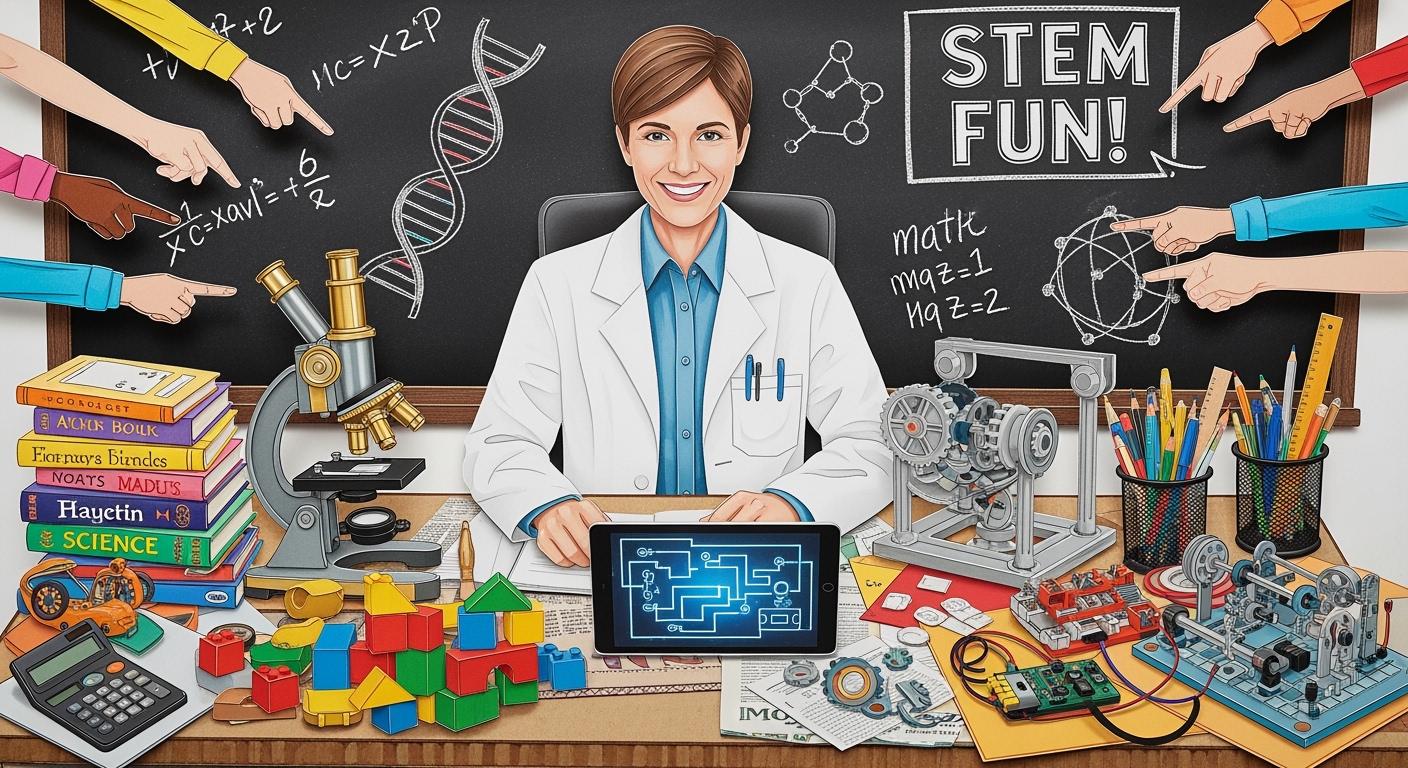
You know how classrooms change every year. In 2026, you’ll see classroom STEM supplies make a big difference in science and learning. Teachers benefit from new technology and classic supplies. Check out these trends shaping STEM:
Schools use outside partners for STEM.
Flexible education solutions rise.
Summer learning expands.
Early childhood STEM matters more.
Social-emotional skills join STEM.
Equity and access get more focus.
Get ready to update your supplies and boost your classroom!
Key Takeaways
Robotics kits and coding toys help students learn by doing. These tools make students interested and improve their problem-solving skills.
Labeled bins and student bags keep the classroom neat. They help students find what they need fast.
Digital planners make lesson planning easier. Teachers can spend more time teaching and less time planning.
Essential Classroom STEM Supplies
Notebooks and Writing Tools
Every classroom needs basic supplies. Notebooks and writing tools are very important for STEM. Giving students notebooks helps them keep their ideas organized. They can write down experiments and remember what they learn. Taking notes helps students pay attention in class. Stickers make notebooks more fun and personal. Students enjoy decorating notebooks with stickers. This makes them proud of their work. Decorated notebooks can help students review important ideas. They can use stickers to highlight key points or make science toys less scary.
Tip: Let students use stickers to show their favorite math or science discoveries. This helps them feel motivated and makes learning more fun.
Dry-Erase Markers and Binders
Dry-erase markers and binders are important for STEM classrooms. You can use dry-erase markers for checklists and group ideas. Students like writing answers on whiteboards during games and challenges. Binders keep papers and instructions together. This way, nothing gets lost. Here is a table showing how these supplies help:
Material | Purpose |
|---|---|
Dry erase markers | Track progress on student checklists |
Metal Binder Rings | Keep constellation cards organized |
Page protectors | Make checklists reusable |
Student Supply Bags
Student supply bags help keep the classroom neat. Each student gets a bag for their STEM supplies and toys. These bags stop clutter and help students find things quickly. You can make bags for science, math, or engineering projects. This saves time and lets students build and learn faster. Students stay ready for hands-on activities with their STEM toys. Supply bags also help students work together. They can share and trade materials for group projects.
Here is a list of basic STEM supplies for 2026:
Notebooks and writing tools
Dry-erase markers and binders
Student supply bags for STEM toys
Coding supplies for fun projects
Art supplies for creative STEM challenges
When you have these supplies, your classroom is ready for success. Students stay organized, interested, and excited about science and math.
Robotics Kits and LEGO Mindstorms
Enhancing Hands-On Learning
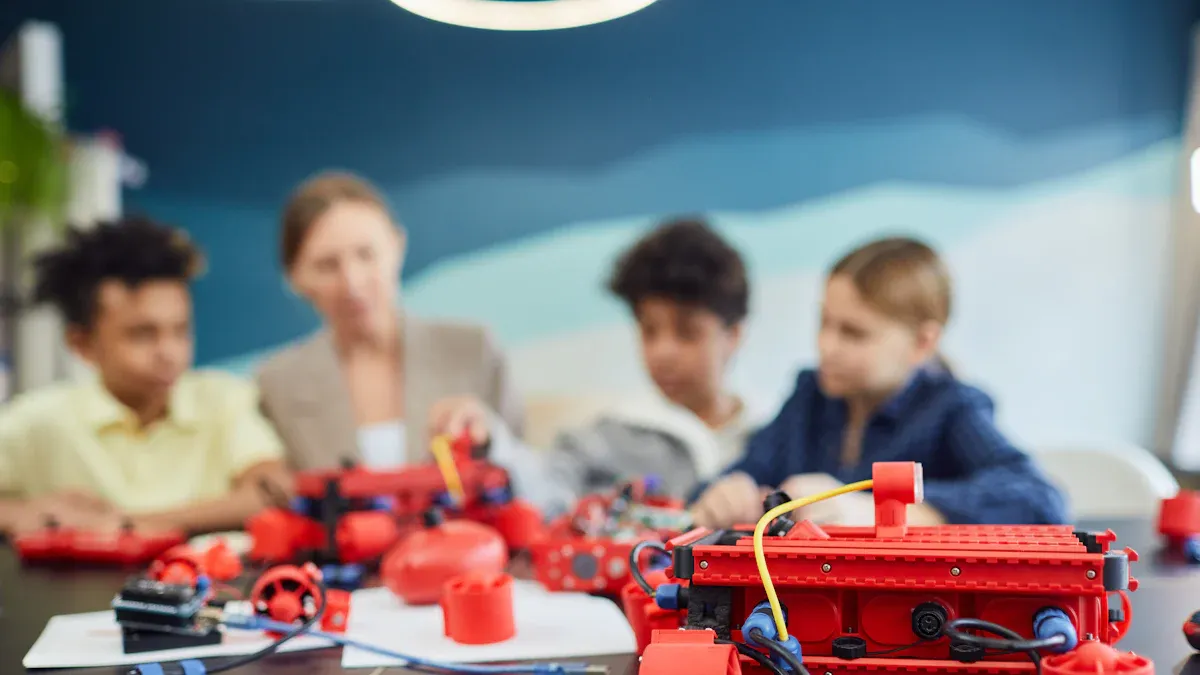
You want your students to enjoy science and engineering. Robotics kits and LEGO Mindstorms help make this happen. These kits let you do hands-on experiments in class. Students can build robots and program them. They get to see their ideas work in real life. Studies show STEM toys like these help students think better. They also help with social skills. Using LEGO Mindstorms lets students use engineering ideas in real projects. They learn how to solve problems. They also learn to think in new ways. A study by Afari and others found that building sets like LEGO Mindstorms help kids learn about robotics. These sets also help with creative play. This hands-on way of learning gives students a strong start in STEM.
Fostering Teamwork and Problem-Solving
You can use these kits to teach more than just science. These tools help students work together as a team. They also help students solve problems. Look at this table to see how different LEGO Education kits help teamwork and learning:
Evidence Description | Source |
|---|---|
The LEGO Education SPIKE Prime Set engages students through playful learning activities, fostering critical thinking and problem-solving skills. | Ecompass LLP |
The LEGO 9686 Simple and Powered Machine Set includes lessons and problem-solving tasks that promote teamwork and design engineering. | Ecompass LLP |
The LEGO Education SPIKE Essential Set encourages investigation of STEAM concepts and includes comprehensive lesson plans that support social-emotional development. | Ecompass LLP |
You will see that robotics kits do more than teach facts.
Robotics can help students pay attention and work with others.
Hands-on activities help students join in and work together.
Team projects help students get better at teamwork.
When you add robot building to your class, you help students grow in science and teamwork. These kits make STEM learning fun and important.
Coding Toys and Interactive Kits
Coding Pets and Engagement
You want your students to enjoy coding. Coding toys and interactive kits help make this happen. When you bring coding pets like Bee-Bot or Dash to class, students get excited. These toys make coding feel like a game. Kids like giving commands and watching robots move around. You can use these tools to teach science, engineering, and math in a fun way.
See how these toys help students get interested in STEM:
Evidence Description | Key Findings |
|---|---|
Children showed STEM skills when using technology-enhanced toys (TETs). | Using TETs helps kids think, solve problems, and work together. |
Kids ages 3–4 used planning and direction with programmable toys like Bee-Bot. | This shows young kids start thinking about STEM and try out commands. |
Open-ended toys help kids work together and keep asking questions. | Kids learn STEM basics by playing and exploring. |
You can see that coding pets help students work as a team and think like engineers. They plan, test, and try again. This hands-on way helps students remember what they learn in STEM.
Promoting Coding Skills
You want your students to learn real coding skills. Coding kits give you what you need for this. Older elementary students learn about loops, commands, and solving problems with block-based robots. These kits help students think clearly and work on their own. You can use Dash Robot to teach programming, geometry, and algorithms from kindergarten to eighth grade. Younger kids use easy apps, and older kids try harder tasks.
Coding kits help students:
Learn basic computer ideas
Practice engineering and math
Get better at solving problems
Work together on creative projects
When you use these kits to teach programming, you help students grow in thinking, creativity, and engineering. Coding becomes part of everyday STEM learning. Students see how science, engineering, and math all connect in real life.
Digital Planners and Lesson Books
Managing Curriculum
You want your lessons to go well. Digital planners and lesson books help you do this in your stem classroom. These tools keep all your science, technology, engineering, and math lessons together. You can plan each day, week, or month with just a few clicks. If you need to add a new engineering project or a science experiment, you can change your schedule easily.
See how digital planners help your stem teaching:
Benefit | Description |
|---|---|
Organized Lessons | Digital planners help you make clear lessons. You spend less time planning and more time teaching. |
Inquiry-Based Learning | Digital resources help students explore and learn new things. |
Alignment with Standards | Digital lessons match NGSS and state standards, so your stem lessons are important. |
Flexibility | You can use digital tools for many grades and different classrooms. |
Differentiation | Good stem planners let you help students who need more support and challenge those who are ready. |
These planners help you keep your engineering projects moving forward. They make sure every student gets the help they need.
Tracking Assessments
Digital lesson books do more than just organize your lessons. They help you see how students are doing in stem and engineering. You can find out who needs more practice and who is ready for something harder. These tools let you change lessons for each student.
You can:
Get information to help your teaching and see progress.
Make goals and tests that match your lessons.
Make learning personal and easy for everyone.
Give students feedback right away.
Help students talk and work together.
With digital planners, you can focus on helping your students learn science, engineering, and stem. You stay organized, and your students stay interested.
Project Case Organizers and Storage
STEM Material Organization Systems
A busy stem classroom can get messy fast. There are science projects, engineering kits, and many supplies. Project case organizers and storage bins help keep things neat. Labeled file folder bins let you find materials for each class quickly. This saves time and keeps your classroom tidy. You can also use gallon-sized baggies to prep materials. This trick helps you reuse supplies and clean up faster after stem activities. You spend less time looking for things and more time teaching.
If you want your stem lessons to go well, try these tips:
Label bins for each engineering project.
Use clear containers to see what’s inside.
Store small science tools in baggies for quick use.
Keep a checklist of what you need for each lesson.
Station Trays and Work-in-Progress Storage
You can make your classroom better with station trays and work-in-progress storage. These tools help students manage their projects. When pencils and scissors are in labeled trays, students find them without asking. Desktop caddies for shared supplies make the room quieter and help everyone focus.
Here’s a quick look at how these systems help:
Organization System | How It Helps Students and Teachers |
|---|---|
Students work on engineering tasks alone. | |
Desktop caddies for shared materials | Less noise and better stem organization. |
You can set up trays for each engineering station. Students know where to put their work and where to find materials. This makes stem projects easier to start and finish. You help students build good habits for science and engineering. Your classroom stays organized every day.
Augmented Reality Tools
Interactive Learning Experiences
You want your students to be excited about learning. Augmented reality tools make science and engineering feel real. When you use AR, students see 3D models on their tablets or phones. They can walk around a virtual volcano. They can look inside a cell. This turns lessons into an adventure.
See how AR tools help your students:
Evidence Type | Description |
|---|---|
Academic Performance | Students using AR got much higher test scores than those using regular methods. |
Engagement | AR tools made students more interested and motivated. They changed how the classroom feels. |
Collaboration | Group tasks with AR helped students work together. This made learning better. |
Students say they like lessons more when you use AR. You will see them pay more attention and remember more. Teachers notice students understand science and engineering faster. AR also helps students do group projects. They share ideas and solve problems as a team.
Integrating AR in Lessons
You can use AR in many ways to help stem learning. In biology, students can watch cells divide right in front of them. In chemistry, they can build molecules and see how atoms connect. Physics lessons get better when students use AR to test forces or build circuits. In math, AR helps students see shapes and angles in 3D.
STEM Discipline | Application of AR | Benefits |
|---|---|---|
Biology | Seeing biological processes | Makes students more interested and helps them understand |
Chemistry | Seeing molecules | Helps students learn hard ideas |
Physics | Exploring forces and circuits | Makes learning more interactive |
Mathematics | Seeing geometry in 3D | Helps students understand tough concepts |
You can start with easy AR templates. Let students make 3D models for their engineering projects. Maybe they design a bridge or a city and add virtual objects. This hands-on way helps students connect stem ideas to real life. AR lets students explore, ask questions, and build their own understanding. You will see them become more confident in science and engineering.
Tip: Try AR for your next engineering challenge. Watch your students get creative and excited about stem!
3D Printers in STEM
Creative Project Applications
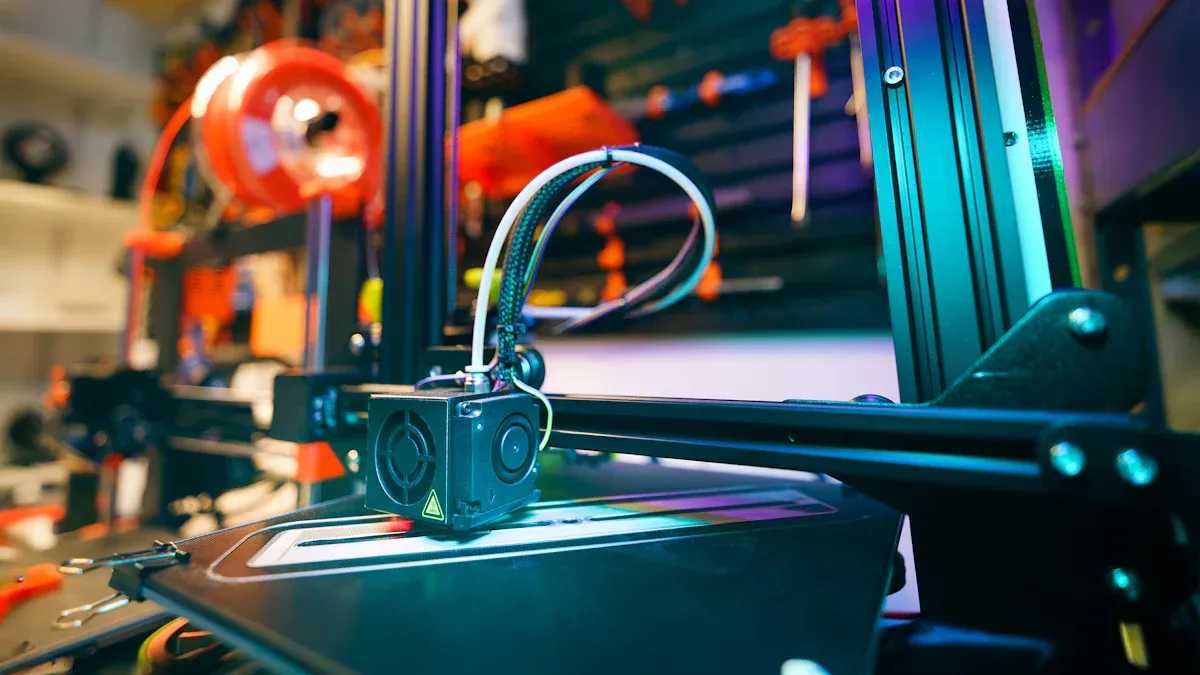
You can make your classroom a makerspace with 3D printers. These machines let students design and build real objects for stem lessons. You might print a bridge for an engineering challenge. You could create a shape for a math lesson. Students like seeing their ideas become real. They learn to solve problems and test their designs. You can use 3D printers in science, math, and engineering. Look at this table to see how 3D printers help in different subjects:
Application Area | How It Helps Students Learn |
|---|---|
Engineering Systems | Improves spatial skills and boosts motivation |
Critical Skills | Grows creativity, teamwork, and design thinking |
Project-Based Learning | Lets students build working prototypes |
Anatomy Education | Makes science lessons hands-on with 3D models |
Architecture Education | Builds confidence and helps with spatial reasoning |
Mathematics Education | Makes geometry and technology easier to understand |
You can use 3D printers for group projects or solo challenges. Students feel excited when they hold their own creations. This hands-on way makes stem learning stick.
Inspiring Innovation
You want your students to think like engineers and inventors. 3D printers help make this happen. You can guide students through projects that mix creativity with real-world problem-solving. Here are some ways 3D printers inspire innovation in stem:
Students design and print prosthetic limbs for animals or people.
They create useful items like phone holders or desk organizers.
They build renewable energy models, such as wind turbines.
Group projects let students remix designs and learn from each other.
Students solve problems when prints do not work the first time.
When you add 3D printing to your stem lessons, you connect art, science, and engineering. Students learn to test ideas, work together, and try again. You will see them grow as creative thinkers and future engineers.
Tip: Try a seasonal project, like designing a snowflake or a flower. Students enjoy making something special for the time of year, and they remember the lesson.
Data Collection Sensors
Real-Time Experimentation
You want students to see science and engineering in action. Data collection sensors help make this happen in your stem class. These sensors connect to lab tools and let students collect data during experiments. For example, you can measure how temperature changes or how fast something moves. Students watch the results show up on their screens right away. This makes science and engineering feel exciting.
When you use probeware, students feel more motivated. They get feedback from their projects instantly. Students can test ideas, see what happens, and try again right away. This hands-on way helps students learn how real engineers and scientists work. You will see students get more excited and pay better attention in stem lessons.
Tip: Try wireless sensors for your next engineering project. Students like seeing their data appear right away!
Supporting Inquiry-Based Learning
Data collection sensors turn your classroom into a place for discovery. These tools let students lead their own experiments and ask questions about science and engineering. Here’s how sensors help with inquiry-based learning:
Students use engineering tools and collect real data.
Sensors make hard ideas easier to understand.
Students become more curious and think more deeply.
Real-time data makes stem lessons more active.
Students learn better by doing things themselves.
You can use sensors to measure things like speed or temperature. Many sensors are small and wireless, so you can set up labs fast. Students see their results right away, which keeps them interested in stem and engineering. Some classes use sensors for projects like watching plants grow or mapping the environment. This helps students connect science, engineering, and technology in new ways.
Ed Tech Tools for STEM
Collaborative Online Platforms
You want your students to work together and share ideas. Collaborative online platforms help make teamwork easy in your STEM class. These tools let students talk and build projects as a group. Students can solve engineering problems together. You can use forums, sharing tools, and interactive whiteboards. Students post questions and share files with each other. They help classmates with science and engineering work.
Here is a table that shows different technology tools you can use:
Technology Tool Type | Description |
|---|---|
Communication Technology | Tools for embedded communication and voice chats |
Dynamic Presentation Technology | Simulation, virtual games, and augmented reality |
Sharing and Co-construction Technology | Forums and resource sharing tools |
Learning Platforms | Intelligent learning systems and integrated environments |
Hardware Technology | Interactive whiteboards and similar devices |
When you use these platforms, students learn more about STEM. Research shows these tools help students think better and feel happier. Students feel closer to their classmates and ready for engineering challenges. You will see them become better thinkers and team members.
Tip: Try a group project on an online platform. Watch your students share ideas and build something great together.
Virtual Science Labs
You can make science and engineering come alive with virtual labs. These labs let students do experiments on the computer. Students can change things, see what happens, and learn at their own speed. Virtual labs make STEM lessons more fun and hands-on. Students can repeat experiments if they want to understand more.
Virtual labs help break down barriers for students. Kids from anywhere can join and learn about engineering and science. You do not need expensive tools or a big classroom. Everyone gets a chance to try STEM and test their ideas.
Here are some benefits of virtual labs:
Students get hands-on practice with engineering and science.
Labs are open to all students, no matter where they live.
Students can do experiments again and learn more.
You can teach STEM topics in new and different ways.
You help your students become curious and sure of themselves. Virtual labs make learning fun and give everyone a chance to explore.
STEM Assessment Tools
You want to know how your students are doing in stem, science, and engineering. Good assessment tools help you check progress and give feedback. You can use many types of tools to make learning better for everyone. Some tools give instant results, while others help you see growth over time.
Assessment Sheets and Grading Templates
Assessment sheets and grading templates make your job easier. You can use rubrics to show students what you expect in engineering projects. Try letting students help design these rubrics. This makes them feel part of the process. When you use clear grading templates, students know how to improve. You can give feedback that helps them grow in stem and science.
Here’s a table with ways to use assessment sheets and templates:
Strategy | Explanation |
|---|---|
Involve students | Let students help design rubrics for engineering projects. |
Show where students do well or need help in stem. | |
Analyze and apply assessment data | Find patterns and adjust your teaching in science and engineering. |
Foster a culture of reflection | Ask students to reflect on their learning and set goals. |
Monitoring Student Progress
You can track student progress with digital or paper tools. Try exit tickets to see what students learned in stem. Use quiz games like Kahoot! for fun checks during engineering lessons. Platforms like Pear Deck and Mentimeter let you collect real-time answers. Video tools like Flip help students share their thinking about science and engineering.
Here’s a table with tools you can use:
Goal | Tool | Description |
|---|---|---|
Find out what students learned | Exit tickets | Quick checks at the end of stem lessons. |
Kahoot! | Quiz games for engineering and science review. | |
Check understanding | Pear Deck | Collect answers during stem lessons. |
Share learning | Flip | Students record videos about engineering projects. |
You can use these tools every day. They help you see who needs more help and who is ready for new challenges in stem and engineering.
You can change your classroom with new stem supplies. Look at the table to see how tools like AI, games, and immersive tech help science learning:
Tool Type | Impact on Learning Outcomes |
|---|---|
Higher engagement and achievement |
New supplies make students curious and help them work together.
These tools also teach real-world skills.
Try stem gifts, online resources, and teacher training to learn more.
Keep working hard and bring new ideas to your classroom!
FAQ
What is the most important STEM supply for 2026?
You need a mix of hands-on kits and digital tools. Start with notebooks, coding kits, and AR apps. These boost engagement and make learning stick.
How can I organize all these STEM materials?
Try labeled bins and student supply bags. Use a checklist for each project. This keeps your classroom tidy and saves you time.
Do I need expensive tech for effective STEM lessons?
No, you don’t! Simple supplies like dry-erase markers, building blocks, and free online tools work great. Focus on creativity and teamwork.
See Also
Guidelines for Teachers to Choose Quality STEM Toys
Innovative STEM Toys Influencing Future Generations of Learners
Understanding STEM Toys and Their Importance for Children
