What Are the Most Popular STEM Toys in Schools Right Today
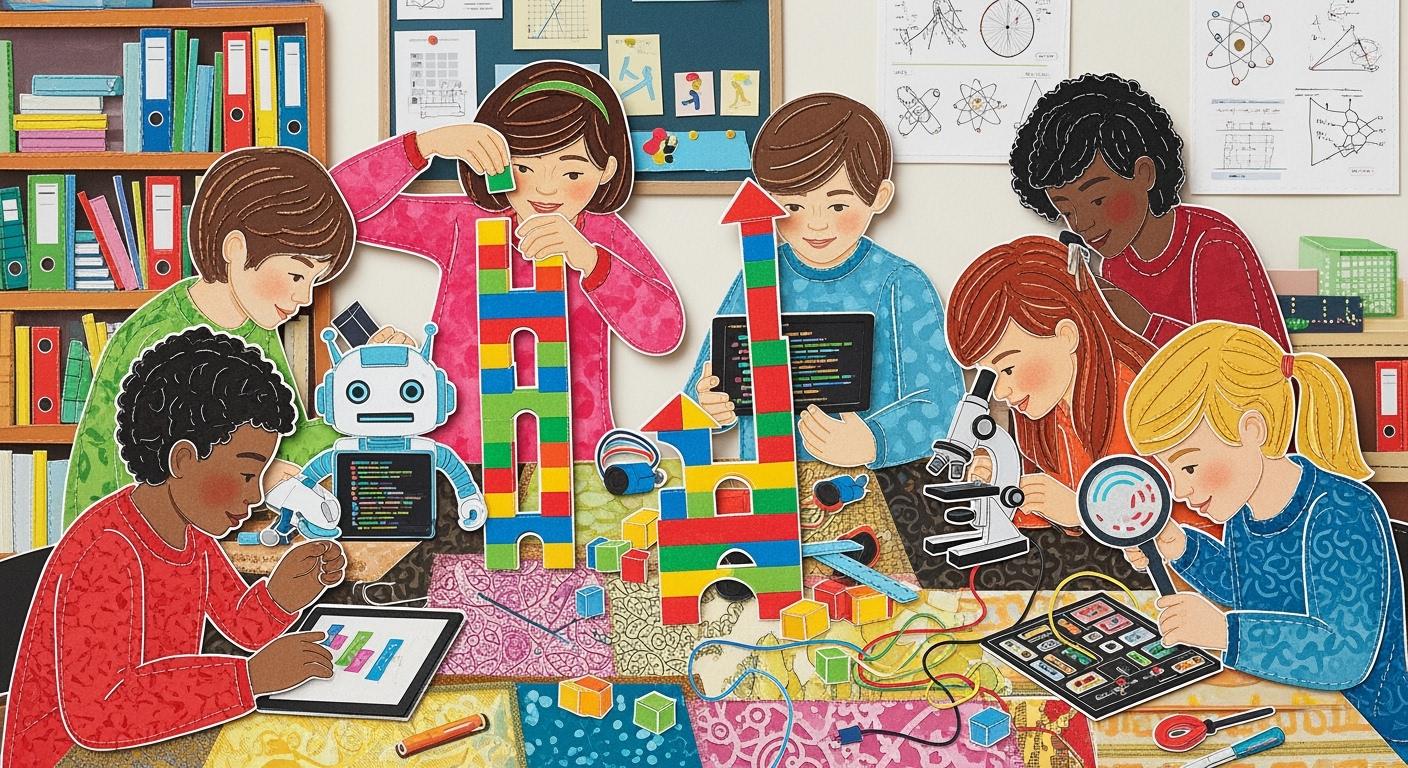
You see students use robotics kits, LEGO Mindstorms, and APAC stem toys every day in class. These STEM supplies give you flexible tools. They help students get more interested. They also match what schools want students to learn.
Type of STEM Toy | Educational Benefit | Impact on Students |
|---|---|---|
Robotics Kits | Teach programming and engineering | 30% more students join STEM clubs and activities |
LEGO Mindstorms | Hands-on learning and engagement | Students get better at solving problems and do better in school |
APAC Stem Toys | Enhance STEM curricula in schools | More students want jobs in STEM fields |
"Everyone was working. Everyone helped out. Each person had a job." (Grade 2 teacher, PA)
You can use these STEM supplies to make lessons that help students be creative. They also help students solve problems and work together.
Key Takeaways
STEM toys like robotics kits and LEGO Mindstorms make students more interested in learning. These toys help students pay attention in class. Hands-on activities with STEM supplies help students solve problems. They also help students be creative. Education kits show how things work in real life. Students can try out ideas and see what happens. Working together on STEM projects helps students learn to be a team. It also helps them talk and share ideas better. Using many different STEM resources helps every student learn. This makes school fair and good for everyone.
Top STEM Supplies For Building

Structures Plank Set
Structures Plank Sets help students be creative in class. These stem supplies let kids build towers, bridges, and cool designs. Each set has simple wooden planks for open-ended play. Students do not need instructions to start. They can try out ideas and see what works. This hands-on way helps students learn about balance, geometry, and cause-and-effect.
Tip: The idea booklet is colorful and gives new design ideas. You can use it to find fun challenges.
Teachers pick these stem products because they help with teamwork and problem-solving. Students work together, share ideas, and learn from mistakes. These kits also help students get better at fine motor skills and spatial reasoning. You can use them in class, makerspaces, or at home.
Feature | Description |
|---|---|
Promotes Creativity | Lets students build and solve problems in their own way. |
Educational Value | Brings science, technology, engineering, and math into fun lessons. |
Developmental Benefits | Builds fine motor skills, teamwork, and spatial thinking. |
Versatility | Works well in classrooms, makerspaces, and at home. |
Inspiration | Has a bright idea booklet for new designs and creativity. |
Structures Plank Sets help students learn about geometry, balance, and cause-and-effect. These stem supplies give students a way to build and be creative. They make learning fun and help students remember what they learn.
Education Kits
Education kits have everything you need for hands-on stem learning. These kits come with materials for building, testing, and exploring. You can find kits for robotics, simple machines, and science experiments. Each kit lets students play and discover new things.
When you use these stem products, students connect what they learn to real life. They build models, test ideas, and solve problems. Students get better at solving problems and keep trying even when it is hard. They learn that it is okay to struggle and face challenges.
Education kits get students involved in real activities.
These kits help kids think and solve problems.
You can use them for creative projects with no set answers.
Students talk and share ideas with each other.
You see more inquiry-based learning in your lessons.
Education kits help students use thinking skills in different subjects. They also help students feel confident as problem-solvers. You can use these stem supplies to teach important skills for the future.
Magna-Tiles And Magnetic Blocks
Magna-Tiles and magnetic blocks are very popular stem products in schools. You can use these kits to teach shapes, patterns, and engineering. Students snap pieces together to build flat and 3D structures. This kind of play helps students be creative and think carefully.
Toy Name | Description |
|---|---|
Magna-Tiles | Flat plates with magnets that stick together. |
GeoMag | Spikes and balls connect with magnets to build shapes. |
Squigz Fat Brain Toys | Pieces stick together using suction, not magnets. |
Students work together to solve problems and test ideas. These stem supplies are easy to use and safe for all ages. Teachers like these stem products because they let students play and explore freely. You can use them for math, science, and engineering lessons.
Note: Kids who use stem supplies before age 10 are more likely to pick stem careers. Early stem activities matter a lot.
Why Teachers Choose Building STEM Supplies
Teachers pick engineering and building sets because they make learning fun. Research shows open-ended play with stem supplies helps creativity and thinking. Students who use these stem products get curious and enjoy learning.
Study | Findings |
|---|---|
Maker et al. 2023 | Looked at how STEM play helps kids with math. |
Masek et al. 2024 | Studied how loose parts help kids join STEM activities. |
Gold et al. 2015 | Found loose parts play is important for STEM behaviors. |
Gull et al. 2024 | Talked about how loose parts boost creativity and thinking. |
Zeng and Ng 2024 | Checked how open-ended questions help kids learn science. |
You may have problems using stem supplies, like not enough materials or fitting them into lessons. You can solve these by planning and using what you have in smart ways.
STEM education is important for young students. You help students learn to solve problems and stay curious. When you use building kits and stem products, you let students explore and try things out. These experiences help students get ready for the future.
Popular Coding And Robotics STEM Products
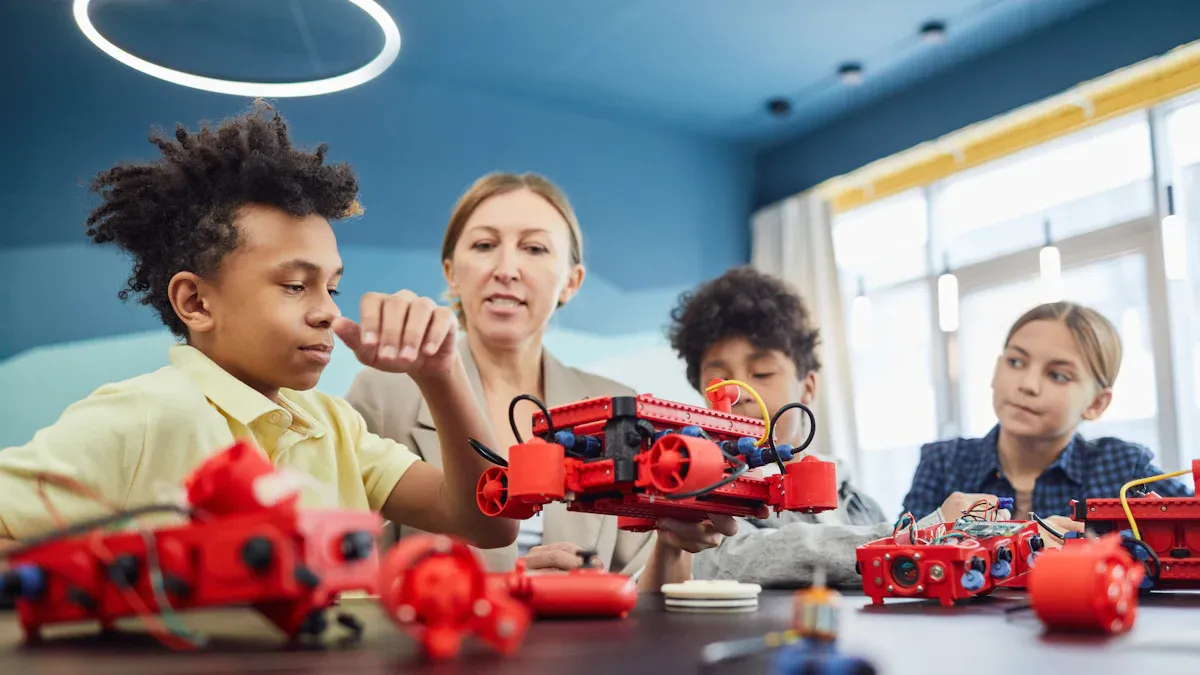
More schools are using coding and robotics toys now. These tools help students learn technology skills. Students get to try coding, logical thinking, and problem-solving. Teachers like these products because they make learning fun. Students learn by doing things, not just by listening.
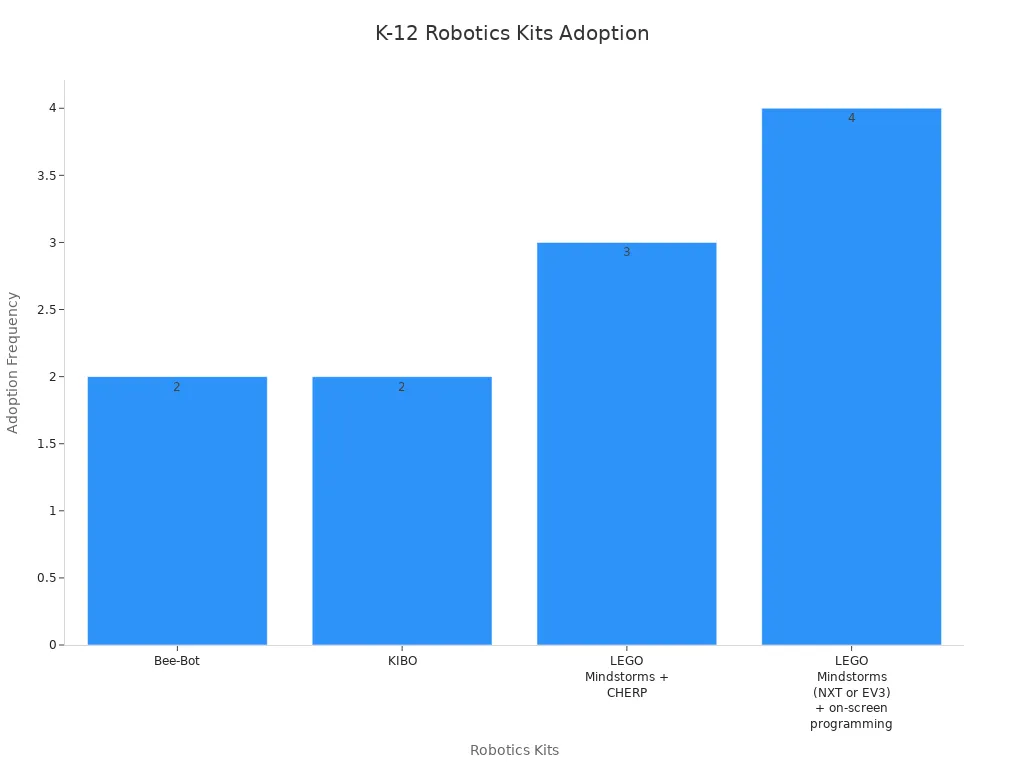
Frequency | Studies | |
|---|---|---|
Bee-Bot | 2 | Angeli and Valanides (2020); García-Valcárcel-Muñoz-Repiso and Caballero-González (2019) |
KIBO | 2 | Bers et al. (2019); Pugnali et al. (2017) |
LEGO Mindstorms + CHERP | 3 | Bers et al. (2014); Kazakoff and Bers (2012); Kazakoff and Bers (2014) |
LEGO Mindstorms (NXT or EV3) + on-screen programming | 4 | Baek et al. (2019); Fanchamps et al. (2021); Newton et al. (2020); Taylor and Baek (2019) |
Studies say robotics programming helps students think better. It also helps them be more creative. Coding and robotics toys teach skills like sequencing, loops, and debugging. These activities help students solve problems and think logically.
Using robotics and game design makes students more interested.
Students practice coding by fixing real problems.
Research shows hands-on coding toys help students learn technology better than just listening.
Botley 2.0 Coding Robot
Botley 2.0 Coding Robot lets you teach coding without a screen. Students use a remote to give commands. They learn to put steps in order, make loops, and solve puzzles. Botley 2.0 shows how coding works in real life.
You can use Botley 2.0 with small groups or centers. Students work together to solve problems. They learn to fix their code and try new ideas. This robot makes coding easy for beginners. Teachers like Botley 2.0 because it works for many grades and is hands-on.
Tip: Make obstacle courses or mazes for Botley 2.0. Students can code the robot to finish each challenge.
Snap Circuits Kits
Snap Circuits Kits help you teach electronics by building. Students snap pieces together to make circuits that work. They learn about voltage, current, and resistance by making projects.
Evidence | Description |
|---|---|
Hands-on Learning | Snap Circuits Kits provide a hands-on approach to learning about electronics, allowing students to experience the field of electrical engineering directly. |
Engagement | The program aims to engage young students in STEM fields, encouraging them to consider careers in engineering. |
Community Involvement | The initiative emphasizes the importance of community partnerships to inspire the next generation of engineers. |
Snap Circuits makes STEM learning fun and easy.
The kits have won awards for being good for education.
Students understand hard ideas by building and testing circuits.
Students learn more about voltage, current, and resistance.
They get better at solving problems and thinking carefully.
Many projects keep learning new and exciting.
Snap Circuits gives a hands-on way to learn electronics. It makes learning fun for kids and adults.
Sphero And Ozobot Robots
Sphero and Ozobot robots help you teach coding in fun ways. Students use apps or markers to program the robots. They see the robots move, light up, or follow lines right away.
Evidence | Description |
|---|---|
1 | Ozobots help kids learn programming in different ways. |
2 | Workshops were for grades 3-5 in eight schools from 2018 to 2019. |
3 | Worksheets were made to help students focus and learn better. |
4 | Kids moved from using commands to making their own programs. |
5 | Kids liked programming, and both boys and girls joined in. |
Sphero and Ozobot robots use simple steps. Students start with easy commands. Then they make their own programs. This helps students learn coding and feel confident.
You can use these robots for group work or solo challenges. Students learn to work together and share ideas. Teachers see students get excited and stay interested in lessons.
Aspect | Traditional Methods | |
|---|---|---|
Student Performance | Students improve a lot over time | Students improve slowly |
Creativity and Critical Thinking | Hands-on activities boost creativity | Memorizing facts does not help much |
Problem-Solving Skills | Active learning builds these skills | Passive learning does not help |
Engagement | Interactive lessons keep students interested | Lectures are less interesting |
Long-term Retention | Students remember more with active learning | Students forget more with lectures |
When you use coding and robotics toys, students get to explore technology. These tools help students become creative and solve problems. You help students get ready for STEM jobs by making learning active and important.
Sensory And Science STEM Kits
Science Lab Kits
Science lab kits help bring real science to class. You can use these kits for hands-on activities. Students mix things, measure, and test materials. This makes science lessons more fun and helps students remember. Science lab kits also help students work together and solve problems.
Benefit | Description |
|---|---|
Students use real tools and materials to make science ideas clear. | |
Promotes Problem-Solving | Each activity challenges students to think and find solutions. |
Encourages Creativity | Open-ended projects let students try new ideas and explore. |
Fosters Teamwork | Many kits require students to work in groups and share ideas. |
Improved Academic Performance | Regular use of science kits helps students do better in science and math. |
Career Readiness | Early exposure to science opens doors to future careers. |
Develops Soft Skills | Students practice communication and teamwork. |
Inspires Lifelong Learning | Fun activities spark curiosity and a love for learning. |
You can use science lab kits to make lessons active and fun. Students learn by doing, not just reading or listening.
STEM Bins And Open-Ended Games
STEM bins and open-ended games are flexible tools for learning. You fill bins with blocks, recycled things, or craft supplies. Students use these items to build, design, and solve problems. This kind of play helps students think in new ways.
Evidence Source | Description |
|---|---|
Using recycled materials in bins boosts creativity and gives students many ways to explore. | |
Hand2Mind STEM Bins Learn & Play Pack | Students learn engineering by building and solving problems at their own pace. |
Stem Bins/Morning Tubs | Free play with bins builds fine motor skills and problem-solving while keeping learning fun. |
You can set up STEM bins for morning work or centers. Students work alone or with friends. They learn to share, plan, and test ideas. Open-ended games keep students busy and make them want to explore every day.
Sand And Water Tables
Sand and water tables give a special way to learn with senses. You can use these tables for pouring, scooping, and building. These activities help students get better at using their hands. Sand and water tables also help students play together and work as a team.
Water tables help students pour and scoop, which builds fine motor skills.
Sand tables let students use their imagination and feel different textures.
Both tables help students learn social skills and work together.
Sand and water tables make fun places for kids with different needs.
These tables also help students get along and enjoy learning more.
Tip: Change the materials in your sand and water tables to keep things new and fun.
You can use sensory and science kits in many ways. Start with easy challenges, use technology when you can, and let students work in groups. Make sure your activities fit what you need to teach and always keep lessons fun. These ideas help you make a classroom where every student can explore and love stem.
STEM Classroom Benefits
Hands-On Exploration
Students learn best when they use their hands. STEM toys make it easy to add hands-on learning to class. When students build and test things, they remember lessons longer. They also understand ideas better. For example, building kits help students think and be creative. Students must solve problems and try new ideas. This helps them learn more and connect lessons to real life.
STEM toys help students work together on projects.
These toys give challenges that need problem-solving.
Students learn by doing, so lessons feel important.
Collaboration And Problem-Solving
STEM learning works well with teamwork. You can use group puzzles and role-play to help students work together. These activities build talking and social skills. When students build a bridge or protect an egg, they practice solving problems. Research says teamwork in STEM class helps students get better at working together. Students talk, test ideas, and fix their designs. This teamwork gets them ready for real life.
Group puzzles need everyone to solve problems.
Role-play helps students learn to talk and work things out.
STEM challenges let students use what they learn in real ways.
Supporting Diverse Learners
STEM toys help all students in your class. These tools are for everyone and make sure all students feel welcome. You help students with different ways of learning feel good about themselves. STEM toys help students think for themselves and be creative. Students with special needs do well with hands-on activities. You make a class where everyone can do well and enjoy learning.
Benefits | Challenges | |
|---|---|---|
Elementary | Early use of STEM toys helps students get curious. | Not enough supplies or money. |
Middle School | Students learn harder ideas and work in teams. | Need better tech and teachers who know STEM. |
High School | Special classes in robotics and engineering. | High costs and some schools have less than others. |
When students use STEM tools early, they may want STEM jobs later. You help students get ready for the future by making learning fun and active.
You can pick from many STEM supplies for your class. These tools help students learn by exploring and solving problems. Students also work together and share ideas. Good resources and hands-on activities make learning fun. Research says these things help students understand better.
Key Takeaway | Description |
|---|---|
You need good materials for STEM lessons. Digital lessons that use questions help students learn more. | |
Hands-On Activities | Doing activities helps students stay interested. It also helps them see how lessons connect to real life. |
Differentiation for Diverse Learners | Resources should fit different skill levels and needs. Teachers should not spend extra time planning. |
Professional Learning for Teachers | Teachers need training and support to teach STEM well. |
To begin, you can:
Make a STEM corner with building tools.
Give students challenges to think creatively.
Treat mistakes as ways to learn.
Show how STEM is part of everyday life.
FAQ
What makes STEM toys effective for students in the classroom?
STEM toys help students learn by doing. You see students use these toys to solve problems and build new things. Teachers use toys in the classroom to make lessons fun and hands-on. Students remember more when they use toys.
How do you choose the best STEM toys for your classroom?
You look for toys that match your classroom goals. Pick toys that help students work together and think creatively. Choose toys that fit your students’ ages and interests. Ask students what toys they like most.
Can students with different learning styles use STEM toys in the classroom?
Yes! STEM toys work for all students. You see students with different skills join in classroom activities. Toys help students learn in their own way. Teachers use toys to support every student in the classroom.
How do STEM toys help students work together in the classroom?
STEM toys encourage teamwork. You watch students share ideas and solve problems in the classroom. Toys help students talk and listen to each other. Students learn to respect different opinions and work as a team.
Tip: Rotate toys in your classroom to keep students excited and engaged.
Benefit | How It Helps Students in the Classroom |
|---|---|
Hands-on | Students learn by building and testing |
Teamwork | Students solve problems together |
Creativity | Students design and invent new things |
See Also
Understanding STEM Toys And Their Importance For Children
Guidelines For Teachers To Choose Quality STEM Toys
Ten Highly Recommended STEM Toys That Engage Young Minds
