Messy play table fun made easy with trays
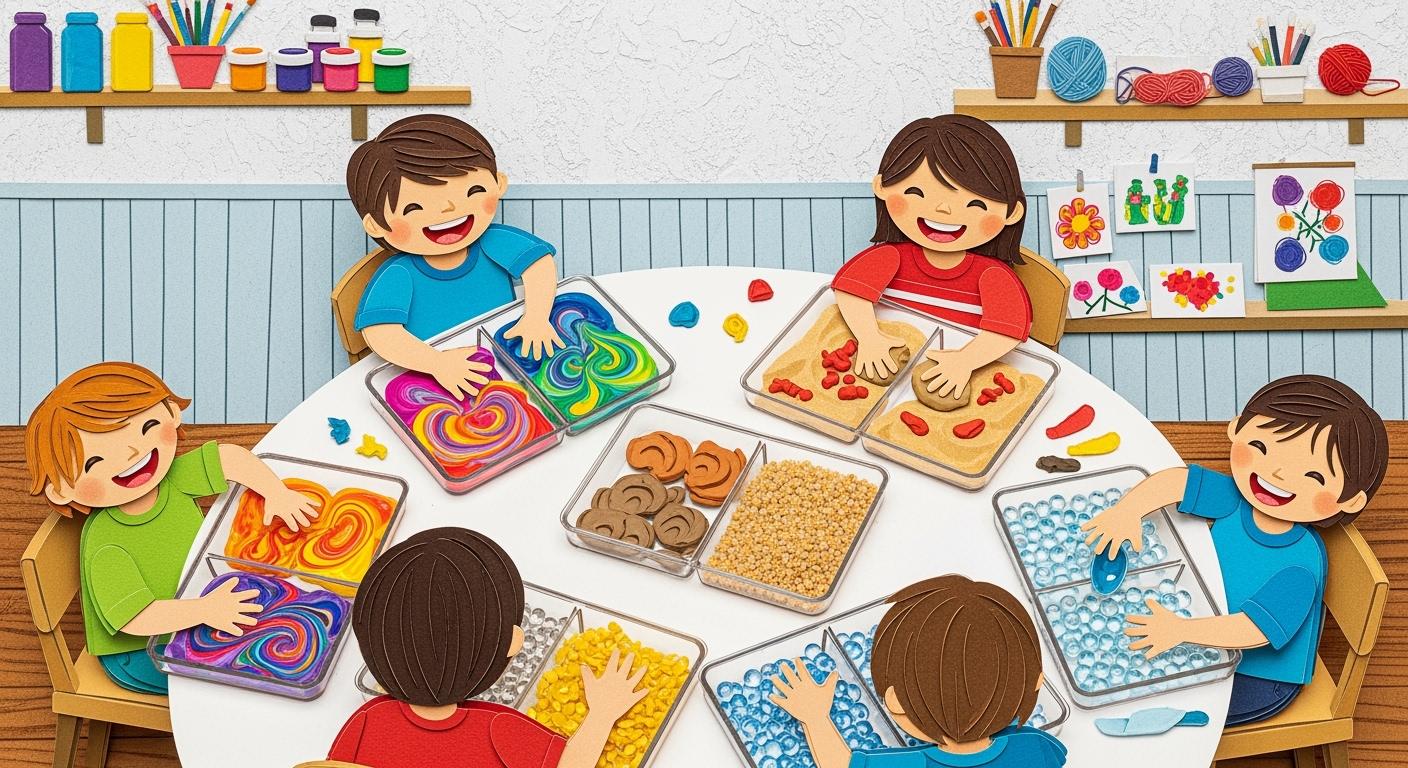
Picture this: your kids rush to the messy play table, eager to dive into a world of creativity and imagination. You grab a tray, set it on the Sensory Play Table, and suddenly, messy play feels manageable. The Messy Play Tray contains the chaos, turning easy sensory play into a breeze. As little hands scoop and pour, they’re exploring the senses and developing fine motor skills. A tray on your Wooden Sensory Table or Sensory Mood Table means less stress for you and more time for play and learning.
Key Takeaways
A tray helps keep messy play in one spot. This makes cleaning up faster and easier for parents.
Pick a tray that is deep so things do not spill. Make sure it is strong and safe so it lasts a long time.
It is important to change up sensory play often. Use new materials and themes to keep kids interested and happy.
Add tools like tweezers and cups to sensory play. These help kids build fine motor skills and use their imagination.
Always watch kids while they play. Use safe materials for their age and keep the play area clean.
Why use a tray for sensory play
Containment benefits
You know how messy play can get. One minute, your kids are exploring sensory materials, and the next, you’re picking up beans from under the couch. A tray changes everything. It keeps the mess in one spot, so you don’t have to chase after runaway rice or sand. The raised edges on a sensory play tray act like a barrier, making sure materials stay put. Take a look at how a popular tray helps with containment:
Feature | Description |
|---|---|
Tray Type | Learning Through PLAYtrays® Large 35.4" Tuff Tray |
Purpose | Supports sensory play, STEM invitations, and more |
Key Feature | Raised containment edges help keep materials contained |
You get peace of mind knowing the mess won’t spread all over your home. Your children can scoop, pour, and dig without you worrying about cleanup later.
Easy cleanup
Let’s be honest—easy sensory play should mean easy cleanup. With a tray, you just lift it off the table and dump out the materials. No more scrubbing the table or picking up tiny pieces from the floor. You can wipe down the tray in seconds. If you want to switch activities, just swap out the sensory materials. You save time and energy, which means more play and less stress.
Tip: Keep a damp cloth nearby for quick wipe-downs after each play session.
Flexible play options
A tray gives you endless ways to set up sensory play. You can fill it with water, sand, beans, or even shaving cream. Want to try a new theme? Just change the materials in the tray. You can move the tray from the kitchen to the backyard for outdoor play. The tray works for solo play or group activities. You can add cups, scoops, or funnels to boost fine motor skills. The possibilities for play are endless, and you control the mess every time.
Choosing a sensory play tray
Tray size and depth
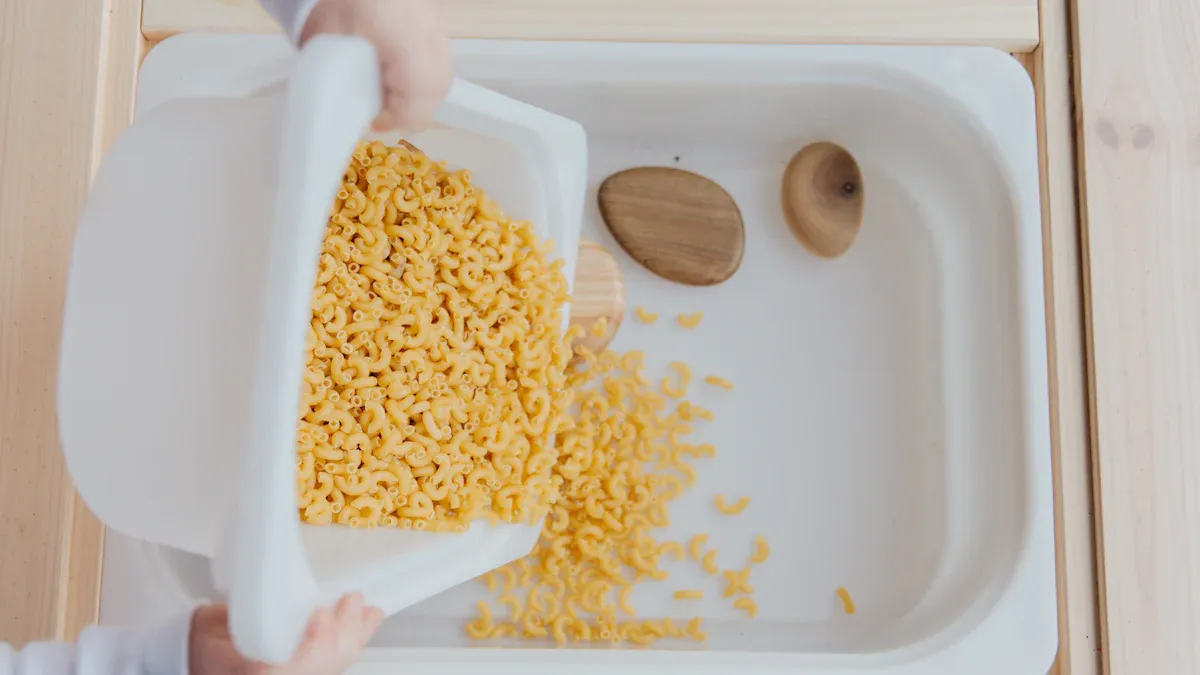
The tray you pick matters for messy play. You need enough space for your child to explore. But the tray should not be so big that it covers your whole table. Experts say the tray should be at least 4–5 cm deep. This helps stop spills. A tray that is about 50 x 35 cm is good for two kids to play together. If you have one child or want solo activities, use a small tray or a shallow bin.
Tip: Pick a tray with smooth, raised edges. This keeps beans, sand, or water inside and makes cleaning up simple.
Material and durability
You want a tray that will last for many playtimes. Look for trays made from strong, safe materials. Many parents buy BPA-free, phthalate-free, food-safe ABS plastic trays. These are tested for safety in the USA and other places. Some brands use HDPE plastic that can handle sunlight. This means you can use the tray outside too.
Feature | Description |
|---|---|
Certification | U.S. CPSC certified for safety |
Durability | Extra strong for active play |
Quality Control | Regular checks for safe, responsible materials |
Manufacturing | Upgraded for long-term use |
If you want to save money and help the earth, you can use clear boxes or baskets as trays. Try not to use glitter and pick natural materials when you can.
Features for different ages
Safety is most important for sensory play. Always watch your child while they play. Pick a tray with smooth edges and no sharp corners. For little kids, make sure nothing inside is a choking hazard. Check for allergies too. Never leave a child alone with water. Clean the tray often to stop germs. Change what’s inside as your child gets older. Always encourage safe and creative play.
Messy play table setup and activity ideas

Preparing the sensory play tray
You want your messy play table to look fun and simple. First, pick a clean tray that fits your table. Put the tray in the middle so your child can reach it. Gather all your sensory play materials before you start. You might use beans, sand, water, or dough. Pour the materials into the tray and spread them out. If you want a theme, try a fruity tray with orange slices, lemon peels, and soft dough. You can also use play dough to make fruit or animal shapes. Keep some towels close for fast cleanups.
Here’s an easy step-by-step guide:
Put the tray on your messy play table.
Add sensory play materials like dough, beans, or water.
Place tools such as cups, spoons, or tweezers in the tray.
Pick a theme, like a fruity tray or a play dough garden.
Ask your child to explore and play.
Tip: Change your sensory play tray theme every week. Many parents say switching trays weekly keeps kids interested.
Sensory materials and themes
Sensory play is best when you use different materials and themes. You can use play dough, kinetic sand, slime, or water. Kids love to squish dough, pour water, and shape play dough. Sensory play helps the brain grow and improves memory and thinking. When you set up a tray with many textures, you help your child explore and get curious.
Try these fun sensory play activities:
Sensory bins with beans or rice
Play dough for rolling, squishing, and shaping
Water play with cups and funnels
Slime for stretching and squeezing
Kinetic sand for digging and building
Sensory Activity | Developmental Benefit |
|---|---|
Jumping on a Sensory Path or Trampoline | Improves balance and coordination |
Crawling Through a Sensory Tunnel | Builds upper body strength and spatial awareness |
Balancing on a Wobble Board or Stepping Stones | Enhances stability and core strength |
Water Play (Pouring, Scooping, Splashing) | Strengthens arm and shoulder muscles while providing tactile input |
You can use play dough to make themed trays. For example, make a garden with green dough, flower shapes, and small animal toys. Sensory play tools like tweezers, tongs, and scoops help build fine motor skills.
Note: Sensory play helps kids be creative and solve problems. It also helps them learn to cope and focus.
Indoor and outdoor play
You can use your messy play table inside or outside. Playing inside is easier to control and less messy. Playing outside lets your child use things like mud, water, and leaves. When you take the tray outside, your child gets more sensory experiences. Outdoor play uses all the senses with many textures and sounds. Kids often play longer and get more excited.
Outdoor Sensory Play | Indoor Sensory Play | |
|---|---|---|
Mess Management | Generally messier due to natural elements like mud and water | More controlled and less messy |
Child Engagement | Offers a rich, multi-sensory experience with dynamic input | Often lacks the same level of dynamic input and variety |
Sensory Variety | Engages all senses simultaneously with diverse textures and sounds | Limited range of sensory engagement |
Developmental Importance | Provides essential sensory experiences crucial for development | May hinder optimal development due to lack of diversity |
If you want less mess, use the tray outside for water or dough play. You can wash the tray with a hose after playing. Inside, use play dough, slime, or sensory bins for easy cleanup.
Fine motor skill activities
Sensory play trays are great for building fine motor skills. You can add tools like tweezers, tongs, and lacing beads. Kids use these tools to pick up small things, thread beads, or sort shapes. Play dough is good for finger strength. Rolling, pinching, and shaping dough helps build muscles for writing and cutting.
Try these sensory play tools and activities:
Description | |
|---|---|
Building Blocks | Enhance hand-eye coordination and finger dexterity through stacking and arranging. |
Shape Sorters | Help children recognize shapes while practicing hand-eye coordination and grasping skills. |
Lacing Beads | Improve finger strength and hand-eye coordination by threading beads onto a string. |
Puzzles | Require manipulation of pieces, enhancing finger dexterity and spatial awareness. |
Art Supplies | Activities like drawing and cutting strengthen hand muscles and precision. |
Tweezers and Tongs | Build finger muscles and coordination by picking up small objects, aiding in later skills like writing. |
You can use play dough to make letters, numbers, or animals. Add cups and funnels for pouring water or sand. These activities help kids build fine motor skills and spark creativity. Sensory play trays also help kids with special needs by supporting self-control, visual tracking, and social skills.
Tip: Ask your child to use both hands when playing. This helps with coordination and makes their hands stronger.
Managing mess, cleanup, and safety
Minimizing mess
You want to keep the mess under control when your kids use the messy play table. The best way is to use a tray or shallow container. This keeps all the sensory materials in one spot and makes cleanup easier. You can also cover the table with a mat or old sheet before you start. This way, you catch any spills and protect your floor. Try these simple ideas to keep things tidy:
Use a tray or shallow bin for every sensory play activity.
Lay down a mat, old bedsheet, or newspaper under the table.
Dress your child in play clothes or an apron.
Choose washable materials for easy cleaning.
Quick cleanup tips
Cleanup does not have to take forever. You can make it fast and even fun. Many parents find that making cleanup part of the play helps kids learn responsibility. Here are some quick tips:
Wipe down the tray with a damp cloth after each use.
Use a dustpan, broom, or vacuum for spilled materials.
Separate sensory materials with a colander or bag.
Wash tools and trays regularly to keep them clean.
Do a deep clean every few weeks for hygiene.
Tip: Turn cleanup into a game. Ask your child to sort toys, wipe surfaces, or wash tools with you.
Safe storage and supervision
Safety comes first with sensory play. Always supervise your child, especially with water or small parts. Stay close and watch for any risks. For children with special needs, keep extra watchful. Never leave kids alone during sensory play. Here are some safety rules to follow:
Only let children aged four and up play with small items like water beads.
Store sensory materials in closed bins out of reach when not in use.
Count and inspect items before and after play.
Teach your child not to put materials in their mouth, ears, or nose.
Limit the number of kids at the table to avoid crowding.
If you see any accidents, write them down to keep track. With the right setup and supervision, your child can enjoy the messy play table safely every time.
You can make sensory play at home simple and fun with a tray. Experts say sensory play trays help your child learn and grow in many ways:
Sparks new ideas and creativity
Makes it easier to handle feelings
Teaches kids to take turns and share
If you worry about mess or safety, try these easy tips:
Challenge | Solution |
|---|---|
Managing mess | Show kids how to keep things in the tray, mark spots for tools, use a small broom |
Ensuring safety | Pick materials that are safe to taste |
Maintaining engagement | Give fewer choices, use a work rug, show how to play slowly |
Join a Facebook group to get and share sensory play ideas with other parents. Try a new tray setup and post your favorite play times!
FAQ
How do you clean a sensory play tray?
Wipe the tray with a damp cloth after each use. For sticky messes, use warm soapy water. Let the tray air dry before storing. You can clean plastic trays in the dishwasher if the manufacturer says it is safe.
What materials work best for sensory play trays?
You can use beans, rice, sand, water, play dough, or kinetic sand. Try natural items like leaves or pebbles for outdoor play. Avoid glitter or anything that might cause allergies.
Can you use a sensory play tray for more than one child?
Yes! Pick a larger tray so everyone has space. Give each child their own tools. Set clear rules for sharing. You can use a table with two trays for group play.
How do you keep sensory play safe for younger kids?
Always supervise play. Choose large, non-toxic materials. Avoid small items that could be a choking hazard. Clean the tray and toys often. Teach your child not to put materials in their mouth.
See Also
Utilizing Messy Play Trays for Engaging Sensory Experiences
Innovative Ideas to Boost Learning Through Sensory Play Mats
Simple Sensory Table Concepts for Effortless Home Setup
Ultimate Resource for Sensory Play Strategies in Early Education
