Human Anatomy Toy Adventures for Hands-On Learning
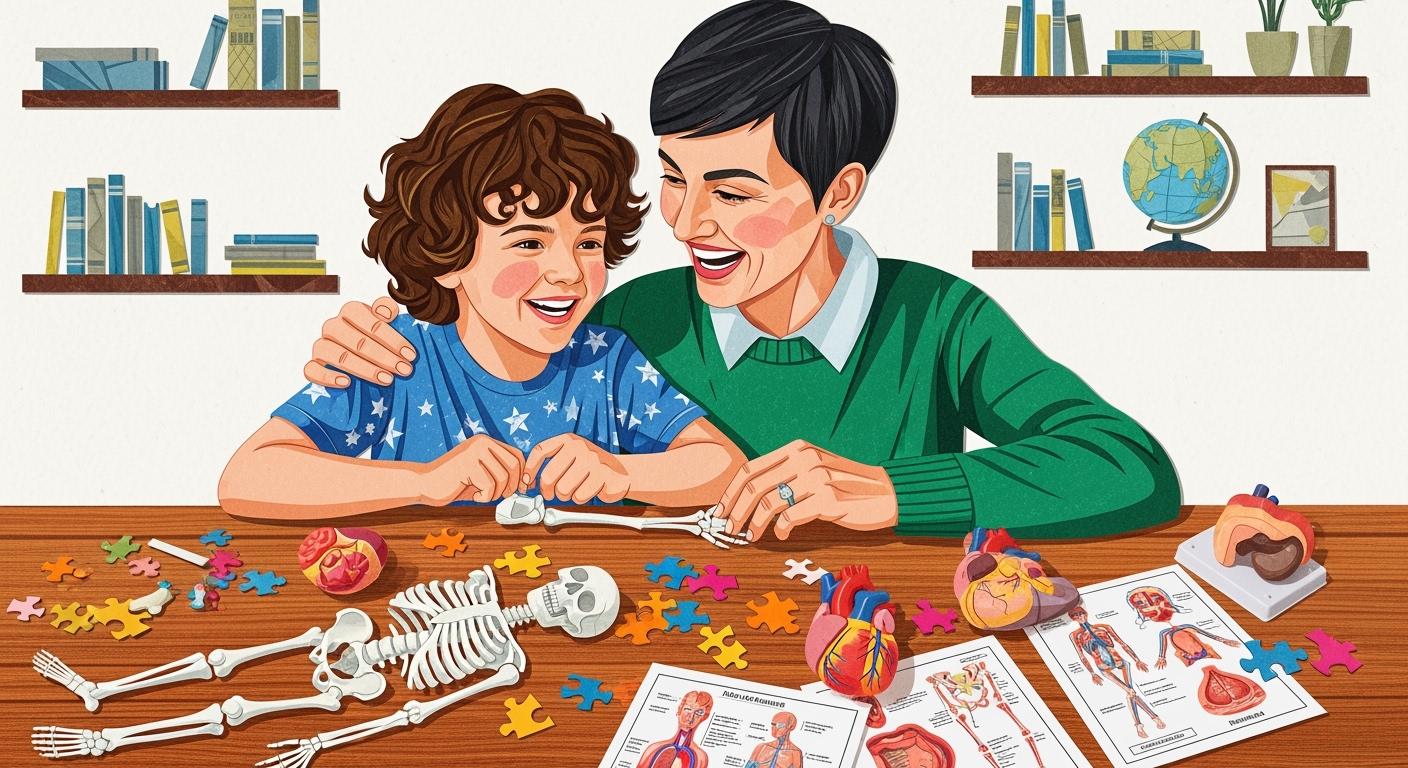
When you give kids a human anatomy toy, you mix learning and play. These toys make learning fun and let you touch each part of the body. Studies show kids using tools like a Skeleton Model or Anatomy Model Toy learn better. They remember more and pay attention 34% more than with regular ways.
Evidence Type | Description |
|---|---|
Brain Development | Sensory play helps the brain grow. It makes connections stronger between what you feel and how you move. It helps kids organize what they sense. It also helps the two sides of the brain talk to each other. |
Body Awareness | Tactile play helps kids know their bodies. It helps them understand space by exploring. This is important for learning how the body works. |
Emotional Regulation | Sensory activities help kids control their feelings. They learn self-control. This is important for understanding their body and how it reacts. |
Human anatomy toy activities help kids pay attention and control feelings.
These toys help kids solve problems, be creative, and think carefully.
You mix play with science, so learning is fun and matters.
Human anatomy toy adventures make learning about the body fun, hands-on, and easy to remember for every kid.
Key Takeaways
Human anatomy toys make learning fun and hands-on. They help kids remember facts more easily. - Pick toys that are right for your child’s age. This helps them learn better at their own level. - Make a space with lots of things to touch and see. This helps kids explore and learn about the human body. - Add stories and pretend play to your lessons. This makes learning about anatomy more fun and easy to remember. - Use toys, books, and videos together. This helps kids learn in many ways and understand more.
Choosing Human Anatomy Toys
Types of Toys (Models, Puzzles, Play Trays)
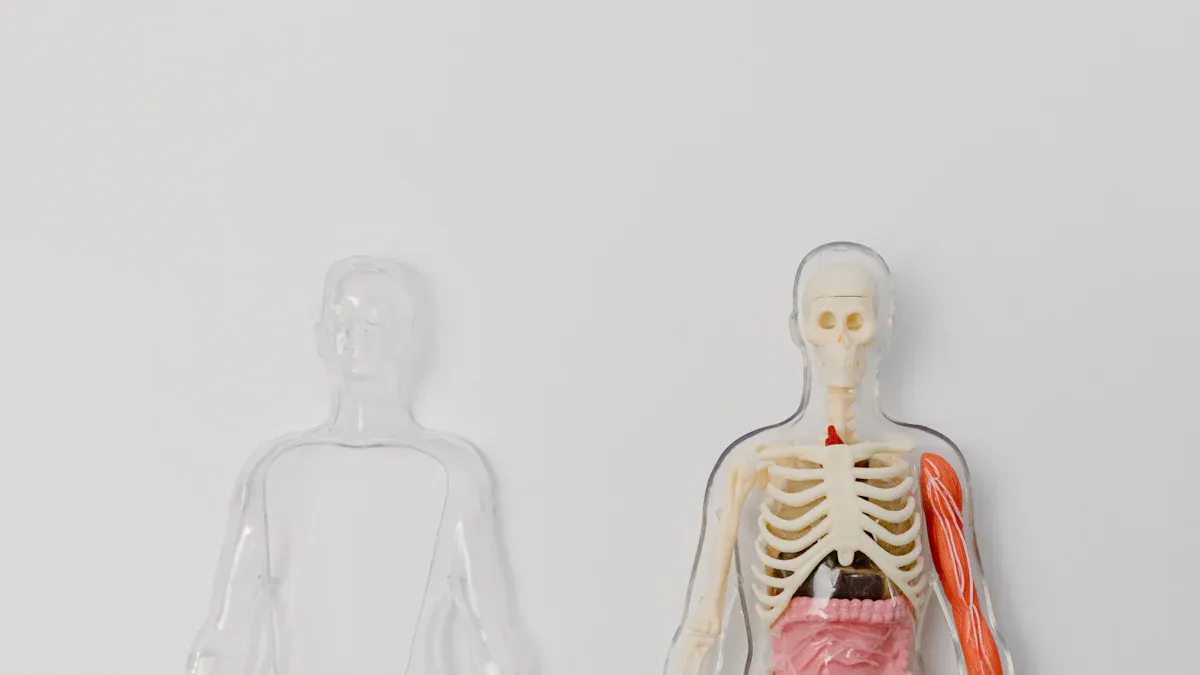
There are many human anatomy toys for kids. These toys make learning about the body fun. Some favorites are:
Organauts teach about important organs. They come with a comic book and a guide.
Human Body Muscles Model lets kids look at organs and muscles inside the body.
Layered puzzles show bones, muscles, and organs in steps.
Play trays have play-doh for building organs or making a play-doh heart.
Printable activities can be used with play-doh for hands-on learning.
Play-doh bodies let kids shape the body and organs by themselves.
These toys help kids touch, build, and find out new things. Montessori-inspired models let kids take apart and put together layers. This helps them learn how the body works.
Age-Appropriate Picks for Kids
Think about the child’s age when picking toys. Preschoolers do best with simple puzzles or play-doh. Kids in elementary school can use more detailed models and printables. Play-doh is safe and easy for all ages. It is great for preschool activities about the body. Always check the toy’s age label to see if it is right for your child.
Safety Tips
Safety is important when you pick toys for kids. Look for toys that meet these safety rules:
Safety Standard/Certification | Description |
|---|---|
EN 71 Series standards | |
ASTM F963 | Standard Consumer Safety Specification for Toy Safety. |
CPSIA | Makes sure toys do not have lead or other harmful stuff. |
California Proposition 65 | Checks for safe chemicals in toys. |
ISO 8124-3 | Standard for how much of some elements can be in toys. |
Tip: Wash toys with warm water and mild soap. Rinse them well and let them dry in the air. Keep toys in a cool, dry place. This keeps toys safe and ready for the next play-doh time.
Setting Up for Human Body Activities
Preparing the Learning Space
You can create a sensory-rich environment that helps kids learn about the human body. Sensory-friendly spaces support academic growth and emotional well-being. When you set up your learning area, think about how kids use their senses. Place anatomy toys on a low table where kids can reach them. Add soft mats or rugs for comfort. Use bright trays or bins filled with sand or rice to make activities tactile. Kids love to dig and find hidden bones or organs in these bins. You can also bring in items from nature, like leaves or small stones, to connect science with the world around them.
Tip: Combine different sensory channels. Let kids see, touch, and even hear about the body. This approach helps them remember what they learn.
Transform regular activities into hands-on experiences. For example, use a sand tray to hide model organs. Ask kids to find and name each part. This method makes learning active and fun.
Introducing Toys to Kids
Start by making anatomy toys part of daily play. Kids feel more curious when you let them explore at their own pace. Choose toys that match their age and interests. Younger kids may enjoy simple puzzles, while older kids can handle detailed models. Hands-on models, like human organs TOOBs, invite kids to touch and move pieces. This interaction builds curiosity and helps them learn faster.
Add anatomy toys to your regular play area.
Let kids ask questions and share what they notice.
Use stories or simple facts to spark interest.
When you introduce toys in a relaxed way, kids feel excited to learn. They start to see science as something they can touch and understand.
Educational Activities for Kids
Guided Exploration of the Human Body
Start human body activities with guided exploration. Use anatomy toys to help kids name body parts. Ask them to build models layer by layer. This lets them see how bones, muscles, and organs fit together. Fill play trays with sand or rice and hide small anatomy pieces. Kids dig and find each part, then match it to a chart or card. This method helps science learning and builds confidence.
Montessori-inspired anatomy activities encourage discovery. Kids learn by touching, sorting, and labeling. Use unit blocks to measure body height or match skin tones. Labeling body parts in another language helps build vocabulary. Sorting sensations by taste, touch, or hearing lets kids explore their senses. DIY smelling bottles make science lessons more fun.
Tip: Let kids ask questions and share ideas. This builds independence and self-awareness.
Interactive Games and Challenges
Make science exciting with games and challenges. These activities help kids remember facts and fix common mistakes about the human body. Try body part bingo or anatomy puzzles. Kids build models and label each piece. Use educational apps for 3D views or augmented reality. Online quizzes on Kahoot or Quizizz test knowledge in a fun way.
Activity Name | Description |
|---|---|
Kids make a life-size outline of their bodies and label body parts. | |
Anatomy Art: Creating a Body Puzzle | Kids build a puzzle of body parts and label them, mixing art with learning. |
Educational Apps | Apps like 'Human Anatomy Atlas' and 'Anatomy 4D' give interactive 3D views and augmented reality. |
Online Quizzes | Kahoot or Quizizz let kids take quizzes to test knowledge in a fun way. |
Books About Body Parts | Books like 'My Amazing Body' and 'From Head to Toe' explain body parts. |
Story Creation | Kids make their own stories about body parts, building creativity and understanding. |
Use anatomy toys to fix mistakes. Kids may think the heart is on the left side or that digestion starts in the stomach. Use models to show the heart’s real spot and explain how digestion starts in the mouth. Show blue veins and talk about why they look blue through the skin.
Misconception | Correction |
|---|---|
The heart is located on the left side of the chest | The heart is in the center, slightly tilted to the left |
Blue veins contain deoxygenated blood | Blue veins only look blue through the skin |
Digestion begins in the stomach | Digestion starts in the mouth with enzymes in saliva |
The liver only processes alcohol | The liver does over 500 important jobs, like filtering toxins and controlling blood sugar |
We only use 10% of our brains | We use all parts of our brain, just at different times for different tasks |
Hands-on anatomy activities build motor skills and give multi-sensory experiences. Digital tools give feedback that fits each child. You can mix both for a complete science lesson.
Approach | Strengths | Educational Outcomes |
|---|---|---|
Build motor skills, give multi-sensory experiences | Help kids with special learning needs, improve physical development | |
Digital Learning Tools | Give feedback that fits each child | Match each child’s abilities and interests, give feedback right away |
Combined Approach | Mix both methods for a complete learning experience | Make fun environments for different learning styles and needs |
Storytelling and Role-Play
Storytelling and role-play make human body activities memorable. Use anatomy toys to make stories about organs and body systems. Kids act out roles, like the heart pumping blood or the lungs breathing air. This helps them remember terms and functions.
Activity Steps | Description |
|---|---|
Kids build a model of the skeletal system, learning by doing. | |
Role-Playing | Acting out roles helps kids remember terms and functions. |
Collaboration | Working in groups helps kids talk and understand body systems. |
Encourage kids to work together. Group activities help kids talk and learn more. Use 3-part cards to talk about feelings and label body parts in different languages. This helps science learning and builds emotional intelligence.
Note: Storytelling and role-play help kids connect science ideas to real life.
Creative Projects
Creative projects help kids learn science and anatomy. Use human organs TOOBs to build models of the human body. Kids shape organs with play-doh or make posters showing body systems. These projects let kids explore anatomy in a hands-on way.
Human anatomy toys give a tactile approach. Kids learn about organs and body systems by touching and building. This makes learning more fun and supports STEM education. Ask kids to sort sensations by the sense used or match scents with DIY smelling bottles. Creative play builds confidence and independence.
Make a poster showing the digestive system.
Build a play-doh heart and explain how it works.
Create a sensory tray with hidden anatomy pieces.
Label body parts in another language to build language skills.
Use creative projects to mix science with art. Kids share their ideas and learn more about the human body.
Callout: Creative projects help kids solve problems and spark curiosity about science.
Tips for Effective Learning
Encouraging Curiosity
You can make kids curious by using simple tricks. Show diagrams and models to help them see the body. Tell stories or sing songs to make learning fun. Pick a few main organs and talk about what they do. Let kids use their hands to build or craft models. This helps them remember better. Ask kids to think of questions and look for answers. Mix anatomy with art or math for more fun. Play games to help kids relax and join in.
Show diagrams and models to explain ideas.
Tell stories or sing songs about the body.
Talk about a few main organs and what they do.
Let kids build or craft to remember more.
Ask questions and let kids explore answers.
Mix anatomy with art and math for fun.
Play games to make learning exciting.
Tip: If you let kids lead, they feel proud and want to learn more.
Integrating Toys with Books and Videos
You can help kids learn more by using toys, books, and videos together. Pick books that match their age and explain body parts. Watch videos to see how organs work in real life. Use a model heart while watching a video about blood flow. Read a story about digestion as kids make a play-doh stomach. This way, kids see, hear, and touch what they learn. They remember better when they use all their senses.
Match toys with books for reading together.
Watch videos to explain hard ideas.
Let kids talk about what they learn from each thing.
Note: Using books, toys, and videos helps kids learn in many ways.
Assessing Understanding Through Play
You can check what kids know by watching them play. There are different ways to see if they understand. Watch what they do, say, and pretend. These tools show if kids get the main ideas and enjoy learning.
Description | |
|---|---|
Play Matrix | Checks what kids do, say, and feel during play. |
Penn Interactive Peer Play Scale (PIPPS) | Lets teachers rate how kids play together or alone. |
Test of Pretend Play (ToPP) | Sees if kids use toys in new ways and make up stories. |
Child-Initiated Pretend Play Assessment (ChIPPA) | Looks at how kids start pretend play and how complex it is. |
Callout: Watching play helps you see what kids know and how they feel.
You can help kids learn more by asking them questions. Match toys to what kids like. Add anatomy toys to your daily plans. Make a toy center at home or school for play. Use AR apps to make learning fun and new. Show-and-tell lets everyone join in and share. Start your own human anatomy toy adventure now and see kids get curious!
FAQ
What age is best to start using human anatomy toys?
You can introduce human anatomy toys as early as preschool. Choose simple models for young children. As kids grow, select more detailed human body sets. Always check the age label to match the human toy to your child’s stage.
How do human anatomy toys help with learning?
Human anatomy toys let you see and touch each part. You build models, solve puzzles, and explore the human body. This hands-on play helps you remember facts about human organs and systems. You learn faster when you use your senses.
Are human anatomy toys safe for all children?
Most human anatomy toys meet strict safety standards. Always check for small parts if you have young children. Choose human models made from non-toxic materials. Clean human toys often to keep them safe for play.
Can human anatomy toys support classroom lessons?
Yes! You can use human anatomy toys in science class. Teachers use human models to show organs and systems. Students work together to build the human body. This teamwork helps everyone understand how the human body works.
How do I clean and store human anatomy toys?
Wash human anatomy toys with warm water and mild soap. Dry human toys before storing. Keep human models in a cool, dry place. Use bins or trays to organize human body parts. Clean toys help you enjoy safe human anatomy adventures.
See Also
Innovative STEM Toys Preparing Future Generations for Success
Investigating Practical Applications of STEM Learning Toys
Comparing Tactile Sensory Toys for Daily Engagement
