How Sensory Integration Therapy Helps Children With Autism Thrive
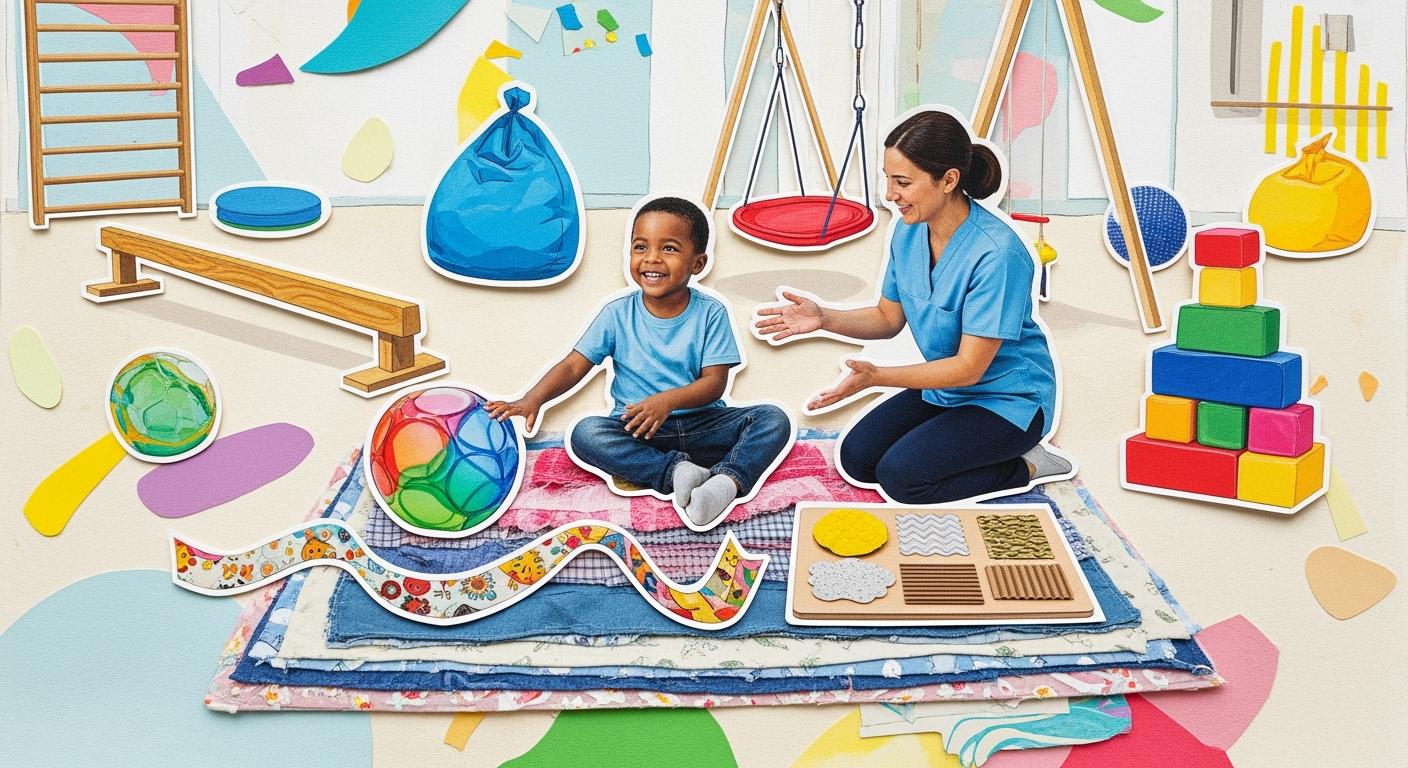
You want your child to feel safe and confident in their world. Sensory integration therapy is designed to support children with autism by improving their sensory integration, helping them manage sights, sounds, and touch more effectively. Many children with autism experience challenges with sensory integration and processing. Sensory integration therapy can enhance your child’s behavior, learning, and ability to interact with others. The table below highlights positive changes in sensory integration, motor skills, attention, and self-care.
Outcome Area | Improvement Observed |
|---|---|
Sensory Processing Abilities | Enhanced sensory integration skills |
Autism-Related Behaviors | Fewer repetitive behaviors |
Social Skills | Improved social interaction skills |
Communication Skills | Better language skills |
Self-Care Abilities | Improved self-care skills |
Motor Skills | Enhanced motor coordination |
Attention | Increased attention span |
Behavioral Control | Better behavioral control |
Participation in Play Activities | Greater involvement in play activities |
Achievement of Personal Goals | Improved achievement of personal goals |
Key Takeaways
Sensory integration therapy helps children with autism handle sensory input. This leads to better behavior and social skills. Therapy activities like swinging and climbing help motor skills. They also improve coordination. This makes daily tasks easier for children. Children learn to control their emotions better. This means fewer meltdowns and more calmness at home and school. Therapists work with families to set goals. They also track progress. This helps children reach their own milestones. Doing sensory activities at home can help therapy work better. It also supports your child's growth.
What Is Sensory Integration Therapy?
Sensory Integration Explained
Sometimes, your child may react a lot to sounds or lights. This is because the brain can have trouble sorting out sensory information. Sensory integration is how the brain understands what you see, hear, feel, taste, and smell. When this works well, your child can focus and play with less worry.
Children with autism often process sensory input in different ways. These differences show up in daily life. Your child might cover their ears when it is loud. They may like spinning or jumping a lot. The table below lists common sensory processing challenges:
Type of Sensory Processing Difference | Description | Examples |
|---|---|---|
Sensory Hypersensitivity | Over-responding to sensory input | Covering ears in loud places, not liking some clothes, feeling upset by bright lights |
Sensory Hyposensitivity | Under-responding to sensory input | Liking loud music, wanting tight hugs, not noticing pain |
Sensory Seeking | Looking for more sensory experiences | Spinning, jumping, touching things a lot |
Sensory Avoiding | Trying to avoid too much sensory input | Eating only certain foods, staying away from crowds, not wanting new things |
How Therapy Supports Children With Autism
Sensory integration therapy gives your child a safe place to practice with sensory input. Therapists use fun activities that fit your child’s needs. Your child might swing, climb, or play with toys that feel different. These activities help the brain learn new ways to handle sights, sounds, and touch.
Therapy has a plan with clear goals. You can expect your child to:
Feel less bothered by sensory input and stay calmer.
Pay better attention at school and during play.
Get stronger motor skills for things like dressing or writing.
Learn ways to deal with strong feelings.
This therapy also helps your child try new things and be more independent. As your child feels braver, you may see them join family and social activities more. Sensory integration therapy helps children with autism do better in daily life.
Benefits for Children With Autism

Improving Sensory Processing
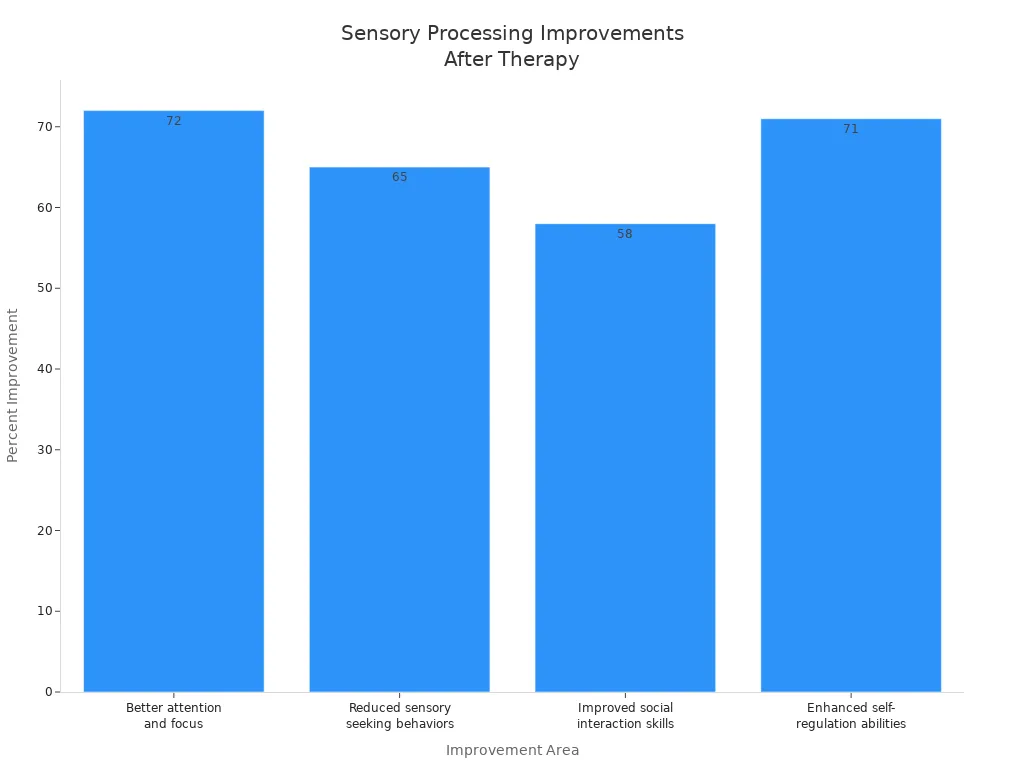
You might see your child react a lot to sounds or lights. Sensory integration therapy helps your child handle these things better. Research shows children with autism can focus more after therapy. They also get better at paying attention and calming themselves down. The table below shows how much kids can get better in different ways:
Improvement Area | |
|---|---|
Better attention and focus | 72% |
Reduced sensory seeking behaviors | 65% |
Improved social interaction skills | 58% |
Enhanced self-regulation abilities | 71% |
When your child handles sensory input better, you may see fewer meltdowns. There may be more calm times at home and school. Better sensory processing helps your child listen in class and join group activities. It also helps them feel okay in new places.
Enhancing Motor Skills and Coordination
Sensory integration therapy also helps with movement and balance. Many children with autism have trouble with these things. Studies show therapy helps kids plan movements and know where their body is. The table below shows what different studies found:
Study Type | Findings | Assessment Tools |
|---|---|---|
RCTs, Case Series | Improvements in motor proficiency, postural control, and dynamic balance | Movement Assessment Battery for Children (M-ABC-2), Pediatric balance scales |
Clinical Studies | Enhanced performance on standardized assessments | Notable gains in static and dynamic balance skills, decreased postural sway |
Systematic Review | Significant improvements in balance skills | Postural sway measures |
Meta-analysis | Large positive effects of balance-focused interventions | Not specified |
Multi-month Interventions | Significant reductions in postural sway | Not specified |
Therapy uses fun things like swinging, climbing, and jumping. These activities help your child get stronger and move better. This makes it easier to dress, write, and play sports. Good movement skills help your child feel sure of themselves every day.
Tip: When your child feels steady and strong, they can join more games and classroom tasks with friends.
Emotional Regulation and Reducing Overload
Many children with autism have big feelings and get overwhelmed. Sensory integration therapy helps your child learn to handle strong sensations. Studies say therapy helps kids feel calmer and act out less. Children learn ways to calm down and deal with changes around them.
Sensory integration therapy can lead to better emotional regulation.
It helps children navigate sensory challenges, promoting emotional stability.
Improvements in social skills and daily functioning are also noted.
Enhances overall quality of life for children with autism.
Promotes independence and reduces sensory processing difficulties.
Therapists use play to help your child get used to new sounds and textures. Over time, your child may have fewer meltdowns and more good days at home and school.
Boosting Social and Self-Care Skills
Sensory integration therapy helps your child feel braver and do more things alone. Some children find it hard to play with others or follow routines. After therapy, many kids make better eye contact and talk more. They also want to play with other children. Studies show kids get better at noticing others and joining in.
Participants showed significant improvements in social responsiveness.
Children had increased eye contact, verbal communication, and willingness to interact with peers.
Therapy reduced anxiety and improved peer engagement.
Therapists also help with things like dressing, brushing teeth, and eating. They use pictures, routines, and play to teach these steps. Your child learns each part and feels proud when they do it. This support helps your child do more by themselves at home and school.
Note: When your child can take care of themselves and connect with others, daily life becomes smoother for your whole family.
Inside a Sensory Integration Session
Play-Based Activities and Tools
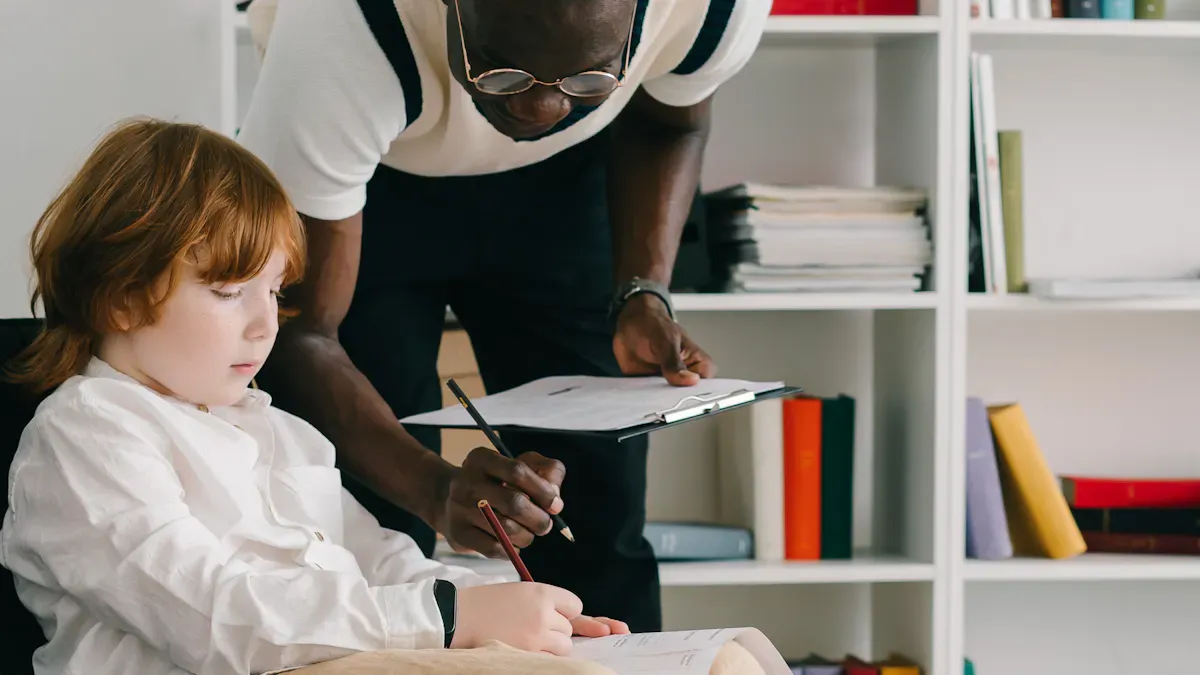
Sensory integration therapy uses play to help kids learn. Therapists pick activities that fit what your child needs. These activities make therapy fun and interesting. Here are some examples of play-based activities: Swinging helps with balance. Crashing into pillows helps your child know where their body is. Rolling or bouncing helps with moving better. Brushing routines give calming deep pressure. Sensory bins and art projects let kids touch different textures. Balance beams, trampolines, and water play are also used.
Therapists use sensory tools to help your child get better. The table below shows some tools and how they help:
Type of Sensory Tool | Examples | Benefits |
|---|---|---|
Proprioceptive | Yoga balls, trampolines | Improves balance, body control, emotional regulation |
Vestibular | Sensory swings | Provides emotional stability, engages balance system |
Tactile | Kinetic sand, slime | Enhances texture tolerance, fine motor skills |
Visual | Light projectors, sensory bottles | Aids attention, calming, visual processing |
Auditory | Music boxes, musical instruments | Promotes emotional expression, language development |
Oral | Chewies, Z-Vibe | Supports self-regulation, oral motor development |
Fidget | Fidget toys, chewelry | Helps focus, emotional regulation |
Swing | Platform swings, cocoon swings | Delivers vestibular input, promotes calmness |
What Parents Can Expect
Therapists work with you and your child during sessions. They focus on what your child does well and what they need help with. Therapists set goals and tell you how your child is doing. The table below explains how everyone talks and works together:
Aspect of Communication | Description |
|---|---|
Collaboration | Involves therapists, parents, and educators working together to set and monitor goals. |
Measurable Objectives | Goals are specific, measurable, attainable, relevant, and time-bound (SMART), allowing families to track progress. |
Regular Monitoring | Goals are revisited and adjusted based on the child's progress to ensure they remain relevant and achievable. |
You will get updates and help as your child learns new things. Therapists want you to ask questions and join in when you can.
Tracking Progress in Therapy
You will see how your child is doing by checking goals often. Therapists use tools to see how your child’s sensory and motor skills change.
Studies show that children who get Ayres Sensory Integration® (ASI) therapy reach more personal goals for sensory and motor skills. Therapists use Goal Attainment Scaling (GAS) to measure how much your child improves on their own goals.
You will notice your child reach new steps and feel more sure of themselves. Checking progress helps everyone stay on track and celebrate wins. Sensory integration therapy gives children with autism a way to do better, especially if they have sensory processing disorder.
Sensory Processing Disorder and Autism
Recognizing Sensory Challenges
Children with autism may react a lot to normal sights, sounds, or textures. Sensory processing disorder changes how the brain understands and reacts to things around us. Almost 90% to 95% of autistic people have sensory processing differences. More than 80% of kids with autism have sensory processing disorder. These problems can make everyday life harder for them.
There are many signs of sensory processing disorder. Some children cover their ears or do not want to wear certain clothes or eat some foods. Others look for strong feelings by rocking or jumping. Meltdowns happen often because of too much sensory input, not bad behavior. You might see a child cry, go quiet, or run away. Bright lights, loud noises, strong smells, and some clothes or foods can cause these reactions.
Signs of SPD in Children with Autism |
|---|
Very strong reactions to textures, sounds, or lights |
Trouble with changes in routine or switching tasks |
Clumsy movements or poor motor skills |
Looking for or avoiding certain sensory things |
Hard time calming down emotions |
Trouble paying attention or focusing |
You can tell sensory processing disorder apart from other problems by looking at what causes it. Autism changes how kids talk and play with others. Sensory processing disorder means kids react in unusual ways to things they see, hear, or feel. Many kids with autism have both autism and sensory processing disorder.
Feature | Autism Spectrum Disorder (ASD) | Sensory Processing Disorder (SPD) |
|---|---|---|
Definition | A condition that affects how kids talk, play, and act. | A condition where the brain has trouble understanding and reacting to things around us. |
Symptoms | Trouble making eye contact, making friends, or knowing social rules. | Too sensitive or not sensitive enough to things like sound or touch. |
Overlap | Many people with autism also have SPD. | SPD can happen alone or with other conditions like autism. |
How Therapy Addresses Sensory Processing Disorder
Sensory integration therapy helps kids handle sensory information better. Therapists use games and fun activities to teach kids how to deal with sights, sounds, and touch. The Wilbarger Protocol uses brushing to give deep pressure and calm the body. Special listening programs use music to help with hearing and self-control. Cognitive Behavioral Therapy teaches kids to notice what bothers them and find ways to cope.
Therapy can help lower sensory problems and help kids control their feelings. Kids learn how to handle too much sensory input and feel better in daily life. Sensory integration therapy gives kids with autism ways to do well at home and at school.
Sensory integration therapy gives you ways to help your child grow. It helps your child feel sure of themselves. Studies show kids get better at moving and doing things. They reach goals and need less help at home and with friends.
Study Source | Participants | Duration | Key Findings |
|---|---|---|---|
Egyptian Journal of Medical Human Genetics | 34 children (40-65 months) | 6 months | |
Farber researchers | 32 children (4-8 years) | 10 weeks | More goals reached and less help needed for self-care and social times |
You can make life easier by making calm spaces. Use sensory tools and work with experts. Many families see routines get easier and fewer meltdowns happen. Try therapy choices and ask for help. You help your child do well every day.
FAQ
What age is best to start sensory integration therapy?
You can start sensory integration therapy at any age. Starting early often helps the most. Many kids begin therapy when they are 2 to 8 years old. What matters most is if your child is ready and needs it.
How long does sensory integration therapy take to show results?
You might see small changes after a few weeks. Most kids need a few months to see bigger changes. How fast your child improves depends on their goals and how often they go to therapy.
Can you do sensory integration activities at home?
Yes! Therapists can show you easy things to do at home. You can use swings, playdough, or sensory bins. These activities help your child practice every day.
Does insurance cover sensory integration therapy?
Some insurance plans pay for therapy if a doctor says it is needed. You should ask your insurance company to be sure. Your therapist can help you with the forms.
How do you know if your child needs sensory integration therapy?
Watch for strong reactions to sounds, lights, or touch. If your child avoids or looks for certain feelings, therapy might help. Talk to your doctor or an occupational therapist for advice.
See Also
Exploring The Benefits Of Sensory Rooms For Autistic Kids
Essential Insights Into Sensory Processing For Autism Support
The Role Of Sensory Toys In Enhancing Motor Skills

