Hands-On STEM Tips Every Preschool Teacher Should Try
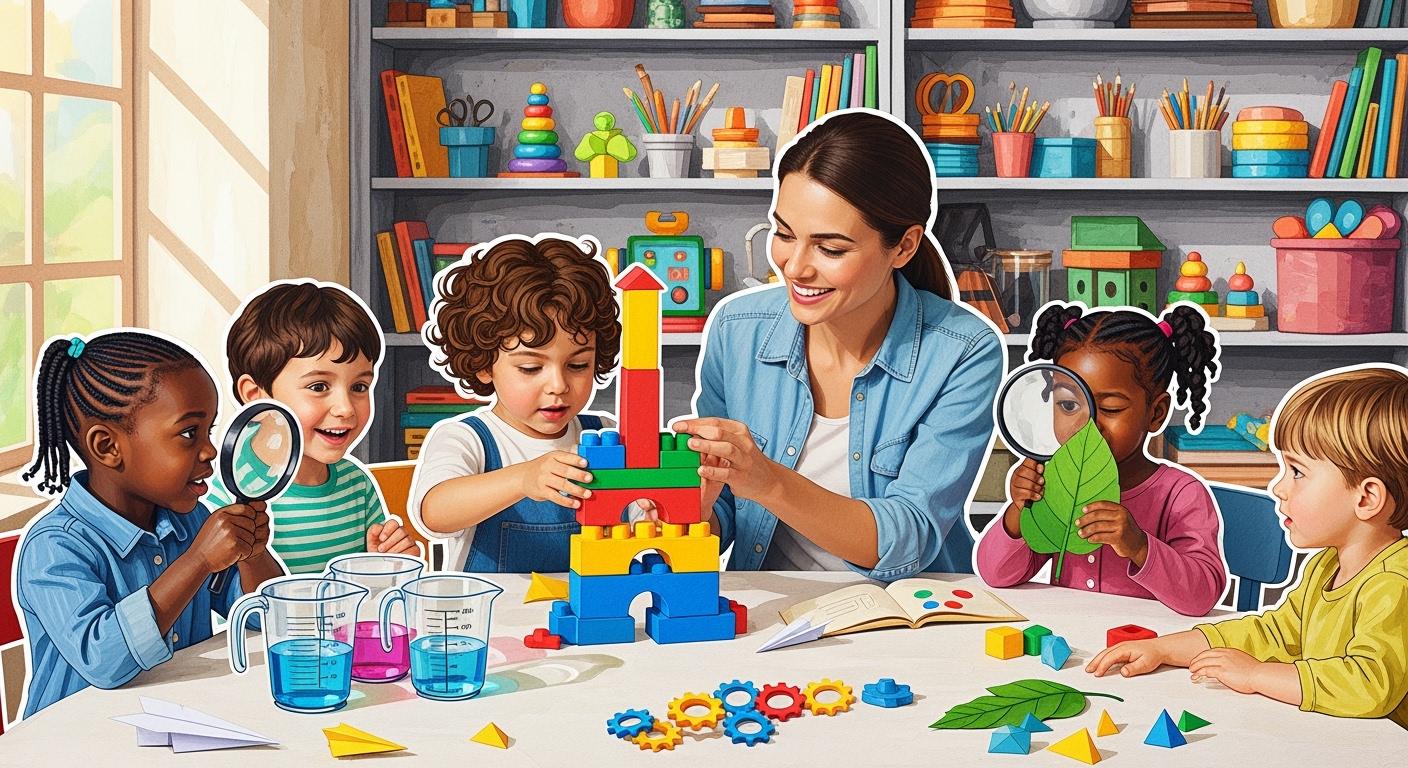
You notice kids get excited when you add preschool STEM to class. Hands-on activities make kids curious and help them work as a team. You can use a wooden human body puzzle or a Geometric Shape Set to begin. A Kids Microscope Kit or a Bug Catching Kit can also make learning fun. These tools turn simple times into learning adventures. Try Electronic Building Block Sets for creative play. STEM fits into daily routines, so learning feels easy and fun.
Key Takeaways
Add hands-on STEM activities to help kids get curious. These activities help kids want to explore new things.
Use things you find every day for STEM learning. This makes STEM easy and fun. You do not need costly tools.
Help kids work together and build social skills. Group projects and talking during STEM activities help with this.
Put math into daily routines so kids see why it matters. This helps kids feel sure about using math in life.
Change STEM activities so all kids can join in. Make sure every child can take part and do well.
Preschool STEM: Why It Matters
Curiosity and Play-Based Learning
You see kids light up when you introduce preschool STEM in your classroom. Young children love to explore and ask questions. When you bring in hands-on STEM activities, you spark their curiosity. You might watch them mix colors in water or build towers with blocks. These moments let kids experiment and discover new things. Play helps them learn without pressure. You guide them, but they lead the way with their ideas. Early childhood education grows stronger when you encourage this kind of playful discovery.
Tip: Ask open-ended questions like, "What do you think will happen next?" This keeps kids thinking and talking.
Building Skills for the Future
STEM gives children tools for lifelong learning. You help them develop problem-solving skills when you let them try, fail, and try again. Kids learn to count, measure, and compare. They start to notice patterns and make predictions. These skills build a strong foundation for future education. You prepare them for new challenges by letting them explore and experiment. STEM activities teach kids to think for themselves and find creative solutions.
Try simple experiments, like testing which objects sink or float.
Use everyday items, such as spoons or cups, for math and science play.
Teamwork and Social Growth
Preschool STEM brings kids together. You watch them share ideas and work as a team. They learn to listen, take turns, and solve problems together. These moments help them build friendships and understand others. STEM activities create a space where every child can join in. You support social growth by encouraging group projects and discussions. Education becomes more meaningful when kids learn from each other.
Skill | How STEM Helps |
|---|---|
Communication | Sharing discoveries |
Cooperation | Building together |
Empathy | Listening to peers |
You make a big impact when you use STEM in your classroom. Kids grow in confidence and learn skills that last a lifetime.
STEM Activities for Preschoolers

Simple Science Exploration
You can turn your classroom into a mini science lab with just a few supplies. Kids love to mix, pour, and watch what happens. Try filling clear cups with water and let children add drops of food coloring. They will see colors blend and make new shades. You can also set up a nature table. Collect leaves, rocks, or flowers from outside. Give kids magnifying glasses and let them look closely. They will notice patterns and textures they never saw before.
Another easy idea is a sink-or-float experiment. Fill a tub with water. Ask kids to guess if a spoon, block, or crayon will sink or float. Let them test each item and talk about what they see. These activities help children ask questions and make predictions. You guide them, but they lead the way with their curiosity.
Tip: Encourage kids to describe what they see, hear, or feel. This builds observation skills and language.
Technology Without Screens
You do not need tablets or computers to teach technology. You can use simple tools and materials to show how things work. Try using a flashlight to explore shadows. Shine the light on the wall and move objects in front of it. Kids will see how shapes change and grow. You can also use gears, pulleys, or wind-up toys. Let children take apart old gadgets (with supervision) to see what is inside.
Coding does not have to involve screens. You can play games that teach sequencing and logic. Lay out colored cards on the floor. Ask kids to follow a path by stepping on the cards in a certain order. You can also use picture cards to create simple patterns or routines. These activities build problem-solving skills and introduce basic technology ideas.
Everyday Engineering Challenges
You can spark creativity with building challenges. Give kids blocks, cups, or recycled boxes. Ask them to build a tower as tall as they can. See if they can make a bridge that holds a toy car. You can also use playdough and toothpicks to build shapes or houses. Kids will test ideas, fix mistakes, and try again.
Cooking is another way to explore engineering. Let children help mix ingredients and pour batter into molds. They will see how things change when you cook or freeze them. You can also set up a ramp with cardboard and test which objects roll the fastest. These challenges help kids learn about balance, structure, and design.
Note: Celebrate every attempt, not just the finished product. Kids learn a lot from trying and adjusting their ideas.
Fun Math in Daily Routines
You can weave math into every part of the day. Count blocks as you clean up. Sort buttons by color or size. Compare who has more crackers at snack time. These simple moments build strong math skills.
Research shows that when families and teachers both support math learning, children make bigger gains. You can send home ideas for counting at meals or comparing amounts at the table. Ask families to talk about shapes they see on walks or practice simple addition with snacks.
Here are some ways to add math to your routine:
Count steps as you walk to the playground.
Match socks by color or size.
Build shapes with sticks and clay.
Measure how much water fills different cups.
Example Activity | |
|---|---|
Counting and cardinality | Children count five objects using one-to-one correspondence and share how many objects there are. |
Operations and algebraic thinking | Children solve simple addition problems using concrete objects. |
Measurement and data | Children compare objects by length and weight. |
Geometry and spatial thinking | Children build shapes with sticks and clay balls. |
You make math fun and meaningful when you use real-life examples. Kids see that math is everywhere, not just in workbooks. This approach supports early childhood education and helps every child feel confident with numbers.
Try asking, "How many do we have now?" or "Which is longer?" during play and routines.
Incorporating STEM Learning in the Classroom
Gathering Materials and Setup
You can make your classroom a place where kids love to explore. Start by choosing safe and simple materials for each activity. Show children how to handle tools and supplies. Use clear words to set boundaries, like “Keep water in the tub” or “Only use scissors at the table.” If you don’t have every item, try using what you have. For example, swap rocks for buttons or use cardboard instead of wood. Celebrate when kids follow the rules and take care of materials.
Try these best practices:
Take photos of children’s projects and keep a science journal.
Create a “Wonder Wall” to display questions from your class.
Connect hands-on activities with storybooks to build on ideas.
You help kids see that stem education is part of everyday life. You also show them that their questions matter.
Managing Groups and Transitions
You know that moving from one activity to another can get tricky. Keep groups small so every child gets a turn. Give each child a simple job, like passing out supplies or cleaning up. Use songs or chants to signal when it’s time to switch tasks. If a child finishes early, offer a quiet puzzle or let them draw what they learned.
Here’s a quick table for smooth transitions:
Transition Tip | Example |
|---|---|
Use a timer | “When the bell rings, we clean up.” |
Give clear choices | “Do you want to build or sort today?” |
Celebrate teamwork | “Great job working together!” |
You keep the classroom calm and help kids stay focused on stem activities.
Encouraging Exploration and Questions
You play a big role in making kids feel curious. Ask open-ended questions like, “What do you notice?” or “Why do you think that happened?” Listen to their ideas and let them test out answers. Write their questions on the Wonder Wall so everyone can see them. Encourage kids to share discoveries with the group.
Tip: Connect stem activities to real life. If you read a book about bugs, let kids look for insects outside.
By incorporating stem learning into your daily routine, you build a creative space for education. Kids learn to ask questions, try new things, and work together. You help them grow as thinkers and problem solvers.
STEM and Child Development

Cognitive and Motor Skills
When you use STEM in class, kids get stronger minds and bodies. They stack blocks, pour water, and sort things with their hands. These actions help their fingers and eyes work together. You see them twist, turn, and balance with new materials. When you ask questions, you help them think deeply. Kids start to see patterns and fix problems. They learn to compare, measure, and guess what will happen next. These early skills help them learn more STEM later.
You can make easy challenges for kids. Ask them to build a bridge or sort things by size. Watch them try ideas and change their plans. You help, but let them do things alone. This makes them feel brave and independent. Kids learn best when they move, touch, and try things out.
Tip: Use things like spoons, cups, or buttons for hands-on fun. You do not need special tools to help kids learn.
Social-Emotional Benefits
STEM is not just about facts. It helps kids grow in feelings and friendships. When kids work together, they share things and ideas. They learn to listen and work as a team. Telling stories and playing games helps them talk better. You see kids win and lose during group play. They learn to handle tough times and keep going.
Kids show care when they help friends with a project.
Teamwork gets better as they solve problems together.
Talking skills grow when they share what they find.
Kids learn to control feelings when they face hard things and try again.
You make a safe place for kids to share feelings and help each other. STEM lets every child shine and make friends.
Benefit | How STEM Supports Growth |
|---|---|
Empathy | |
Communication | Talking about discoveries |
Resilience | Handling setbacks and trying again |
You see kids do well when STEM is part of every day. They get ready for school and life.
Adapting STEM for All Learners
Modifying for Different Abilities
Each child learns in their own way. You can change activities to help everyone join in. Use bigger blocks for small hands. Give tongs to kids who need help gripping. Show steps with pictures and clear directions. Some kids need more time or extra tries. Let them work with a buddy or in a small group. If a child struggles, break the task into smaller parts. This helps all kids feel proud and keeps things fun.
Tip: Watch how each child reacts. Change your plan if it does not work. Being flexible helps every student learn.
Troubleshooting Common Challenges
Things may not always go as you hope. Sometimes a child gets upset or the group stops paying attention. Set clear rules and routines to keep things running smoothly. If a child feels stressed, give them a quiet spot or another way to join. Use simple words and repeat instructions when needed. If a problem comes up, stop and talk about it. Ask questions to help kids think and solve problems. This helps them get better at fixing mistakes and builds confidence.
Here are some quick solutions:
Use timers to help kids wait and share.
Give choices so kids feel they have control.
Cheer for small successes to keep kids happy.
Inclusive and Culturally Responsive STEM
You can make your classroom friendly for everyone. Pick materials and stories that show many cultures and backgrounds. Ask families to share traditions or favorite science ideas from home. When you plan lessons, think about what matters to your students. Use examples from their lives to make learning real. When kids see their own experiences in class, they connect better. Showing respect for every culture makes your classroom stronger.
Inclusive Practice | Example |
|---|---|
Use diverse storybooks | Read about scientists from many cultures |
Invite family participation | Ask families to share a recipe or tradition |
Connect to real life | Explore local plants or weather patterns |
Remember: Each child brings something special to your class. When you value their ideas, everyone grows.
You can make every day in your classroom a new learning experience with hands-on STEM. These tips work for any teacher and any group of kids. Start with one small idea and watch your students grow. Try new activities, ask questions, and celebrate each discovery. You have the power to inspire young minds—give these STEM tips a try and see the difference!
Spark curiosity
Build teamwork
Make learning fun
Ready to start? Your classroom is the perfect place for STEM adventures!
FAQ
How do I start STEM if I have limited supplies?
You can use everyday items like cups, spoons, or cardboard. Kids love exploring with simple tools. Try collecting recycled materials or ask families to donate extras. Creativity matters more than fancy equipment.
What if my students lose interest quickly?
Switch activities often and keep them short. Let kids choose what to explore. Use songs or movement to grab attention. Celebrate small discoveries to keep excitement high.
Can I do STEM with mixed-age groups?
Yes! Pair older kids with younger ones for teamwork. Give each child a role that fits their skills. Adjust challenges so everyone can join in and feel successful.
How do I handle messes during STEM activities?
Set clear rules before you start. Use trays or mats to catch spills. Teach kids to help clean up. Messy play helps learning, so embrace it and make cleanup part of the fun.
What if I’m not confident teaching STEM?
Start small. Try one new activity each week. Ask questions and learn with your students. You don’t need to know all the answers. Curiosity is the best tool you have.
