Exploring Elementary School STEM Courses and Specializations in 2026
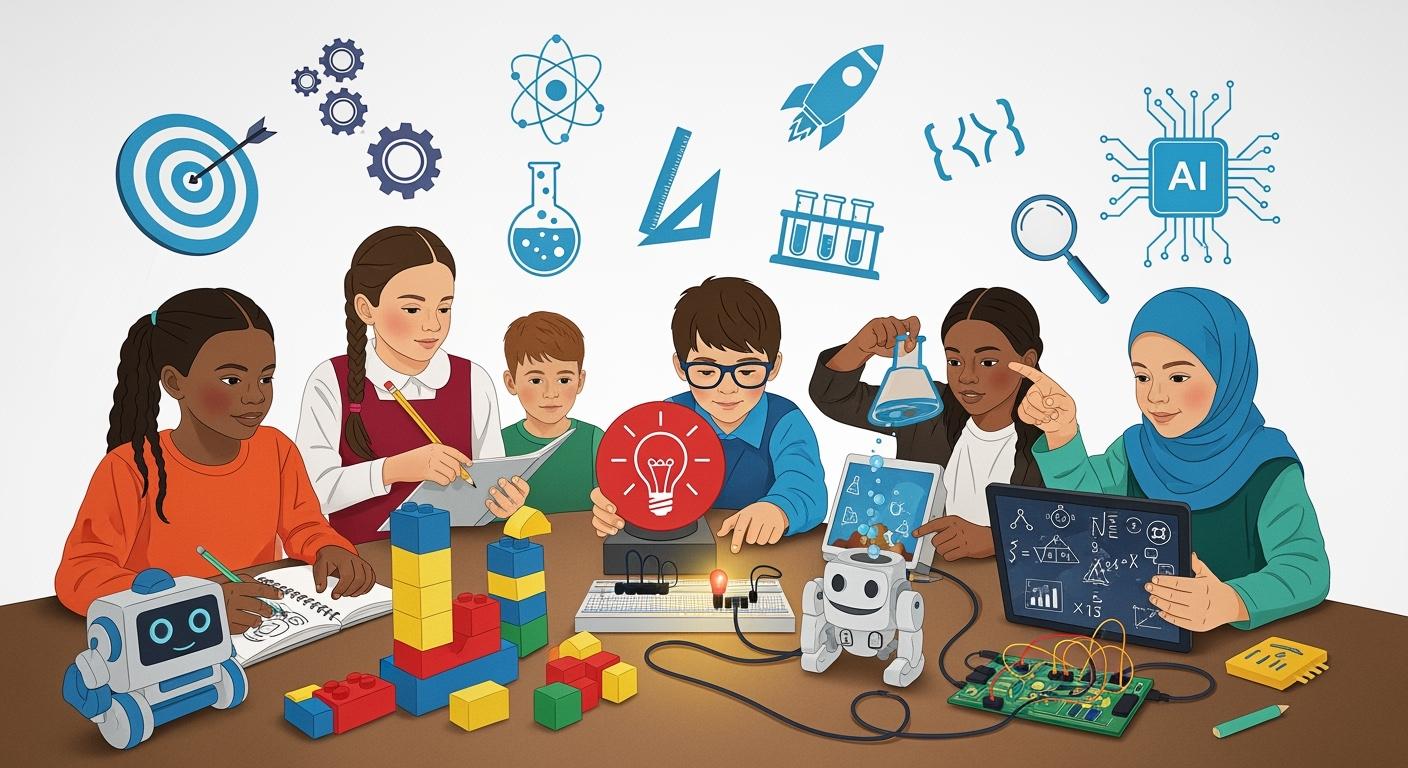
In 2026, you can find many STEM education courses designed for elementary students. Kids ages 8-10 will learn coding basics and explore AI concepts. They can participate in summer camps focused on Roblox, Minecraft, or Python.
Course Type | Age Group | Specialization/Track |
|---|---|---|
Elementary School Core Track | 8-10 | Coding basics and foundational skills |
AI | 8-10 | Introduction to AI and machine learning |
Summer Classes | 8-18 | Accelerated Core Track, Python Language |
Summer Camps | 8-18 | Roblox, Minecraft, Fortnite, AI camps |
Hands-on learning through these STEM education courses encourages you to think in new ways. You ask questions and experiment with ideas, learning from the outcomes. After-school clubs, labs, and camps provide opportunities to collaborate with others. You utilize teamwork and creativity to enhance your learning experience. This blog is here to help you choose the best courses for your needs.
Key Takeaways
STEM courses for kids ages 8-10 teach coding and AI. They use hands-on learning to help kids think better. These classes help kids solve problems in smart ways.
After-school and summer camps help kids work together. These camps also help kids be more creative. Students can learn STEM in a fun way. They get to try new things and enjoy learning.
Adding arts to STEM makes learning more fun. It helps students feel more connected to what they learn. Students can be creative and link ideas from different subjects.
Parents and teachers should help kids start STEM early. They can give kids hands-on projects to try. They should let kids explore and ask questions. This helps kids feel brave and curious.
Good STEM programs are very important for everyone. We should make sure all kids get the same chances. This helps every student learn skills for the future.
STEM Education Courses in Elementary Education
Science and Engineering Focus
You follow a step-by-step method in stem education courses. The curriculum helps you learn basic ideas through focused lessons. You first find problems and then think of ways to solve them. Next, you build models, test them, and make changes. At the end, you talk about your ideas and show your results. This engineering design process shows how science and engineering work together in real life.
You join steam lessons that let you ask questions and explore. You look for answers and try new things. You use hands-on activities to learn and experiment. These activities help you be creative and solve problems. You work in small groups, which helps you share and talk with others. You build soft skills that help you in the steam classroom and later in life.
You learn by doing in steam education. You make models, test ideas, and study what happens. You learn to think carefully and use what you know. Inquiry-based learning matches your curiosity. You study basic science ideas and use inquiry to build a strong base for future stem courses. You see how special topics like robotics, environmental science, and engineering design fit into your lessons.
Tip: When you join steam lessons, you feel more confident by trying new things and sharing your ideas. You learn to solve problems and work with others.
Technology and Math Integration
You see how technology and math work together in stem education courses. You use cool tools like AI, VR/AR, and robotics in the steam classroom. You join project-based steam lessons that mix math with technology. You create solutions that help in daily life. You explore and try to understand how things work.
You take part in learning with students from different places. You work with classmates from many backgrounds. You focus on fairness and inclusion in steam education. You use flexible credentials to show your skills in special areas. You build computational thinking, which is important for solving problems in stem subjects.
You notice good results from mixing technology and math in elementary school. Studies show that starting steam lessons early helps you do better, feel confident, and perform well. You build attitudes that support creativity and asking questions. You use robotics and programming to grow your skills. You join inquiry-based learning that helps you stay interested and understand more.
Theme | Description |
|---|---|
Learning Outcomes | You get better at achievement, self-efficacy, performance, attitudes, computational thinking, and creativity. |
Technology Empowerment | You use robotics and programming to build your skills. |
Inquiry-Based Learning | You use inquiry methods that help you stay engaged and understand steam education. |
Computational Thinking | You build main skills for solving problems in stem subjects. |
Creativity and Design | You connect creativity with arts and design thinking with engineering in steam lessons. |
You build your own view of the world through steam education. You become a steam thinker who explores, creates, and works with others. You use learning by doing to connect science, technology, engineering, and math. You see how special topics like coding, AI, and design thinking fit into your lessons. You gain skills that help you get ready for more steam education and steam classroom experiences.
Innovative STEM Programs

Robotics and Coding
You join robotics and coding programs to learn new skills. You use Scratch and Tynker to make games and stories. You build robots with LEGO Mindstorms and learn to code them. You explore artificial intelligence and see how it is used. A steam teacher helps you with each step. You ask questions and try out your ideas. You change your designs to make them better. You develop computational thinking to solve problems in new ways. You see how coding and robotics are part of steam subjects. You become more creative and think more deeply. You learn to use technology to solve real-world problems.
Program Type | Age Group | Description |
|---|---|---|
Elementary School Core Track | 8-10 | A basic coding program for young students. |
AI | 8-18 | Learn about artificial intelligence ideas. |
Scratch | 8-16 | Make stories, games, and animations with simple coding. |
Tynker | All ages | Lessons that move from block coding to text coding. |
LEGO Mindstorms | All ages | Build and code robots with LEGO bricks to solve problems. |
Tip: You get more confident by trying new things and learning from your steam teacher. You start to see yourself as a steam student.
After-School and Summer Camps
You join after-school and summer camps to learn about steam. You take part in design challenges and build models in GBH Design Squad: Camp Edition. You make apps with MIT App Inventor and design robots with VEX. You compete in BattleBots and learn about drones and rockets. You study circuits and make electronic projects. You mix art, science, and engineering in Tech & STEAM activities. A steam teacher helps you find new skills. You meet other steam students and share your ideas. You go to school more often and keep learning over the summer. You build strong social skills and grow your steam identity.
New for 2026:
GBH Design Squad: Camp Edition
MIT App Inventor
Advanced Robotics with VEX
Returning Favorites:
BattleBots
Drones & Rockets
Electricity
Tech & STEAM
Note: After-school and summer steam programs help you do better in school and feel better too.
In-School STEM Labs
You use steam labs at school to learn science, technology, engineering, and math. You work with lab kits, lesson plans, and guides from teachers. A steam teacher helps you learn and grow. You try out maker spaces, 3D printing, and robotics. You build basic steam skills with hands-on projects. You ask questions and make guesses about what will happen. You test your ideas and look at the results. You start to see yourself as a steam student who can do well. You learn digital skills for a world full of technology. You practice creative thinking and design. You see how early steam learning can help you get good jobs in the future.
Skill Developed | Description |
|---|---|
Critical Thinking | Helps you ask questions and make guesses. |
Problem-Solving Skills | Lets you test ideas and look at results. |
Positive STEM Identity | Early learning helps you see yourself as a steam learner. |
Digital and Technology Literacy | Gets you ready for a future with lots of technology. |
Creative Innovation and Design Thinking | Helps you adapt and keep learning new things. |
Callout: Early steam learning helps all students believe they can learn. Role models and different materials inspire you to try steam subjects.
STEAM Education and Interdisciplinary Learning
Integrating Arts with STEM
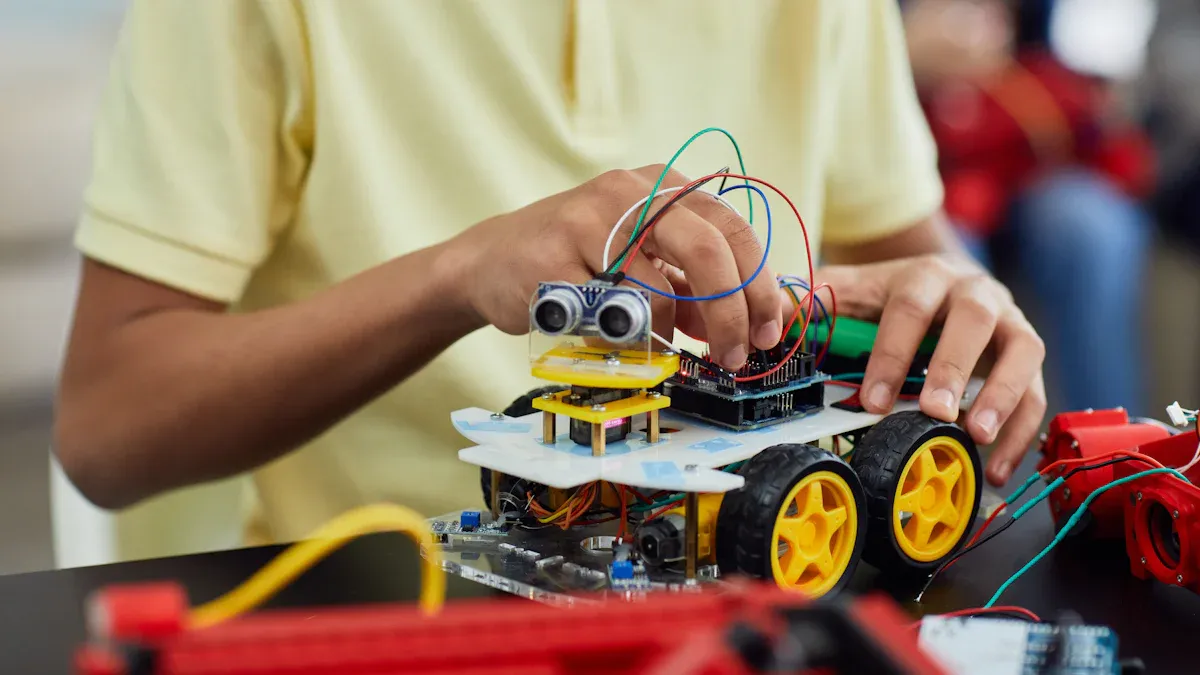
STEAM education mixes arts with science, technology, engineering, and math. You make digital art and animations. You learn graphic design and visual storytelling. You build models that are good for the environment. You use coding and game development to mix tech and creativity. Artists and scientists work together in STEAM classrooms. You create art inspired by science, like fractals or cell biology. You show science ideas with art. This makes learning more fun and personal.
You add art to coding and robotics lessons. You use music and dance to help understand math. You write stories about your projects to connect STEAM and literacy. STEAM education helps you think in new ways. You feel more excited and involved. You use inquiry to ask questions and explore ideas. You build creativity and problem-solving skills. These skills help you in all subjects.
Evidence | Description |
|---|---|
Yakman (2008) | Mixing art with STEAM helps young kids be creative and makes learning personal. |
Land (2013) | STEAM makes teachers and students more motivated to learn. |
Wynn & Harris (2012) | STEAM adds art to early learning, making it richer and more interesting. |
Yakman (2010) | Arts help students understand creativity and use imagination in science and engineering. |
Project-Based STEAM Activities
You join project-based STEAM activities to explore and try things. You work on hands-on projects that match what you like. You build models, make games, and design art. You use inquiry to find answers and solve problems. You write about your projects and share your ideas. This connects STEAM and literacy.
STEAM activities help you be creative and think critically. You learn to work with others and share your ideas. You see how STEAM subjects help you understand bigger issues. You feel confident and ready to try new things. STEAM education helps you adapt and grow.
Helps you solve problems creatively
Makes learning connect to real life
Builds teamwork and communication skills
Mixes science, technology, engineering, arts, and math
Shows real-world uses and connects to big ideas
Makes hard topics easier to understand
Lets you be creative instead of only right or wrong
Benefit | Description |
|---|---|
Cross-disciplinary emphasis | You learn to think in many ways by mixing science and arts. |
Holistic understanding | You learn concepts that connect to real life. |
Encouragement of creativity | You use both technical and artistic skills to learn more. |
Tip: You get more confident and build your STEAM identity by joining STEAM activities. You use inquiry to explore, create, and connect STEAM and literacy in every project.
Parent & Educator Guidance
Choosing STEM Courses
You help students pick the best steam courses. Experts say to start steam early and do it often. Kids can learn hard steam topics, so let them try new ideas. Give them hands-on projects and help them learn by doing. Guide them as they solve problems with technology. Be a steam mentor by asking questions and giving chances to try things.
Start steam activities with students when they are young.
Know that kids can handle tough steam topics.
Give hands-on learning and help when needed.
Help students use technology and solve problems.
Ask questions and let them explore on their own.
Supporting STEM at Home and School
You can help with steam learning at home and at school. Show students how to find problems and work out answers. This helps them be creative and think hard. Let them make their own steam projects about things they like. Make an 'Invention Museum' to show off their work.
Here are some things you can do:
Activity/Tool | Description |
|---|---|
Simple science experiments | Try growing crystals or making slime. |
Building models | Use LEGO bricks or magnetic tiles for structures. |
Online digital science classes | Join for interactive lessons. |
LEGO Mindstorms kits | Build and program robots. |
Crystal-growing kits | Explore chemistry with hands-on experiments. |
Microscopes | Discover the tiny world around you. |
You help students ask questions and feel like steam learners. Use steam tools to link learning at home and at school.
Access and Enrollment in 2026
In 2026, some students may have trouble joining steam programs. Many teachers do not have steam training, so they may not feel ready to teach it. Schools in poor areas may not have good tools or new technology. Money problems in schools can make it hard for some kids to get advanced steam classes.
To fix this, schools train teachers and work with companies. These steps give more steam tools and flexible class times. You can speak up for fair steam access in your area. Support programs that bring steam to all students, especially those who need it most. When everyone works together, students get the skills they need for the future.
You can choose from lots of STEM courses for kids. These include lab kits, robotics, coding, and STEAM activities. You learn by doing hands-on projects. Arts are mixed in to help you be creative. Picking courses that fit your interests helps you learn more. Activities link STEM to reading and writing. This makes learning feel important and useful.
Get your family involved early to make learning better.
Talk to teachers and experts to pick good programs.
Young students ask questions and explore. They build skills for later success.
FAQ
What is the difference between STEM and STEAM?
STEM stands for Science, Technology, Engineering, and Math. STEAM adds Art to these subjects. You use creativity and design in STEAM. This helps you learn in new ways and connect ideas.
How can you join a STEM program in 2026?
You can ask your teacher about school programs. You can also look for after-school clubs or summer camps. Many schools share information online. Your family can help you sign up.
Do you need special skills to start STEM courses?
You do not need special skills. You only need curiosity and a willingness to try. Teachers help you learn step by step. You can start with simple projects and build your skills.
How do STEM activities help you in the future?
STEM activities teach you to solve problems and think creatively. You learn teamwork and how to use technology. These skills help you in school and prepare you for many jobs.
Can you do STEM projects at home?
Yes! You can try simple experiments, build models, or use coding apps. Many websites offer free STEM activities. You can ask your family to join and make learning fun.
See Also
Innovative STEM Toys Preparing Future Generations for Success
Investigating Practical Applications of STEM Learning Toys
Choosing Engaging STEM Toys to Spark Children's Curiosity
