A Teacher’s Guide to Educational STEM Kits for Elementary Classrooms
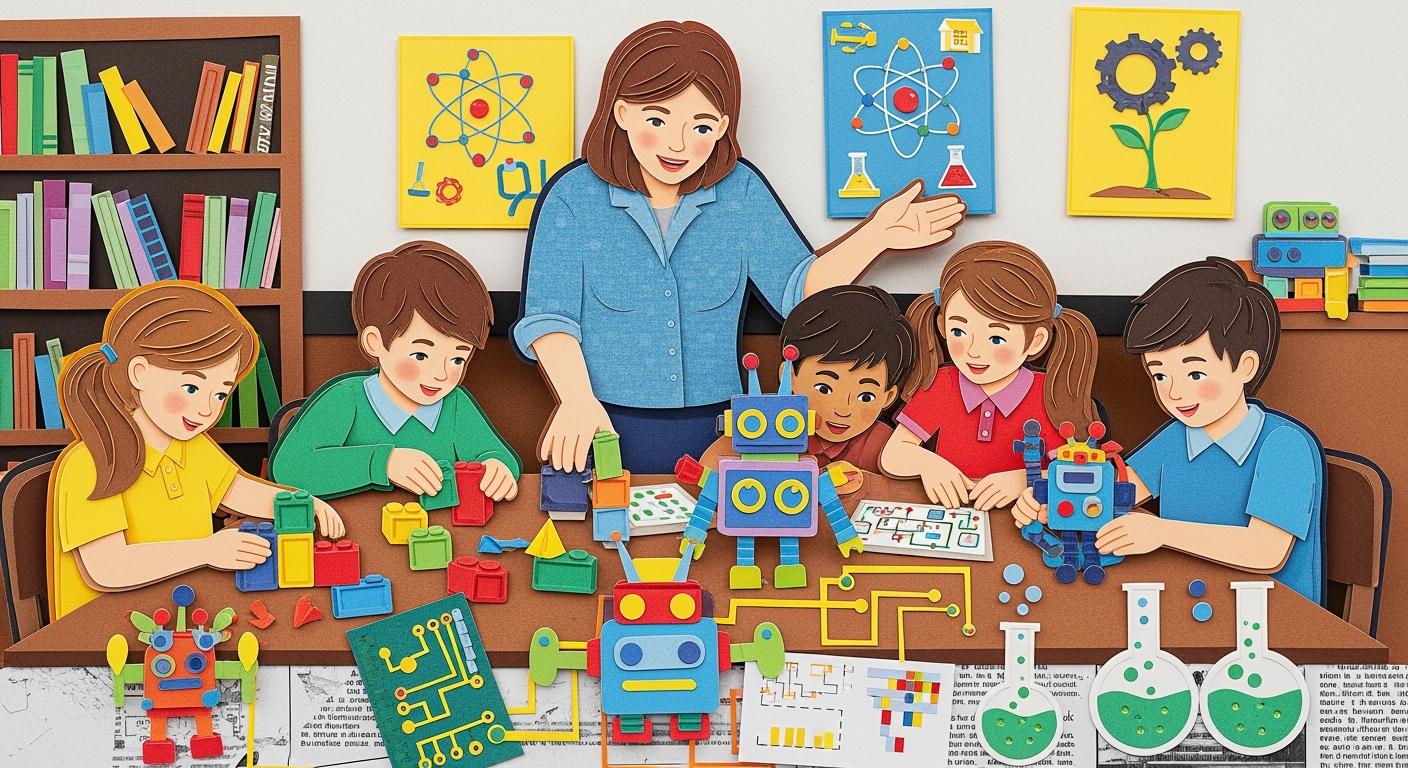
Educational stem kits change your stem classroom into a place for hands-on learning. You use tools and materials that help students ask questions. Students explore new ideas and solve problems. These kits help you start curiosity and creativity. They also make students more interested in stem subjects.
Studies show students remember more from interactive projects than from passive lessons.
Teachers often ask how to pick kits, handle materials, and help different learners. The table below shows main benefits:
Skill/Benefit | Description |
|---|---|
Critical Thinking Skills | Students ask questions and try out ideas. |
Hands-On Learning | Real-world links make stem ideas easier to understand. |
Cross-Disciplinary Learning | Kits connect stem to art and language arts. |
21st Century Skills | Students learn digital skills and how to adapt. |
Key Takeaways
Educational STEM kits help students learn by doing activities. They make science, technology, engineering, and math fun for everyone.
Pick STEM kits that match what you are supposed to learn. This helps you reach your learning goals and supports different ways of learning.
Use the tests and checks in STEM kits to see how students are doing. Change how you teach if students need more help.
Build teamwork in class by using STEM kits that let students work together. These kits help students solve problems as a group.
Use help from your community and partners to make STEM learning better. This gives students chances to learn about real-world things.
What Are Educational STEM Kits?

Educational stem kits are like special boxes for learning. Inside, you find tools and materials for hands-on activities. These kits help you teach science, technology, engineering, and math in a fun way. Experts say educational stem kits are complete teaching tools. They have lessons, activities, and materials to help students learn STEM ideas. These kits match standards like the Next Generation Science Standards (NGSS). They also support what you teach in class.
Core Components of STEM Kits
Most stem kits have some key parts in common. The table below shows what is usually inside:
Component | Description |
|---|---|
Curriculum compatibility | Matches national or local standards, helping with classroom lessons. |
Age-appropriate complexity | Gives students challenges that fit their grade level. |
Reusability and durability | Has strong, refillable materials that last and save money. |
Instructional support | Comes with teacher guides, worksheets, and digital tools for planning lessons. |
Scalability | Works for small groups or whole grades, so classes can share. |
You also get materials that make hard ideas easier to see and try. These help students build, test, and discover new things. You save time because the kits have ready-to-use tools and guides. Many kits have digital tools and ways to check how students are doing.
Value for Elementary Classrooms
STEM kits give your classroom many good things. They help students get curious and learn by doing. When students use hands-on materials, they can see and touch what they study. This helps them remember lessons better. Studies show that using stem kits early makes students like science, technology, engineering, and math more. Students feel more sure of themselves and excited about STEM when they work on projects with others. You help students learn to solve problems, work together, and think in new ways. These skills help them in school and later in life.
Key Features of Quality STEM Kits
When you pick a stem kit, look for the right features. Good kits help you teach important ideas. They also support every student in your class. The best kits save time and make learning fun.
Standards Alignment
Stem kits should match what students need to learn. Good kits follow national and local standards. This helps you keep your lessons on track. Experts say you should check for grade-level alignment and built-in assessments. These features help the kit fit your classroom goals. The table below shows what to look for:
Criteria | Description |
|---|---|
Clear grade-level alignment | Makes sure the kit fits each grade. |
Built-in assessments | Lets you check how students understand ideas. |
Hands-on & Inquiry-based | Helps students learn by doing and asking questions. |
Adaptability | Works for different grades and learning needs. |
Differentiation | Supports all learners, including those with special needs and English language learners. |
You can use these points to compare stem kits. This helps you pick the best kit for your students.
Adaptability for Diverse Learners
Every classroom has students with different needs. Good stem kits help you reach all learners. Many kits use universal design. This means they work for students with disabilities and those learning English. Universal design helps you make your classroom welcoming for everyone.
Some features that help diverse learners are:
Universal design for accessibility
Responsive design for different devices
Compliance with accessibility standards
Language support for English language learners
Offline functionality for students without internet
Some kits offer text-to-speech, visual aids, and language options. These features help every student join in stem activities. Using kits with these supports helps you create an inclusive classroom.
Hands-On STEM Activities
The best stem kits give students real experiences. Hands-on activities help students learn by doing. You see students build, test, and solve problems. This makes lessons more fun and easier to remember.
Students use trial and error to solve challenges.
Kits encourage critical thinking and creativity.
Activities include building models, coding, or safe experiments.
Students take charge of their learning and feel proud.
Kits match standards, so you can use them with your lessons.
When students use stem kits, they remember what they learn. They also enjoy learning and want to do more.
Built-In Assessments
You want to know how your students are doing. Good stem kits have built-in assessments. These tools help you check progress and change your teaching if needed.
Common assessment tools in stem kits include:
Surveys and questionnaires to measure interest and confidence
Observation checklists to track engagement and motivation
Standardized tests to see how well students understand stem concepts
These assessments give you feedback during and after activities. You can use this information to help students who need extra support or challenge those who are ready for more.
Tip: Use built-in assessments to celebrate student growth and plan your next lessons.
A good stem kit gives you everything you need. It has standards alignment, support for all learners, hands-on activities, and ways to measure progress. When you choose kits with these features, you help every student do well in stem.
Selecting Educational STEM Kits
Picking the right educational stem kits can really help your students learn. You should choose kits that fit your teaching goals and your students’ ages. Think about how your classroom works too. This section will show you how to find the best kits for your needs.
Assessing Classroom Needs
Before you pick a kit, find out what your students need most. There are a few ways to do this:
Check how interested your students are. Use surveys, class talks, and watch how active they are during hands-on work.
Look at test scores and project results before and after using stem kits. This shows if the kits help students learn more.
Give short quizzes on topics you teach with kits. See if students remember and use what they learned later.
These steps help you know what your students like and where they need help. This makes it easier to pick stem teaching resources that will help your classroom the most.
Evaluating Kit Content
Not every kit is the same. You should look at what each kit gives you. Ask yourself these questions:
Does the kit fit your grade and what you teach?
Are the instructions simple and clear?
Does the kit have all the materials you need?
Can you use the kit for more than one lesson?
Does the kit help different learning styles and abilities?
You want kits that help you teach important stem ideas and skills. Good stem teaching resources have teacher guides, student handouts, and digital tools. These things make it easier to plan lessons and help every student in your stem classroom.
Budget and Storage Considerations
Think about your budget and where you will keep the kits. Many educational stem kits cost between $50 and $300. Look for kits that are strong and can be used many times. Try not to buy kits you can only use once. This saves money and gives you more value.
Pick kits that last and can be used in different ways.
Work with other teachers or your school to buy kits together. This can save money.
Plan where you will store the kits. Make sure you have enough space in your stem classroom.
When you think about cost and storage, you make sure your stem teaching resources are easy to use and last longer.
Trusted STEM Education Resources
You should use stem education resources from brands and groups you trust. The table below lists some top names in stem education. These companies have good kits and tools for your stem classroom.
Brand/Organization | Product/Service | Description |
|---|---|---|
MyStemKits | STEM Curriculum | Developed by FCR-STEM, includes teacher guides, student handouts, and 3D models. |
Ozobot | Robotics Kits | Supports coding and programming for grades K–12. |
Scratch | Coding Platform | Visual coding language for ages 8–16. |
Sphero | Coding Robots | Provides design-and-build kits for grades PK–12. |
PlayShifu | Educational Toys | STEM toys for grades PK–5 with companion apps. |
RoboLink | Robotics Kits | Includes programmable drones for ages 8+. |
Birdbrain Technologies | Robot Kits | Focuses on gender diversity in STEM for grades K–12. |
GoldieBlox | STEM Toys | Engages girls in engineering and coding for ages 0–10. |
“My teachers and I saw students get excited right away. They did more meaningful work. Students could explore, solve problems, use new knowledge, and talk about their ideas.”
Natalie Reiser – Elementary Mathematics Instructional Staff Developer – Pinellas County Schools
You can also find helpful stem education resources online. Many websites have lesson plans, activity ideas, and tips for using stem kits. These resources help you keep up with new things in stem education. They make your stem classroom a place where every student can do well.
By following these steps, you can pick stem kits and stem teaching resources that fit your classroom goals, help your students, and make stem education fun and useful.
Implementing STEM Kits in the Classroom

Lesson Preparation
You get your stem classroom ready by planning lessons carefully. Pick kits that fit your curriculum and standards. Use teacher guides and resources from the kits to help plan. You guide students as they explore and ask questions. This helps students think like engineers and scientists. The table below shows ways to prepare lessons with stem kits:
Description | |
|---|---|
Hands-on Learning | Give students fun experiences like science projects. |
Alignment with Standards | Choose kits that match state and national standards. |
Teacher as Facilitator | Help students think deeply and explore stem ideas. |
You help students feel confident and creative with project-based learning.
Managing Materials and Groups
Organizing your stem classroom helps projects go well. Put students in groups with different skills. Give each student a clear job, like Materials Manager or Data Recorder. Use visual guides and hands-on items for students who learn by seeing and touching. Give audio instructions for students who learn by listening. Set routines for using equipment and make a quiet area for those who need it. These steps help all students join in stem activities.
Make groups that balance skills and needs.
Use easy instructions and visual aids.
Give roles to help teamwork.
Tip: Clear routines and jobs make your stem classroom better for everyone.
Sample STEM Activities
You can make your stem classroom exciting with real-world activities. Students can watch caterpillars and record their growth. They study ecosystems and use technology to take photos and track changes. Students design butterfly habitats and figure out what insects need to live. They measure growth and make graphs to show their results. During remote learning, teachers used stem kits to keep students busy with hands-on science. Workshops on electric parts and soldering also show how stem projects can spark interest.
Fostering Collaboration
Teamwork is important in the stem classroom. When students work together, they share ideas and solve problems as a group. Working together builds communication skills and shows students why teamwork matters. The table below shows how teamwork helps in stem:
Skill Developed | Description |
|---|---|
Problem-Solving | Students face challenges together and find creative answers. |
Communication | Teams share ideas and listen to each other. |
Teamwork | Students learn big breakthroughs happen when they work together. |
You make a classroom where every student can do well in stem.
Integrating STEM Kits with Curriculum
Curriculum Alignment
You can make your stem classroom better by matching kits to your lessons. First, check if the kit fits NGSS’s three parts. Look for kits that match NGSS, CCSS, and K-12 Physical Education Standards. These steps help you reach learning goals and get students ready for new topics. Try these ways to match your stem curriculum:
Pick kits that fit NGSS and other standards.
Make sure lessons meet your local goals.
Match your stem curriculum to state and national benchmarks.
When you use these ideas, students build skills that last after stem class.
Cross-Curricular Connections
You can link stem kits to other subjects to make learning more interesting. Many kits let you connect science, math, art, and social studies. Students can write stories about science or design cities with clean energy. They can measure shadows and draw city maps. The table below shows how stem kits help with cross-curricular learning:
Subject Area | Activity Description | Skills Reinforced |
|---|---|---|
Language Arts | Students write stories about science using a light table. | Critical thinking, narrative skills |
Social Studies | Design a city project with renewable energy. | Collaboration, social skills, environmental science |
Math | Calculate budgets and measure shadows in projects. | Math skills, creative thinking |
Art | Draw city maps and make 3D models from recycled items. | Creative thinking, artistic skills |
Real-World Skills | Show links in shopping, sports, and art. | Practical use of STEM skills |
You help students see how stem connects to real life and other subjects.
Assessing Student Progress
Tracking progress in stem class helps you see how students learn. Use tools like math exit tickets, data sheets, and pre and post-tests. These tools let you collect data fast and make groups for math stations. You can use running records for reading, interactive tools for live data, and instant feedback for students. The table below shows ways to check progress in your stem classroom:
Assessment Tool | Description |
|---|---|
Math Exit Tickets | Quick way to get data at lesson’s end, used to make math groups. |
Data Sheets | Use symbols to mark progress on targets, making grading faster. |
Pre and Post-Tests | Formal tests to track progress, good for seeing what students know before and after. |
Literably gives scores for accuracy, fluency, and comprehension.
Pear Deck lets you collect live data during lessons.
Socrative gives instant feedback and different question types.
You use these ways to help every student grow in stem class and make your stem curriculum stronger.
Troubleshooting and Tips
Overcoming Challenges
You might have problems when using stem kits. Teachers often have issues with money and fitting kits into lessons. They also worry about getting ready for new activities. You can fix these problems by using stem education resources and working with others. The table below lists common problems and ways to solve them:
Challenge | Solutions |
|---|---|
Lack of Resources and Funding | Look for grants, share with other schools, use cheap or DIY options. |
Curriculum Integration | Make projects that link subjects, go to workshops, work with other teachers. |
Teacher Preparation and Development | Join workshops, take online classes, find mentors. |
Addressing Misconceptions | Show different stem role models, use lessons for everyone, encourage all students. |
Engaging Students | Use fun lessons, connect to real life, add games. |
Adapting to Diverse Needs | Use flexible groups, different teaching, assistive technology. |
Tip: Stem education resources can help you find grants, lesson plans, and training. These resources make stem easier and help you solve problems.
Engaging All Learners
You want every student to like stem activities. Some students may feel nervous or not interested. You can use stem education resources to connect activities to what they enjoy. Try these ideas:
Link stem activities to things students already like, such as building with LEGOs or telling stories.
Use hands-on experiences, like cooking or making models, to spark curiosity.
Frame playtime with stem concepts to encourage exploration.
Focus on the learning journey, not just the final result. This builds resilience and a scientific mindset.
Ask questions about predictions, observations, and improvements to promote critical thinking.
Note: Using stem education resources that support sensory and creative activities helps students feel more confident and excited about stem.
Leveraging Community Resources
You can make stem education better by working with your community. Local businesses, museums, and stem groups often help schools. These partnerships give you technology and stem education resources. You can:
Partner with local groups to raise awareness about stem education.
Work with businesses to provide technology and tools for your classroom.
Join collaborations like STEM Pathways to build strong relationships and share stem education resources.
Create a steering committee to guide stem projects and connect schools with organizations.
Callout: Community partnerships help you give fair access to stem education and create learning experiences for everyone.
You can use stem education resources from your community and online to fix problems, help all students, and build a strong stem program in your classroom.
You can begin using educational stem kits by learning basic stem ideas. Pick kits that work for different ways students learn. Follow a clear curriculum and ask questions that make students think. Try new activities and change kits to fit your classroom. Trusted resources like STEMscopes, NISE, and Kid Spark Education can help you. Educational stem kits help students build skills they will need later. The table below shows benefits that last a long time:
Benefit | Description |
|---|---|
Enhanced Academic Performance | Students do better in school. |
Critical Thinking Skills | Students learn to solve problems. |
Social and Emotional Learning | Teamwork and collaboration improve. |
Confidence in STEM | Students feel ready for future stem challenges. |
FAQ
How do you use STEM kits with limited classroom time?
You can break activities into short steps. Use quick experiments or group tasks. Focus on one main idea per lesson. Prep materials ahead of time. This helps you fit STEM kits into your schedule.
Can you reuse STEM kits for different lessons?
Most STEM kits have durable parts. You can use them for many lessons. Try new activities with the same kit. Clean and store materials after each use. This saves money and keeps kits ready.
What if students struggle with STEM activities?
You can give extra help or use visual guides. Pair students for teamwork. Offer simple instructions. Encourage questions and let students try again. Use tips from the teacher guide in your kit.
Are STEM kits safe for young students?
STEM kits for elementary grades use safe materials. You should check age recommendations. Supervise students during activities. Follow safety instructions in the kit. Teach students how to use tools properly.
Where can you find more STEM teaching resources?
You can visit trusted websites like STEMscopes, NISE, and Kid Spark Education. Ask your school or local library for resources. Join teacher groups online. Look for free lesson plans and activity ideas.
See Also
Key Factors Educators Consider When Selecting Science Kits
Guidelines for Teachers to Choose Quality STEM Toys
Investigating Practical Applications of STEM Learning Toys
