How to Use Easy Hold Mirrors for Fun Learning Activities
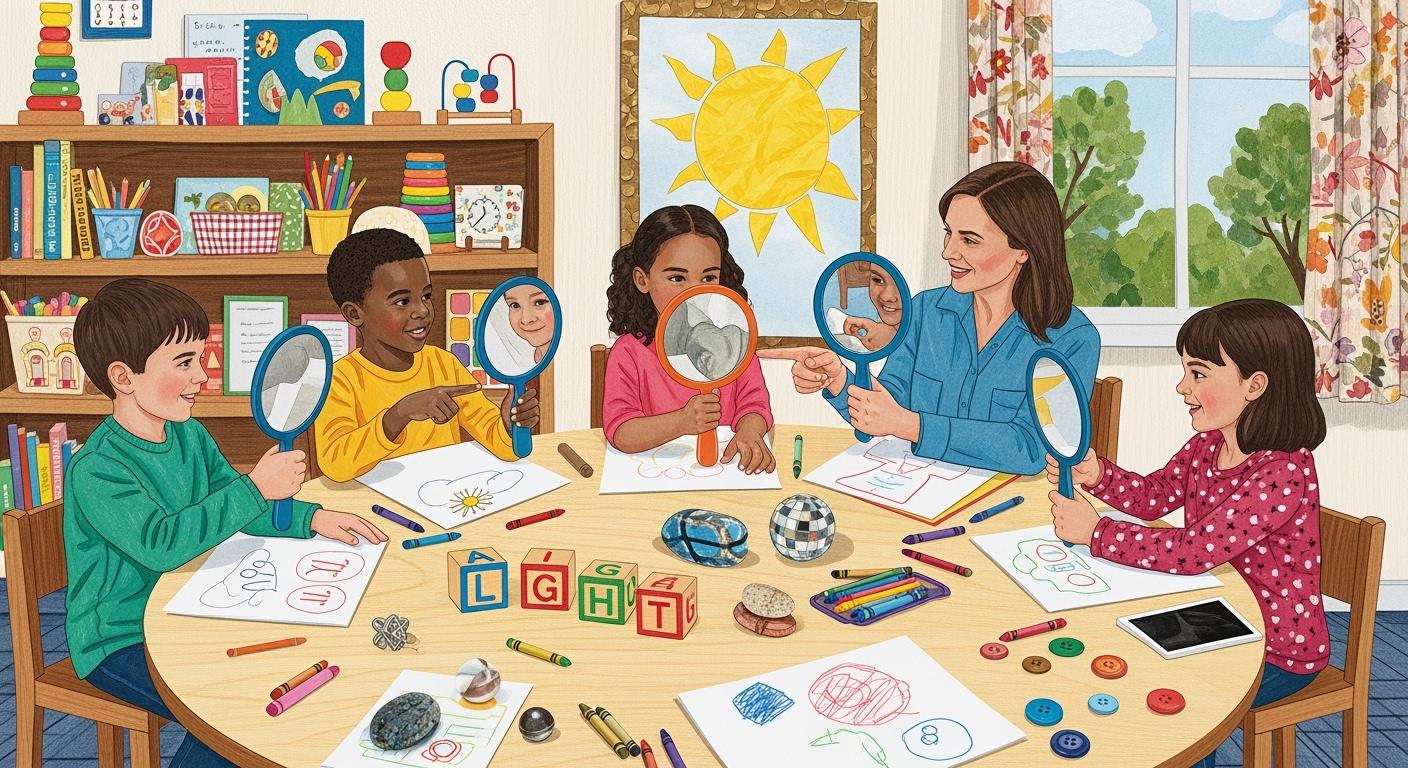
You can make any day fun and educational with an easy hold mirror. Kids can learn about feelings, see their reflections, and grow more confident by using their hands. Mirrors like the Easy Hold Colour panels and Acrylic Easy Hold Mirror give fun and learning activities. Kids get to learn in a fun and real way with mirrors.
Key Takeaways
Easy hold mirrors let kids learn about feelings. They help kids understand themselves better. Ask children to make faces and talk about emotions. This helps them learn more words for feelings.
Mirrors in activities help kids be creative. They also make kids curious. Play fun games with mirrors to explore light. Try activities with symmetry and movement. These games make learning more fun.
Safety is very important with mirrors. Pick mirrors that do not break easily. Watch children while they use mirrors. Keep mirrors clean for safe and fun learning.
Exploring Reflections with Children
Self-Awareness and Emotions
Easy hold mirrors can help kids learn about themselves. Kids look in the mirror and see their faces and how they move. This helps them learn about feelings and who they are. Teachers can ask kids to make faces and talk about what they see. Kids learn new words for feelings when they do this. This is important for learning how to get along with others.
Mirrors show kids how their faces look when they feel different things.
Kids match their feelings to what they see in the mirror.
This helps kids know their own feelings and see them in friends.
Playing with mirrors helps kids learn about who they are.
Special mirrors in class help all kids see themselves.
Studies show that using mirrors in class helps kids feel more sure of themselves. Kids learn to name their feelings and show them. Looking in mirrors also helps kids know how their bodies move and where they are.
Key Findings | Description |
|---|---|
Self-recognition independence | Kids can see themselves in mirrors even if they have not used one before. |
Influence of experience | Kids who have used mirrors before can better match what they see to real life. |
Sensory Play and Curiosity
Mirrors in class can make kids want to explore and try new things. Kids like to play with light, colors, and movement. Mirrors help kids learn about symmetry and how light works. When kids use mirrors, they learn by doing and can be creative.
Mirrors help kids learn about themselves and be creative.
Kids play with mirrors to learn about reflection and symmetry.
Playing with mirrors helps kids see how light works.
Fun mirror games make kids want to learn more.
Experts say that using mirrors in class helps kids learn by being curious. When teachers give kids mirrors, the classroom becomes a fun place to learn and explore.
Easy Hold Mirror Activities and STEM Ideas
Simple Mirror Activity for Preschoolers
You can start with a simple mirror activity for preschoolers. Give each child an easy hold mirror. Ask them to look at their face. Tell them to notice their eyes, nose, and mouth. Let them make silly faces and talk about what they see. This helps kids learn about themselves and new words.
Try using dry-erase markers on the mirrors. Kids can trace their faces or draw shapes. They can draw and erase as they want. This helps their hands get stronger. You can put small objects on the mirror too. Kids can arrange beads, buttons, or leaves. They will see how the reflection changes their designs. This activity mixes sensory play and creativity.
Tip: Let kids stack blocks or toys on the mirror. They will see the objects look doubled. This teaches symmetry and early math skills.
Mirror STEM Activities for Kids
Mirror stem activities give many ways to learn science. You can set up fun activities about reflection, light, and symmetry. Here are some favorite mirror stem activities from teachers:
Emotion Detective: Kids make faces in the mirror. This helps them know feelings and themselves.
Mirror Movement Challenge: One child moves and the other copies. This builds body awareness and space skills.
Symmetry Exploration: Kids find and touch matching facial features. This helps them learn symmetry and space.
Painting Using Loose Parts On Mirrors: Kids dip loose parts in paint and make designs. This helps creativity and hand skills.
Stacking Objects: Kids stack things on the mirror and see double. This helps early math learning.
Sensory Play on a Full Length Mirror: Kids play with small objects on the mirror. This helps their senses and curiosity.
Exploring Shaving Cream on a Mirror: Kids paint clouds or shapes with shaving cream. This mixes art and sensory play.
Making Art on a Mirror: Kids use dry-erase markers to draw. They can wipe off and try again. This helps them practice and experiment.
You can change mirror stem activities for different ages and needs. Homemade kaleidoscopes are good for ages 5 to 12. If kids have physical disabilities, change movements to fit them. For example, focus on upper body for wheelchair users. For kids with autism, use clear steps and pictures. Change the room to help with sensory needs.
Group | Adaptation Strategy |
|---|---|
Physical Disabilities | Change movements to fit what kids can do, like upper body moves. |
Autism | Use clear steps, pictures, and change the room for sensory needs. |
Other Additional Needs | Go slower, give extra help, or use special tools. |
Mirror stem activities help kids build strong hands and bodies. When kids reach or grab things on the mirror, they get better at moving. Seeing their reflection helps them learn about space and movement. This is important for thinking and growing.
Outdoor Exploration with Mirrors
Take mirrors outside for learning. Outdoor mirror stem activities help kids look at nature and see how light reflects. Give each child a mirror. Ask them to look at the sky, trees, or grass. They will see how reflections change with light and movement. This helps kids get better at watching and knowing space.
You can use mirrors to look at leaves, flowers, or rocks. Put these on the mirror. Kids will see patterns and details better. This makes them curious and want to explore. Looking at fall things on a mirror helps kids learn about seasons and nature.
Research shows outdoor mirror stem activities help the brain’s mirror neuron system. Kids watch others explore and then try it themselves. They learn new ways to observe. This helps them build maps in their mind for space and movement.
Note: Always watch kids during outdoor mirror stem activities. This keeps them safe and helps them learn more.
Mirror stem activities can make any place a science lab. Inside or outside, you can use mirrors to learn about light, make art, and build new skills. These activities make learning fun and help every child remember what they learn.
Safety and Best Practices
Choosing Safe Mirrors for Children
It is important to use child-safe mirrors in your classroom. These mirrors should not break easily. Shatterproof mirrors do not break into sharp pieces. This keeps kids safe when they touch the mirrors. The best child-safe mirrors use tempered or laminated glass. Some have a safety film to hold them together if they break. These features help keep everyone safe. Look at the table below to see different types of child-safe mirrors:
Type of Mirror | Safety Features |
|---|---|
Shatterproof Mirrors | Do not break into dangerous shards. |
Impact-Resistant Mirrors | Stay strong even if children bump them during hands-on play. |
Pick mirrors with rounded edges to stop cuts. Check mirrors often for chips or cracks.
Supervision and Setup Tips
Always watch kids when they use mirrors for learning. Put mirrors at the right height for each age. Make sure wall mirrors are secure and cannot fall. For little kids, use mirrors with soft frames or padding. Check hand-held mirrors for damage before using them. Make a cozy spot with a soft mat for mirror play. Change up the mirrors and activities to keep things fun and safe.
Tip: If a child only wants to use mirrors, give them new toys or let them play outside too.
Cleaning and Care
Keep mirrors clean so kids can see well and stay safe. Use a soft cloth and warm water to wipe them. For tough spots, use a gentle soap that is safe for polycarbonate. Wipe softly and do not use strong cleaners. Dry the mirrors so there are no streaks. Check mirrors often for damage and replace them if needed. Clean mirrors help kids enjoy mirror activities every day.
You can use mirrors to help kids learn in many ways. Mirrors help kids know their bodies, talk better, and get along with others. Look at the table below for more ways mirrors help:
Benefit | Description |
|---|---|
Body Awareness | Mirrors let kids watch how they move and use their hands. |
Language Development | Mirrors help kids copy mouth shapes to learn words. |
Emotional Recognition | Mirrors show kids their feelings and help them care about others. |
Social Skills | Mirrors let kids see faces and feel more sure of themselves. |
Cognitive Skills | Mirrors help kids learn about matching sides and what happens when they do things. |
Try these fun mirror ideas:
Make self-portraits or play dress-up with mirrors.
Use mirrors to see how light and angles work.
Play with nature things on mirrors for sensory fun.
Mirrors help all kids learn in fun and creative ways.
FAQ
How do you clean easy hold mirrors?
Use a soft cloth with warm water. Wipe gently. Dry with a clean towel. Avoid harsh cleaners to keep the mirror clear and safe.
Can you use easy hold mirrors for group activities?
Yes!
You can set up group games.
Kids can work together to explore reflections, make art, or solve STEM challenges.
What age is best for easy hold mirrors?
You can start using easy hold mirrors with toddlers. Preschoolers and early elementary students also benefit from mirror activities.
See Also
Innovative Ideas to Inspire Learning Using Sensory Mats
Ten Engaging Sensory Experiences for Young Learners
Fun Holiday Sensory Projects for Children in Class
