Understanding Sensory Integration Therapy in 2026
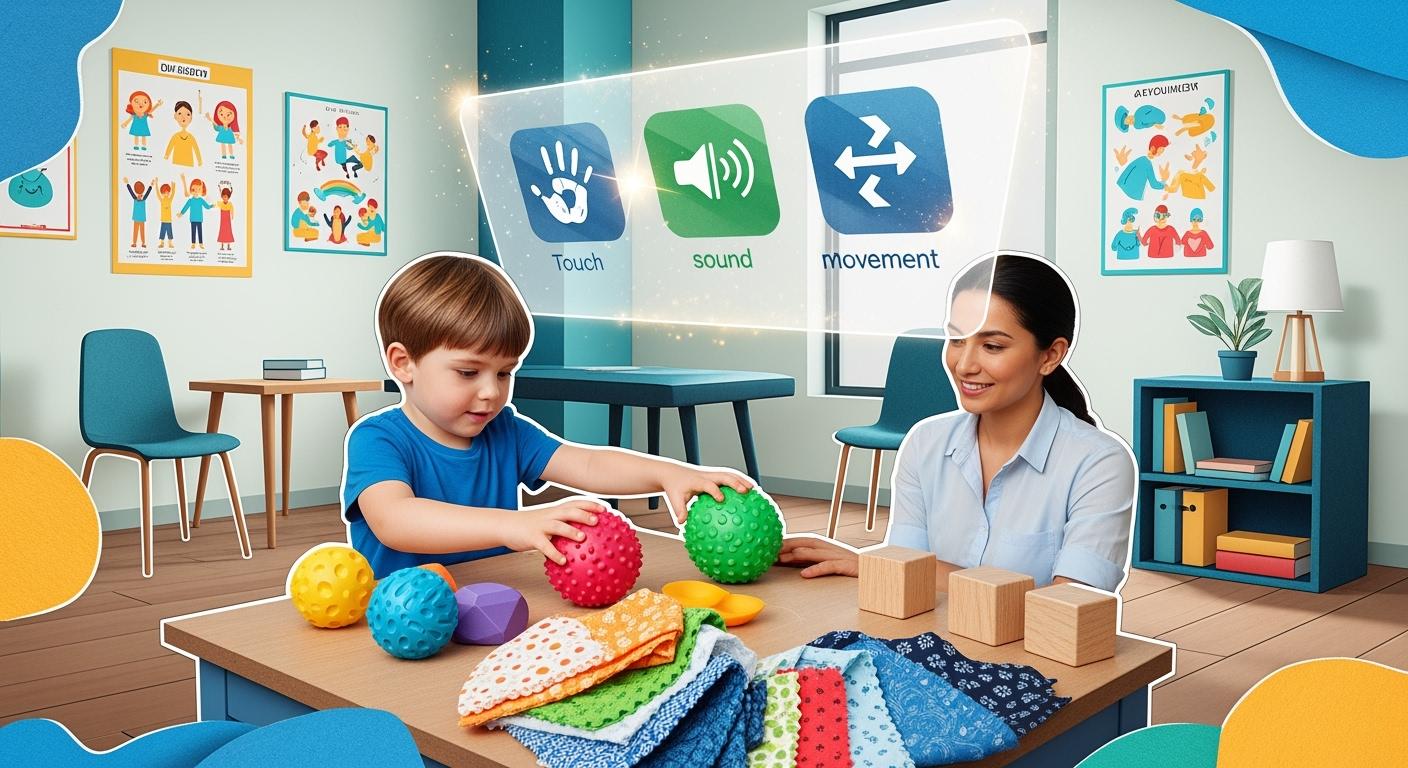
When you talk about sensory integration therapy, it's important to define sensory integration therapy as a treatment developed by A. Jean Ayres. This therapy assists your brain in sorting and understanding the sensations you feel, hear, or how you move. If you or your child experience difficulties with these senses, daily life can become challenging. Sensory integration therapy provides strategies and activities to address these issues, making it easier to learn and connect with others.
Key Takeaways
Sensory integration therapy helps your brain handle sensory information better. Therapists make special plans for each person's sensory needs. Fun activities in therapy help you learn and cope more easily. Family support is very important for therapy to work well. Children and adults can use sensory integration therapy to deal with sensory problems.
Define Sensory Integration Therapy
What Is Sensory Integration
You use your senses to learn about the world. Your brain gets messages from what you see, hear, touch, and how you move. Sensory integration is how your brain sorts these messages so you can react. If your brain does this well, you can pay attention, move, and talk to others easily. Sometimes, your brain has trouble with these messages. You might get upset by loud sounds, not like some things you touch, or feel off balance. These problems can make life harder.
Recent studies show sensory integration needs many brain parts to work together.
Changes in the sensory cortex and thalamus can change how you handle information.
If neural pathways do not work right, it is hard to understand and react to what you sense.
Sensory integration therapy gives you planned activities to help your brain learn new ways to deal with sensations.
How Is Sensory Integration Therapy Defined
Experts say sensory integration therapy helps you manage how your brain deals with sensory information. A. Jean Ayres started this idea by studying how the brain works with sensations. Now, therapists use this method to help people who have trouble with sensory processing.
Here is a table that shows how professionals explain sensory integration therapy in practice:
Aspect | Description |
|---|---|
Definition | Sensory integration therapy is a clinical way to check and treat people who have problems with sensory processing. |
Application | Occupational therapists use this method to make activities that help you control your sensory responses. |
Goals | The main goals are to help you process sensations better, control your reactions, learn daily skills, and join in everyday activities. |
Activities | Activities can be passive, like wearing weighted vests, or active, like jumping on trampolines. Therapists pick activities that fit your needs and help you become more independent. |
When you do sensory integration therapy, you work on many important things:
You learn to control your sensory responses, which helps you stay calm and pay attention.
You get better at moving and knowing where your body is by doing movement and muscle activities.
Deep pressure, like using weighted blankets, helps your nervous system feel steady.
Tactile stimulation, like touching different textures, helps you tell sensations apart.
Vestibular activities, like swinging or spinning, help your balance and movement skills.
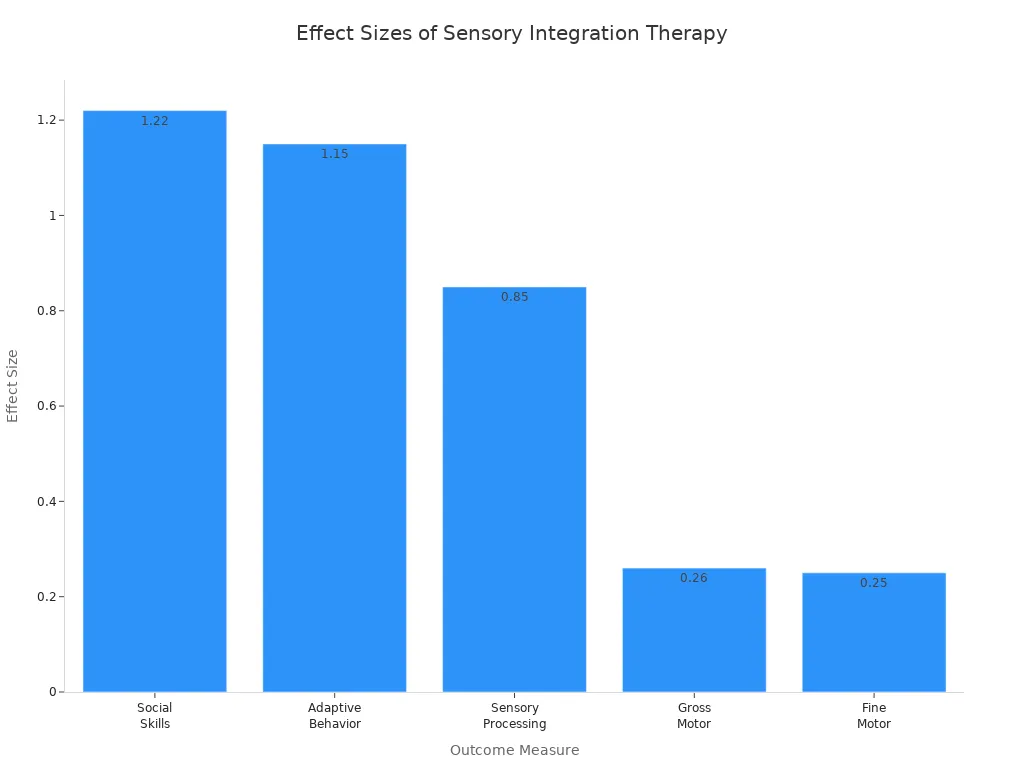
Therapists plan these activities to help your brain learn new ways to react. You practice new ways to handle sensations, which can make life easier. Studies show sensory integration therapy can help you get better at social skills, behavior, and sensory processing. The chart below shows how much people improve in different areas:
Tip: If you or your child has trouble with loud sounds, bright lights, or certain movements, sensory integration therapy may help you feel better and more sure of yourself.
Sensory Integration Theory
Sensory Processing Explained
You use your senses to learn about your world. Your brain gets messages from touch, movement, sight, sound, and gravity. This is called sensory integration. Your brain sorts these messages so you can learn and move. When your brain works well, you can plan how to move and handle new things. This helps you play, study, and talk with others.
Perception helps you understand what you see, hear, and feel. Your brain connects things around you to your thoughts and feelings. This helps you know objects, react to things, and remember details. Your feelings and past experiences can change how you react to what you sense.
Researchers found some main ideas in sensory integration theory. You can see these ideas in the table below:
Description | |
|---|---|
Dynamic Processes | Active integration of sensory and motor functions. |
Neuroplasticity | The brain can change and adapt through sensory integration activities. |
Therapeutic Relationships | Relationships help you improve sensory integration. |
Active Sensory-Motor Processes | Movement and interaction support your development. |
Assessment Strategies | Therapists use tests to find sensory challenges. |
Manualized Intervention | Treatment follows set principles for best results. |
Signs of Dysfunction
Sometimes, your brain has trouble sorting sensory messages. This is called sensory integration dysfunction. You might notice these signs in yourself or others:
Hypersensitivity: Loud noises, bright lights, strong smells, or some textures bother you.
Hyposensitivity: You want strong sensations, like bumping into things or moving a lot.
Trouble with food textures or avoiding some sounds.
Problems with balance or moving smoothly.
Fear of heights or being touched.
Trouble sleeping or handling changes in routine.
Feeling upset in busy places.
Adults may have trouble making choices or feeling okay in loud places.
Therapists look for these signs at home, school, or work. They check if these problems make life harder and rule out other reasons. If you see these signs, you may want to talk to a professional for help.
Sensory Integration Therapy Techniques

Core Methods
You do sensory integration therapy with fun and active methods. Therapists pick activities to help you sort sensory information. These activities help you do better in daily life. You might use deep pressure, like weighted blankets or massage, to feel calm. Squeezing stress balls and stretching resistance bands make your muscles stronger. These activities help your body get the right stimulation. This helps you process sensations in a better way.
Play is important for your senses. Swinging helps you balance and move. Crashing into pillows gives your body strong feedback. This helps you know where you are in space. Rolling and bouncing activities test your balance and coordination. Therapists choose activities that fit your needs. They make sure you feel safe and interested. You learn new ways to react to sensory input by playing.
Note: Play-based therapy helps you join in and try new things. You get more confident as you explore different sensations.
Example Activities
There are many activities to help you with sensation in therapy. Swinging and vestibular play help you balance and move. Deep pressure activities, like weighted vests or squeezing, help you feel calm. Tactile sensory play lets you touch things like sand, fabric, or water beads. You might walk through obstacle courses to build strength and coordination. These activities use play and stimulation to help you sort sensory information.
Therapy is different for kids and adults. Kids do fun challenges to learn how to react to sensations and do better. Adults use planned support to build coping skills and improve relationships. The table below shows how therapy activities change for different ages:
Age Group | Therapy Activities | Focus Areas |
|---|---|---|
Children | Fun, playful challenges to improve responses and tolerance | Learning to respond appropriately and function normally |
Adults | Structured support for coping skills and adaptive mechanisms | Interpersonal relationships and quality of life |
You get help from sensory integration therapy when you practice these activities. Play and stimulation help you handle sensory processing and get better at skills.
Who Benefits from Sensory Integration Therapy

Conditions Helped
You might wonder who gets the most help from sensory integration therapy. Many kids with sensory processing disorder find this therapy useful. If you have autism spectrum disorder, you may notice that sensory problems affect your life. Studies say that almost all autistic kids have sensory integration issues. Sensory integration therapy can help you deal with these problems. Kids with attention deficit hyperactivity disorder also get help, since they often struggle with sensory information.
Here is a table that lists some conditions treated with sensory integration therapy:
Condition | How Therapy Helps |
|---|---|
Autism Spectrum Disorder | Lowers sensory overload and helps with emotions |
Sensory Processing Disorder | Makes daily tasks and social times easier |
Attention Deficit Hyperactivity Disorder | Helps you focus better and control your senses |
You might see better motor skills, more control over feelings, and join in more social activities. Sensory integration therapy uses things like swinging or touching different textures to help you react better to what you sense. This therapy works on problems like trouble with sensory control, big feelings, and paying attention.
Note: If loud sounds, bright lights, or certain textures bother you, therapy can help you feel safer and more sure of yourself.
Beneficiaries
Kids get the most out of sensory integration therapy. Starting early helps your brain grow and lets you handle new things better. When you begin therapy as a kid, you can focus, pay attention, and get along with others more easily. You also learn to handle your feelings and daily habits.
Adults with sensory processing disorder can also get help, especially if they feel anxious or have trouble in busy places. Therapy can help you lower stress and feel better in daily life. If you notice sensory problems in yourself or your child, getting help soon can really help.
Tip: Sensory integration therapy is not only for kids. Adults with sensory problems can also see good changes in their lives.
Therapy Providers
Occupational Therapists
You start sensory integration therapy with occupational therapists. These experts help you with sensory problems and daily skills. Occupational therapists have special training and certificates. You can see their skills in the table below:
Qualification Type | Description |
|---|---|
Certification in Sensory Integration | Occupational therapists, physical therapists, and speech pathologists must earn this certification. |
Postgraduate Continuing Education | Therapists build skills through ongoing education and clinical experience. |
Supervision Requirement | Paraprofessionals work under the guidance of a qualified therapist. |
Occupational therapists often work with speech therapists and psychologists. This teamwork gives you a plan that fits your needs. The group helps you with sensory processing, social skills, and talking. You get help from different experts who share ideas.
Tip: Ask your therapy team about their training and how they work together. This helps you know more about your care and feel sure.
Family Collaboration
You are important for therapy to work well. Family support helps children with sensory problems. Therapists show you ways to help at home. You learn how to help your child with sensory issues and build their confidence.
You can help therapy at home by doing simple things:
Use soft lights to make it relaxing.
Add comfy seats like bean bags or pillows.
Pick calming colors to stop overload.
Give comfort items like fidgets and stuffed animals.
You might also make a calm corner with weighted blankets. Change the lights and use rugs or white noise to lower noise. Swings or therapy balls help your child stay calm. Keep spaces neat and keep tools close, like squeeze balls and fidget toys.
Note: When you join therapy and use these tips at home, you make a helpful place. You get closer to your child and help them do better.
Sensory integration therapy helps your brain handle sensory messages. This therapy helps kids pay attention and control feelings. It also helps with making friends and talking to others. You may focus better and feel less worried. To get the best help, work with trained therapists. Make your home a place that feels good for your senses.
New technology like AI and virtual reality will make therapy easier and fit you better in 2026.
Key takeaways:
Sensory integration therapy helps you with sensory problems.
Plans made just for you and family help make therapy work.
Experts say research and teamwork are important for good results.
FAQ
What is the main goal of sensory integration therapy?
You learn how your brain reacts to senses. The main goal is to help you stay calm. You also learn to focus better. Therapy helps you join in daily life.
Tip: Therapy teaches skills for school, home, and friends.
How long does sensory integration therapy take?
Therapy can last for months. Some people see changes fast. Your therapist makes a plan for you.
Progress depends on your goals
Sessions are usually once a week
Can adults benefit from sensory integration therapy?
Yes, adults can get help too. Therapy helps you handle stress. It helps you focus and feel better in busy places.
Note: Adults use therapy to learn coping skills and do better each day.
What activities will I do in therapy?
You might swing or jump. You may play with things that feel different. Therapists pick activities that fit you.
Activity Type | Example |
|---|---|
Movement | Swinging, jumping |
Tactile | Sand, fabric |
Do I need a referral to start therapy?
You often need a referral from your doctor or school. This helps you find the right therapist. You get checked before you start.
Tip: Ask your doctor about sensory integration therapy choices.
See Also
How the Sensory Solutions Team Impacts Lives in 2025
Your Comprehensive Resource for Autism Sensory Processing Integration
Evaluating OT Sensory Integration Therapy Against Alternative Methods
The Importance of Sensory Tents for Children’s Processing Needs
Understanding Sensory Interactive Tools for Special Education Support
