Fun Indoor Obstacle Course Activities Every Kid Will Love
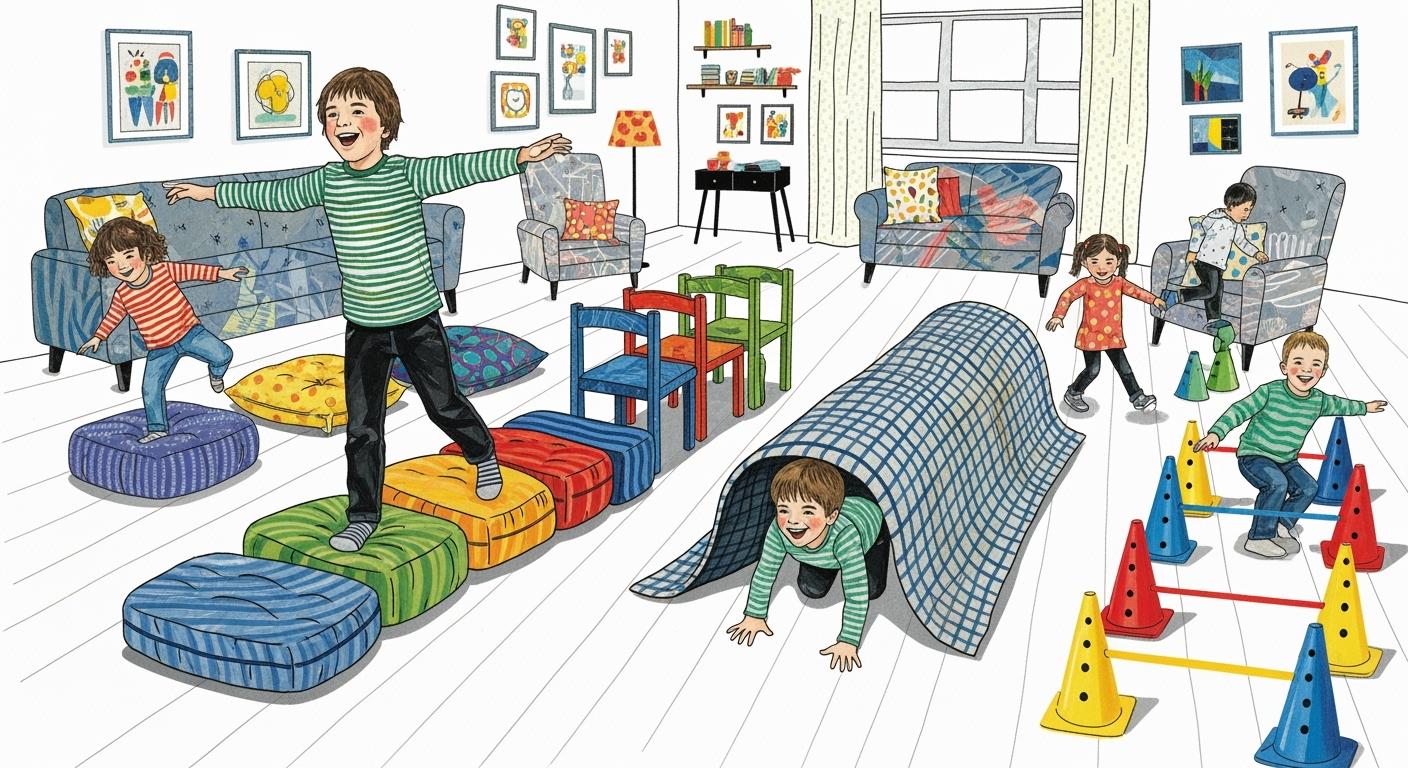
Get ready for some fun! You can turn your living room into a joy-filled adventure zone with creative indoor obstacle course ideas. Kids love a good challenge, and you don’t need an Indoor Obstacle Course Kit. Every day stuff works. Watch kids laugh, leap, and play in your own indoor obstacle course.
Key Takeaways
Indoor obstacle courses help kids get stronger and healthier. They make kids better at moving and using their bodies. Kids can build up their muscles and skills.
Making an obstacle course at home is simple and exciting. You can use things like pillows, blankets, and boxes. These items let you create cool and different challenges.
Safety is very important! Always watch kids while they play. Use soft things and remove hard objects from the area. This keeps everyone safe and makes playtime fun.
Benefits of Indoor Obstacle Courses for Kids
Physical Fitness and Strength
Do you want your kids to use up energy? Indoor obstacle courses help them move, jump, and play. Kids can hop over cushions or crawl through tunnels. These actions make their muscles and bones stronger. Their hearts get healthier, and they become more flexible. Each time they play, their balance and coordination get better. Here are some things that happen when kids move like this:
Helps motor skills and coordination
Improves fitness
Makes kids more flexible and strong
Builds endurance
Grows spatial awareness
Supports emotional health
Kids in elementary school love to be active. These activities give them a safe place to do that.
Tip: Add animal walks or dance moves to your course. This makes it even more fun and active!
Mental Skills and Planning
Obstacle courses do more than make kids tired. They also make kids think. When kids see a new course, they must plan what to do next. They solve problems as they go. Doing things in order, like jumping then crawling, helps them think ahead. Kids feel more confident when they figure out each step. They learn to follow directions and set goals while playing.
Activity Type | Skill Development | Routine Practice |
|---|---|---|
Confidence, healthy growth |
Family Fun and Bonding
You can make a rainy day special with your family. When you join in, you laugh and make memories together. Moving and playing brings everyone closer. Many parents say these times help them bond with their kids. You also show kids how to stay healthy. Family time gets better, and everyone feels happy.
Indoor Obstacle Course Ideas for Kids
Looking for indoor obstacle course ideas that will keep your kids moving and smiling? You can create a whole adventure with things you already have at home. Here are some of the best obstacle course ideas to try today.
Cushion Hop Path
Turn your living room into a jumping adventure! The cushion hop path is a classic that never gets old. Kids love leaping from one soft spot to another.
Materials:
Activity Type | Safety Tip | |
|---|---|---|
Pillows & Cushions | Climbing, Jumping | Stack them low and make sure they are stable. |
Blankets & Sheets | Crawling, Padding | Drape over sturdy furniture and check for stability. |
How to Set Up:
Lay out cushions or pillows in a line or zigzag pattern across the floor.
Space them out so your child has to jump from one to the next.
Mark a start and finish line.
Challenge Mode:
Try hopping on one foot or timing each run. You can even add a rule—no touching the floor!
Tip: Stack cushions for a bigger jump, but always check they won’t slip.
Tunnel Crawl
Kids love crawling through secret spaces. The tunnel crawl brings out their inner explorer and works for all ages.
Materials:
Play tunnel or large cardboard boxes
Blankets or sheets (for homemade tunnels)
How to Set Up:
Place the tunnel on a flat, non-slip surface.
If you use boxes, tape the edges and open both ends.
Drape blankets over chairs to make a tunnel if you don’t have boxes.
Keep tunnels away from sharp corners and heavy furniture.
Clean tunnels often.
Variation:
Add a flashlight for a “night mission” or hide a toy at the end for a treasure hunt.
Tape Balance Beam
The tape balance beam is simple but powerful. It helps kids focus and builds balance and body awareness.
Materials:
Painter’s tape or masking tape
How to Set Up:
Stick a long, straight line of tape on the floor.
Make it twisty or zigzag for extra fun.
How to Play:
Walk heel-to-toe along the tape. Try walking backward or balancing with arms out.
This activity helps kids develop gross motor skills, postural control, and spatial awareness.
Challenge Mode:
Carry a small object or balance with eyes closed for an extra test.
Hula Hoop Jump
Bring out the hula hoops for a jumping challenge. This activity gets kids’ hearts pumping and legs moving.
Materials:
Hula hoops (or draw circles with tape)
How to Set Up:
Lay hoops in a row or pattern on the floor.
Space them so your child can jump from one to the next.
How to Play:
Jump with both feet, one foot, or try hopping in and out of the hoops.
Variation:
Call out colors or numbers for each hoop to add a memory challenge.
Egg and Spoon Challenge
This classic game never fails to bring laughter. It’s perfect for testing balance and patience.
Materials:
Spoons (plastic or metal)
Eggs (plastic, real, or use coins for less mess)
How to Set Up:
Mark a start and finish line.
Give each child a spoon and an “egg.”
How to Play:
Balance the egg on the spoon and walk the path without dropping it.
For younger kids, use plastic eggs.
For older kids, add obstacles or require skipping.
Challenge Mode:
Try balancing coins or skipping instead of walking. Add turns or weave through cones for more fun.
Cardboard Box Crawl
Big cardboard boxes make the best tunnels and mazes. Kids can crawl, climb, or even build their own path.
Materials:
Large cardboard boxes
Tape (to secure edges)
How to Set Up:
Open both ends of the box.
Tape down any sharp edges.
Connect boxes for a longer crawl.
Benefits:
Crawling through boxes builds motor skills and spatial awareness.
Kids can step over or run around boxes for extra activity.
Connect several boxes to create a maze.
Variation:
Decorate the boxes as caves, castles, or spaceships for imaginative play.
Bucket Hurdles
Buckets make great hurdles for jumping or stepping over. This activity adds a new level of excitement to your indoor obstacle course ideas.
Materials:
Plastic buckets or laundry baskets
How to Set Up:
Place buckets in a line or zigzag pattern.
Make sure the area is clear and safe.
Safety Tips:
Avoid slippery floors.
Supervise kids at all times.
Adjust the height for your child’s age and ability.
How to Play:
Jump over each bucket or step carefully for a balance challenge.
Blanket Fort Crawl
Every kid loves a good fort. The blanket fort crawl combines creativity and movement.
Materials:
Blankets or sheets
Dining chairs or couches
Pillows for padding
How to Set Up:
Drape a blanket over two chairs to make a tunnel.
Add pillows inside for comfort.
Use foam guards or extra blankets on sharp edges.
Best Practices:
Place a non-slip rug under the fort.
Clear away hard toys or clutter.
Variation:
Add fairy lights or stuffed animals for a magical touch.
Animal Movement Circuit
Let your kids’ imaginations run wild! The animal movement circuit turns your living room into a jungle, pirate ship, or even outer space.
Key Activities | Props Needed | |
|---|---|---|
Jungle Safari | Crawl through “caves,” hop over “rivers,” swing on “vines” | Green/brown pillows, stuffed animals, blankets |
Pirate Treasure Hunt | Walk the “plank,” climb “mountains,” dig for treasure | Cardboard box “ship,” eye patch, toy coins |
Space Exploration | Moonwalk, crawl into a “rocket ship,” collect “moon rocks” | Tinfoil, star cutouts, glow stickers |
Super-Hero Training | Leap over “buildings,” crawl through “tunnels,” test strength | Cape, masks, superhero figures |
How to Play:
Pick a theme and act out each movement. For example, crawl like a bear, hop like a frog, or tiptoe like a cat.
Note: Animal action adventures and color code courses are also popular indoor obstacle course ideas. Assign a color to each movement or let kids invent their own animal actions for even more fun.
With these indoor obstacle course ideas, you can turn any day into an adventure. Mix and match activities to create a new path every time. Your kids will love the challenge, and you’ll love seeing them active and happy.
DIY Indoor Obstacle Course Activities
Using Everyday Items
You don’t need fancy equipment to build an awesome obstacle course. You probably have everything you need at home. Try these common items:
Furniture like chairs and couches
Yarn for a spiderweb
Blankets and pillows
Painter’s tape for a maze
You can get creative with what you have. Pad sharp edges with foam guards or thick blankets. Place non-slip rug pads under pillows and cushions so nothing slides. Always clear away hard toys and clutter before you start. Safety comes first!
Let your kids help pick out items. They’ll love designing their own course.
Adapting for Toddlers
If you want to create an indoor obstacle course for toddlers, focus on safety and fun. Here’s how you can adjust your setup:
Design Element | Description |
|---|---|
Prevents falls and keeps play safe | |
Rounded Edges | Reduces bumps and bruises |
Soft Materials | Adds extra cushioning for little ones |
You can use soft mats, plush toys, and low tunnels. Make sure everything feels sturdy and gentle.
Customizing for Space
Small or odd-shaped rooms work too! You can measure your space and design the course to fit. Try these strategies:
Design Strategy | Description |
|---|---|
Compact Solutions | Mini playgrounds fit even in small rooms |
Vertical Climbing | Use walls or doors for climbing activities |
Multi-Level Pods | Stack activities to save floor space |
Zoning | Create different play zones for more variety |
You can also create clear pathways and zone areas for different activities. This makes your indoor obstacle course for toddlers or older kids interactive and exciting, no matter the room size.
Setup and Safety Tips
Safe Materials
You want your kids to have fun and be safe. The best obstacle courses use soft, safe materials. These help protect kids from getting hurt. Look at this table for good choices:
Material Type | Safety Features | Additional Notes |
|---|---|---|
Non-toxic, no smell, strong, holds weight well | Smooth edges, safe for kids |
You can also use foam blocks, thick blankets, and pillows. These make soft places to land and help stop injuries. Always cover sharp corners with foam guards or extra blankets.
Tip: Put non-slip rug pads under cushions and pillows. This keeps them from moving when kids play hard.
Preparing Your Space
Check your room before you start. Pick up hard toys and clear away clutter. Make sure the area is soft and open for your course. Try these steps:
Put climbing parts or gym gear on a flat, clean floor.
Keep obstacles away from windows and heavy furniture.
Use gym mats or foam blocks under climbing and landing spots.
Try fun ideas like a yarn spiderweb or a tunnel made with chairs and blankets.
Use painter’s tape to make a maze or path on the floor.
These steps help kids play safely and have lots of fun.
Supervision and Encouragement
Stay nearby while your kids play. Watch them so you can help if needed. For younger kids, have one adult for every three children. Older kids can have one adult for every five.
Remember: Cheering for your kids makes the obstacle course even more exciting!
You can turn any room into a play zone. Indoor obstacle courses boost your child’s skills and confidence. Let your kids design their own course, work together, and stay active. Keep creativity and safety in mind. Ready to start? Grab some pillows and build your adventure today! 🚀
FAQ
How can I make an indoor obstacle course safe for my toddler?
Use soft items like pillows and blankets. Remove sharp objects. Stay close and watch your child. Safety comes first!
What if I have a small space?
You can use a hallway or even a bedroom. Try tape lines, mini tunnels, or animal walks. Small spaces work great for creative courses!
Can older kids enjoy these activities too?
Absolutely! Add challenges like timing each run or using one foot. Let older kids design their own course for extra fun. 🏆
See Also
Engaging Christmas Sensory Activities for School-Aged Children
Comprehensive Evaluations of Popular Gross Motor Toys for Kids
Comparing Sensory Floor Mats: Which One Is Ideal for Children?
