What Are the Best Sensory Fine Motor Activities for Every Age Group
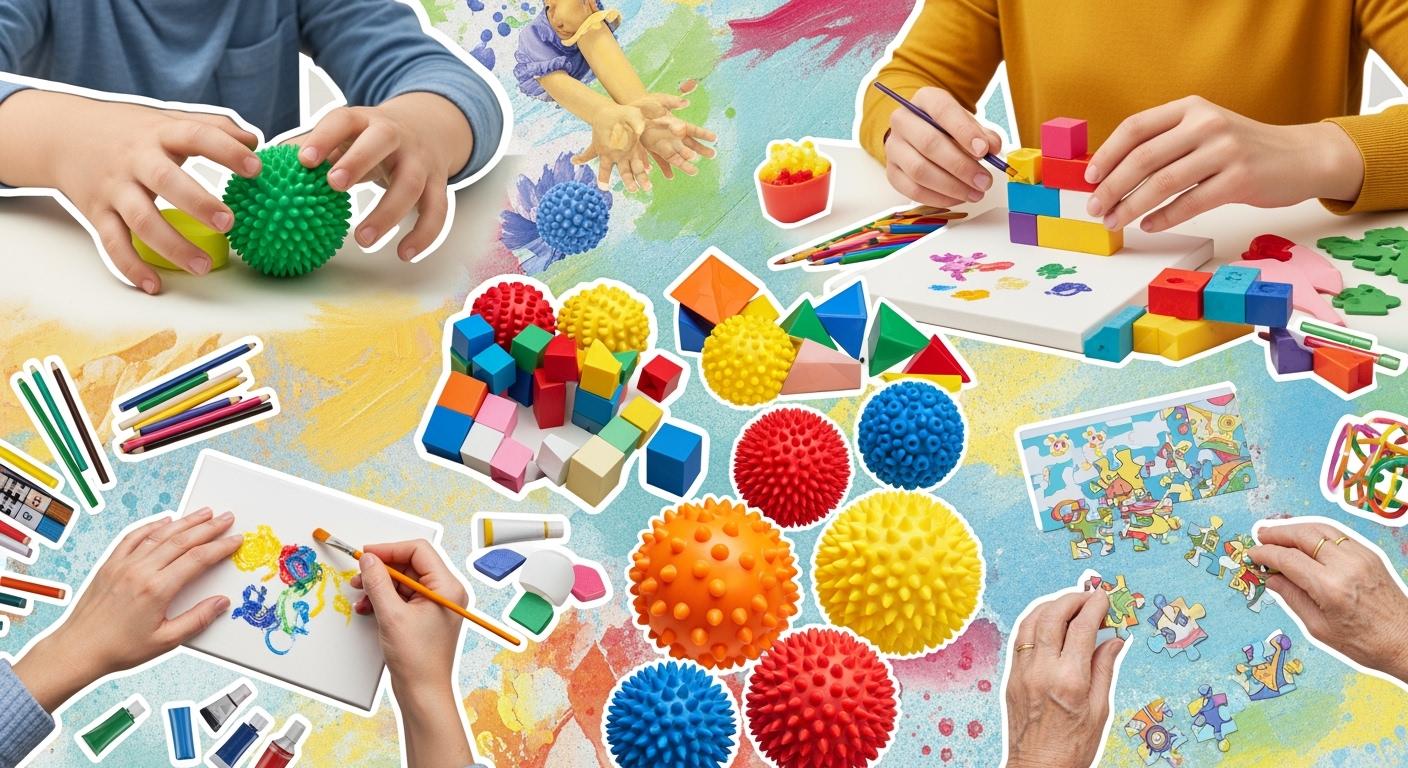
You want your child to hit big milestones, and you may wonder how to make learning fun. Incorporating sensory fine motor activities allows kids to use their hands to learn while having a great time. These fine motor activities help them explore and build new skills. Infants stack blocks or scribble with crayons, while toddlers enjoy stringing beads and looking at books. Preschoolers can copy shapes and cut along lines, and school-aged kids practice tying shoelaces and writing sentences. Check out the table below for fine motor activities resources tailored to each age group:
Age Group | Activities |
|---|---|
Infants (0-1 year) | Stacking blocks, scribbling, using a spoon with help |
Toddlers (1-3 years) | Flipping through books, stringing beads, cutting with scissors |
Preschoolers (3-5 years) | Cutting along lines, copying shapes, dressing with little help |
School-aged (5+ years) | Tying shoelaces, writing sentences, cursive writing |
Engaging in sensory fine motor activities helps kids grow and learn. You can incorporate these activities into your daily routine.
Key Takeaways
Add sensory fine motor activities to daily routines. These activities help kids build important skills. Kids can learn while having fun.
Infants can do tummy time and use textured mats. This helps their muscles get stronger. It also helps them move better.
Toddlers can play with playdough and sensory bins. These activities make their hands stronger. They also help them move their hands well.
Preschoolers can do crafts and building activities. This helps them be creative. It also improves their fine motor skills.
School-aged kids can ride bikes and draw pictures. These activities help them move better. They also get ready for school tasks.
Why Sensory Fine Motor Activities Matter
Sensory Play and Fine Motor Skills
Kids often like to squish playdough or pour water. They also enjoy flipping through books with bumpy pages. These activities are not just for fun. They help kids build fine motor skills and improve sensory development. When kids pinch clay or pour sand, they use small hand muscles. Using tweezers to pick up tiny things also helps. These actions make their hands and fingers stronger. Strong hands are needed for writing and tying shoelaces.
Sensory play lets kids feel different textures. They learn how hard to press and how to move their hands. Activities like finger painting or squeezing a sensory bag help with hand-eye coordination. They also make fingers stronger. These activities give the brain lots of new things to learn. Jean Ayres, an occupational therapist, said that touch and movement help the brain learn. Each time kids try something new, their brains change and grow.
You can try these activities:
Fill containers with sand or water
Scoop and pour kinetic sand
Explore sensory books with bumpy pages
Play with mess-free sensory bags
All these activities help kids learn and grow. They make fine motor skills better in a fun way.
Development Through Play
You may wonder why play is so important. Play lets kids practice new skills in a calm place. It helps them feel less worried and think in creative ways. Play also helps with language skills. Kids who play with blocks do better on language tests. Play teaches kids to care about others and work together.
Here is how play helps kids at every age:
Benefit of Play | Age Group | Study Reference |
|---|---|---|
Reduces anxiety | Animals and children | Siviy's study on play reducing anxiety |
Boosts creative thinking | Preschool children | 1973 study on creative uses for objects |
Improves language skills | Toddlers | 2007 study on block play and language development |
Teaches empathy | Young children | Collaborative play scenarios |
Promotes social skills | Children in poverty | 1997 study on social adjustment |
When you let kids do sensory play, you help them learn and grow. You give them skills they need for school and life.
Sensory Fine Motor Activities for Infants
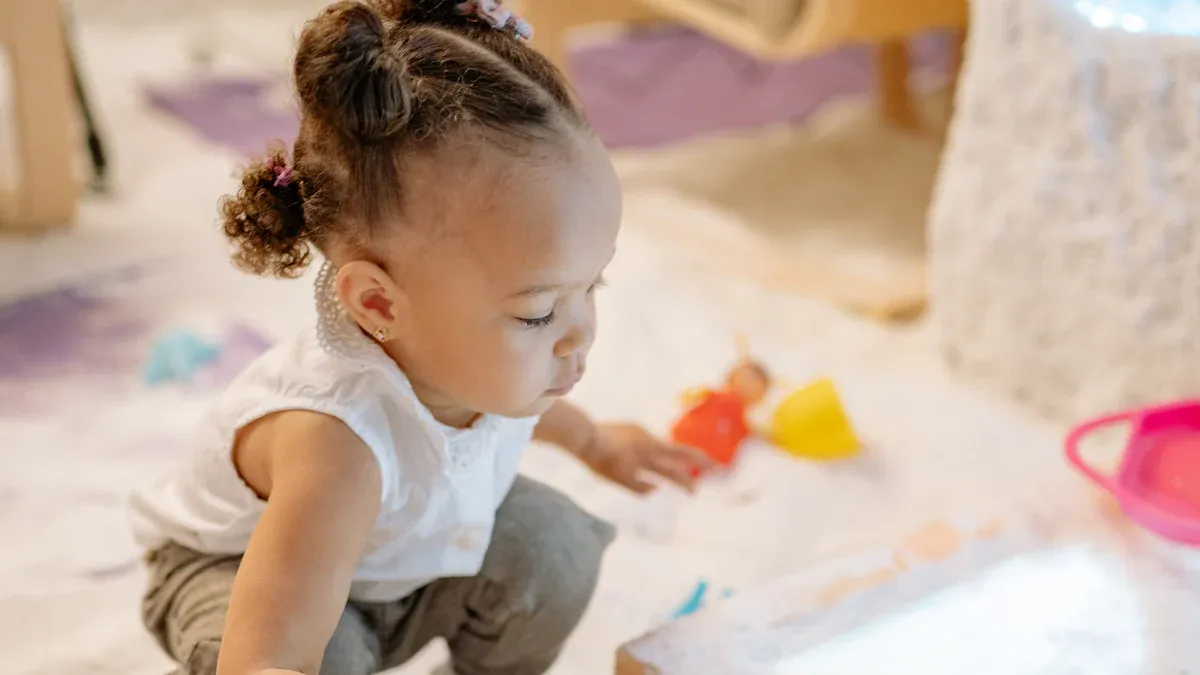
When you think about infant milestones, you might see your baby reaching or grabbing. These actions are more than cute. They show growing fine motor skills. You can help your baby learn with simple and fun routines. Here are some of the best activities for fine motor skills development in infants.
Tummy Time and Textured Mats
Tummy time is important for babies. It helps them build neck, shoulder, and arm strength. These muscles are needed for fine motor skills development. Babies push up, reach, and move their fingers. You can use textured mats to make tummy time more fun. These mats have bumps and soft spots. They make your baby want to touch and explore.
Tummy time makes muscles stronger and helps with coordination. Both are important for fine motor skills.
Textured mats give your baby new feelings. They help your baby learn about touch.
Babies like to go barefoot during tummy time. This gives extra sensory feedback through their feet. It helps motor skill growth.
You can add textured toys to tummy time. Your baby will try to grab and move them. This helps with fine motor skills development.
Tip: Start with short tummy time sessions. Make them longer as your baby gets stronger. Put toys just out of reach to help your baby reach and grab.
Grasping Toys and Sensory Bags
Babies like to grab and hold things. Grasping toys and sensory bags are great for this stage. These activities let your baby open and close their hands. They can squeeze and shake toys. Sensory bags are sealed bags filled with safe things like gel or beads. Your baby can squish and poke the bag. They feel different textures without any mess.
Here are some good activities for infants, as suggested by pediatric occupational therapists:
Activity Type | Description |
|---|---|
Texture Exploration | Collect items with different textures for your baby to touch. This helps with tactile sensitivities. |
Heavy Work Play | Let your baby push or pull soft objects. This gives deep pressure and helps body awareness. |
Everyday Fine Motor Activities | Stirring, pouring, and picking up small snacks help fine motor skills. |
Drawing and Pre-Writing | Let your baby scribble with safe crayons. This builds hand strength and control. |
Safety is very important when you use new toys. Here are some rules to follow:
Safety Guidelines for Sensory Toys | Description |
|---|---|
Free from small parts | Make sure toys do not have small pieces that could be choking hazards. |
Non-toxic materials | Pick toys made from safe, non-toxic materials. |
Check for allergens | Stay away from toys with things that could cause allergies. |
Note: Always watch your baby during play. Check toys often for damage.
Water Play for Infants
Many babies love water play. You can fill a small tub with water and let your baby splash and pour. Water play is one of the best fine motor skills development activities. It uses many muscles and senses at once. Your baby learns to move their hands and fingers in new ways. They also find out how water feels and moves.
Recent studies show water play has many benefits for fine motor skills development:
Benefit | Description |
|---|---|
Balance | Water play helps your baby get better balance as they move and reach in a slippery place. |
Strength | Water makes your baby use more muscle, which builds strength. |
Coordination | Moving both hands together in water helps coordination and fine motor skills. |
Communication | Babies often babble and gesture during water play. This helps social and communication skills. |
Social Skills | If you play together, your baby learns to share and take turns. |
Exploration | Water lets your baby try pouring, scooping, and splashing. This makes them curious. |
You can do these fine motor skills development activities during bath time or with a small water table. Always stay close and keep your baby within arm’s reach.
Safety Reminder: Never leave your baby alone with water, not even for a second.
How These Activities Support Fine Motor Skills Development
Each time you do these activities, you help your baby reach new fine motor skills development milestones. Tummy time and textured mats build muscles for reaching and grabbing. Grasping toys and sensory bags let your baby practice holding and squeezing. Water play adds a new challenge. It helps your baby use both sides of their body and get stronger.
You do not need fancy equipment. Everyday things like soft cloths, plastic cups, and safe household items can help with fine motor skills development. The main thing is to let your baby explore and try new things. Watch for progress, like reaching for a toy or splashing with both hands. Celebrate each small step. These are the building blocks for writing, feeding, and dressing later.
Try This: Change toys and activities often. This keeps your baby interested and gives them new challenges for fine motor skills development.
Fine Motor Activities for Toddlers
You want your child to have strong hands and learn new things. The best fine motor activities for kids help toddlers get better at using their hands. These activities also help with coordination and sensory skills. You can use simple tools and things you already have at home. There are many easy ways to help fine motor skills development.
Dough Balls and Finger Painting
Start with playdough and finger painting. These are great activities for 2-year-olds. When your child rolls or pinches dough, they use small hand muscles. Squeezing and shaping dough balls makes fingers stronger. Finger painting lets your child feel colors and textures. They move their fingers and wrists in new ways. This helps them control their hands better.
Finger painting helps hand muscles grow and lets kids explore with their senses.
Dough activities like shaping and moving dough build hand strength and coordination.
Finger painting helps kids move their fingers and wrists with more control.
Clay play is good for squeezing and kneading, which makes hands and fingers stronger.
Both activities help with hand-eye coordination by mixing and shaping materials.
Tip: Put down a washable mat or paper for play. Let your child mix colors and make shapes. You can join in and show how to roll dough or make handprints.
Sensory Bins and Pouring
Sensory bins let your child dig, scoop, and pour. Fill bins with rice, beans, sand, or water. These fine motor activities let your child feel different things. Pouring water or sand helps them learn to control their hands. Using spoons, cups, or tweezers builds grasping skills and finger control. Sensory play is important for early childhood development. It helps toddlers learn about their senses and get better at moving.
Using tools like tweezers and spoons helps with grasping skills.
Sensory play lets kids use many senses, which is good for motor skill growth.
Note: Try sensory bins during playtime or when making meals. Let your child pour water into cups or scoop beans into bowls. These best fine motor activities for kids fit into your day.
Simple Puzzles and Peg Boards
Simple puzzles and peg boards are good for fine motor skills development. Your child picks up pieces and puts them in the right spot. Peg boards help with hand-eye coordination and seeing shapes. Lacing beads on a peg board helps with careful hand movements. These fine motor activities make your child use timing, coordination, and control.
Pegboard toys help toddlers get better at fine motor skills.
They also help with hand-eye coordination and seeing shapes, which are important for daily life.
Lacing beads with the pegboard helps kids move their hands with care.
Try This: Keep puzzles and peg boards where your child can reach them. Ask your child to try new shapes and patterns. Celebrate when they finish a puzzle or put all the pegs in.
How These Activities Build Skills
You will see your child get better with the best fine motor activities for kids. Dough balls and finger painting help with hand strength and sensory skills. Sensory bins and pouring teach control and coordination. Simple puzzles and peg boards help with timing and careful movements. These fine motor activities help your child get ready for writing, dressing, and eating on their own.
Here’s a table that shows how different activities help fine motor skills development:
Activity Type | Description | Benefits |
|---|---|---|
Play with materials that build hand strength | Rolling, pinching, and flattening playdough | Builds finger and hand strength |
Digging into sand with a shovel | Improves grip and pressure control | |
Squeezing water from a sponge | Strengthens small muscles in hands and wrists | |
Picking up cotton balls with tweezers | Strengthens pincer grasp and coordination | |
Stringing beads onto yarn | Improves finger dexterity and coordination | |
Peeling and placing stickers | Develops finger control and focus | |
Tracing shapes and coloring | Strengthens eye-hand coordination and control | |
Painting with brushes | Strengthens grip and hand control | |
Cutting with safety scissors | Strengthens hand muscles and coordination | |
Pouring and scooping in the kitchen | Builds steady, coordinated hand movements | |
Stacking blocks | Strengthens hand strength and spatial awareness | |
Placing pegs into holes | Builds timing, coordination, and control |
Making Fine Motor Activities Part of Your Routine
You can add fine motor skills development to daily life. Let your child help pour drinks, scoop snacks, or pick up toys. Encourage them to dress themselves and stack blocks. Use puzzles and peg boards during quiet time. Try sensory bins before bath time or after meals. These best fine motor activities for kids fit into your day and help your child grow.
Callout: Change activities often. Give your child new textures, shapes, and tools. Watch how your child gets better and celebrate each new skill.
You can use these fine motor activities for infants and toddlers. They help build strong hands, smart minds, and happy hearts. You help your child get ready for school and life.
Sensory Play Activities for Preschoolers
Preschoolers like to build, create, and explore new things. Sensory play activities help them get better at fine motor skills. These activities also boost creativity and help kids feel more confident. You can use simple items from home to make learning fun. Here are some of the best activities for fine motor skills development in preschool.
Crafts and Tracing
Preschoolers love doing arts and crafts. Set up a table with crayons, markers, glue, and paper. Cutting, gluing, and drawing use small hand muscles. These actions help fine motor skills get stronger. Tracing shapes or letters helps your child practice control and coordination. Crafts let your child share ideas and tell stories.
Here’s a table that shows how crafts help your child:
Craft Name | Benefits for Dexterity and Creativity |
|---|---|
Magic Wand Craft | Helps with creativity, new words, and pretend play by building and decorating. |
Rocket Ship Craft | Teaches space words and shapes while building fine motor skills through making and decorating. |
Unicorn Headband Craft | Builds confidence and language by telling stories and making something to wear. |
Treasure Map Adventure | Teaches direction words and map skills, and lets kids use their imagination by drawing maps. |
Under-the-Sea Crown Craft | Helps with identity and fine motor skills by making ocean crowns with decorations. |
Try activities for 3-year-olds and 4-year-olds like tracing, coloring, or making collages. Crafts help fine motor skills, grow creativity, and teach new words. They also let your child explore with their senses. Your child learns to use scissors, glue, and pencils with better control.
Tip: Let your child pick their own craft supplies. Ask them to tell a story about what they made. This helps them feel proud and independent.
Building Blocks and Beading
Building blocks and beading are fun for preschoolers. Stacking blocks uses hand strength and helps with coordination. Balancing blocks teaches problem-solving and fine motor skills. Beading is another good activity. Threading beads on string helps with pincer grip and hand-eye coordination.
Here’s a table that shows the benefits:
Activity Type | Benefits |
|---|---|
Building Blocks | Helps with creativity and skill-building by making things. |
Building Blocks | Teaches problem-solving by trying different ways to stack and balance. |
Building Blocks | Makes hands stronger and improves coordination by stacking and balancing. |
Building Blocks | Strengthens grip and lets kids play in creative ways. |
Beading | Lets kids sort and thread, which helps fine motor skills and early math. |
Beading | Gives calm, focused playtime and builds fine motor skills. |
Beading | Improves fine motor control and counting by threading beads. |
Beading | Makes pincer grip and hand-eye coordination better, and helps kids focus. |
Use blocks in many sizes and shapes. Pick beads that are bright and easy to thread. These preschool activities help with fine motor skills, early math, and patience.
Callout: Let your child make their own designs. Ask questions like, “What do you think will happen if you add another block?” This helps your child think and be creative.
Sand and Water Table Play
Sand and water tables are very popular with preschoolers. Kids scoop, pour, and dig, which helps fine motor skills grow. Water play gives a strong sensory experience. Kids feel the water’s temperature and texture, watch it move, and hear splashing sounds. These activities also help with gross motor skills as kids reach and bend.
Here’s a table that shows the benefits of sand and water play:
Benefit Type | Description |
|---|---|
Sensory Engagement | Water play gives a strong sensory experience and helps with sensory processing. |
Tactile Stimulation | Kids feel the water’s temperature and texture. |
Visual Stimulation | Kids watch water move and see different colors. |
Auditory Stimulation | Kids listen to splashing water sounds. |
Fine Motor Skills | Scooping and pouring help fingers get stronger. |
Gross Motor Skills | Reaching and bending help with coordination. |
Social Skills | Sharing and playing together helps kids learn to work with others. |
Sensory play helps the brain make new connections. Kids get better at remembering, focusing, and thinking. Water play lets kids explore and try new ideas. You will see your child share, take turns, and talk with friends.
Water play lets kids explore and guess what will happen.
Kids learn to work together and talk to each other.
Note: Give your child different tools like cups, spoons, or funnels. Encourage them to play with others. This helps them become more independent and learn social skills.
Encouraging Independence in Preschool
You can help your child be more independent by letting them make choices. Offer different materials and let your child decide what to make. Ask open-ended questions to help them imagine new things. Praise your child for trying, not just for finishing. Your child learns to solve problems and try new ideas.
Try these tips:
Set up a craft area with supplies your child can reach.
Let your child help clean up after playing.
Ask your child to explain what they made.
Give your child time to finish at their own speed.
You help your child get better at fine motor skills, creativity, and confidence. These preschool activities help your child get ready for school and life.
Fine Motor Skills for School-Aged Kids
School-aged kids like to move and try new things. You can help your child get better at fine motor skills with playful activities. These activities help your child feel confident and learn new things. They also make daily tasks easier. Here are some fun ways to help your child with fine motor skills development.
Ball Games and Dancing
Ball games and dancing are more than just fun. They help your child use their hands and body together. Throwing, catching, or kicking a ball builds hand-eye coordination. Dancing helps your child move with rhythm and balance. It also helps them control their body parts.
Here is a table that shows what your child learns from these activities:
Skill Type | Description |
|---|---|
Coordination | Your child uses arms, legs, and eyes at the same time. Skipping and hopping help with this. |
Balance | Standing on one foot or spinning in dance builds control. |
Strength | Jumping jacks and climbing games make muscles stronger. |
Endurance | Running and playing outside help your child stay active longer. |
Flexibility | Stretching and bending in dance improve how far joints can move. |
Motor Planning | Your child learns to plan and do movements, like riding a bike or following dance steps. |
Spatial Awareness | Running around obstacles teaches your child where their body is in space. |
Ball games and dancing help your child make friends and feel proud. These activities build strong muscles and a healthy heart. They also help your child think quickly and remember things. You can make games more fun by adding music or changing the rules. Try playing outside with friends.
Tip: Try a new ball game every week. Add silly dance moves or play “freeze dance” to keep things fun.
Drawing and Writing
Drawing and writing are important for fine motor skills development. When your child draws or writes, they use small hand muscles. These activities help your child get ready for school and daily life. Drawing helps your child plan and use their imagination. Writing helps with spelling and sharing ideas.
Here are some ways drawing and writing help your child:
Drawing and writing make hands and fingers stronger.
These activities help your child hold a pencil and write neatly.
Early drawing and pre-writing tasks help with later writing.
Drawing helps your child think in pictures and use space on the page.
Good fine motor skills make it easier to use scissors and tie shoes.
Kids who draw and write often feel more confident in school.
Give your child crayons, markers, chalk, or paintbrushes. Let them draw pictures or write stories for family. Try tracing shapes or letters for extra practice. If your child finds it hard, break tasks into small steps and cheer them on.
Callout: Hang your child’s artwork on the fridge. This shows you care about their work and helps them feel proud.
Bike Riding and Obstacle Courses
Bike riding and obstacle courses are great for fine motor skills development. Riding a bike helps your child balance, steer, and pedal together. These actions use both sides of the body and improve coordination. Obstacle courses let your child crawl, jump, climb, and move in new ways.
You can set up a simple obstacle course at home or outside. Use pillows, cones, or boxes for your child to go over or around. Add jumping jacks, animal walks, or balancing on one foot. These games build muscle strength, balance, and coordination.
Here are some ideas to make these activities more fun:
Time your child and see if they can finish faster.
Add silly rules, like hopping like a frog or walking backward.
Invite friends or siblings to join and play as a team.
Change the course often to keep things interesting.
Bike riding quickly improves motor skills. Obstacle courses help your child plan moves and solve problems. Both activities help your child get stronger and think better.
Everyday Activities That Build Fine Motor Skills
You can use simple tasks at home to help your child. Here is a table with easy activities and the skills they build:
Activity Description | Skills Developed |
|---|---|
Pick up pom poms using tweezers | Grip strength |
Make a flower bouquet | Bilateral coordination |
Sharpen the pencil | Grip strength, bilateral coordination |
Pick berries | Finger dexterity, bilateral coordination |
Play with finger puppets | Finger isolation |
Tie your shoelaces | Bilateral coordination, finger dexterity |
Make a paper airplane | Eye-hand coordination |
Paint with a paintbrush | Grip strength, hand dominance |
Use a spray bottle to water the plant | Bilateral coordination, hand strength |
Finger paint | Finger isolation, dexterity |
Draw with chalk | Grip strength, crossing midline |
Pair socks | Bilateral coordination, grip strength |
Join paper clips together to make a chain | Finger dexterity, eye-hand coordination |
Wrap the string around a stick | Bilateral coordination, finger dexterity |
Make a paper plate mask and decorate it | Bilateral coordination, grip strength |
Build a spider web out of yarn | Eye-hand coordination, grip strength |
Place coins in a piggy bank | Finger dexterity, bilateral coordination |
Decorate cookies | Bilateral coordination, grip strength |
Clip clothespins on paper | Pincer grasp, grip strength |
Use building bricks to create a tower | Bilateral coordination, visual-motor skills |
Add these activities to your daily routine. Let your child help with chores, crafts, or cooking. These tasks make fine motor skills development part of everyday life.
Note: Change activities often to keep your child interested. Watch for progress and celebrate new skills.
You help your child grow strong and confident with these activities. Fun games, creative projects, and active play help your child get ready for school and beyond. These skills will help your child succeed now and later.
Development Through Play for Older Kids
As your child gets older, their interests change. They want harder projects and more creative things to do. You can help them grow by giving them activities that keep their hands and minds busy. These activities help older kids keep building fine motor skills and stay excited about learning.
DIY Projects and Model Building
DIY projects and model building let your child make things from scratch. These activities use many small muscles in the hands and fingers. They also help your child plan, solve problems, and focus for longer. You can try dot-to-dot painting, cardboard art, or building models with recycled items.
Here’s a table with some fun ideas and the fine motor skills they help:
Activity | Description | Fine Motor Skills Supported |
|---|---|---|
Dot-to-Dot Painting | Connect dots with paintbrushes and squeeze paint tubes | Squeezing, holding brushes |
Collaborative Cardboard Canvas | Paint on big cardboard, reach, and move | Using brushes, reaching, moving |
Tissue Paper Collages | Rip and glue tissue paper to make colorful art | Ripping, placing, gluing |
Playdough Activities | Roll, squish, and shape playdough into fun forms | Rolling, squishing, shaping |
Threading and Lacing | Thread beads or string cereal to make patterns | Threading, creating patterns |
Sticker Activities | Peel and place stickers to decorate notebooks or cards | Peeling, placing stickers |
Clothespin Games | Use clothespins to pick up or move objects | Gripping, moving objects |
Coin Sorting | Sort coins by size or color using tweezers | Sorting, using tweezers |
Cereal Play | Pick up and thread cereal pieces onto string | Picking up, threading cereal |
Each project helps different fine motor skills. Your child will use their hands in new ways. This helps with writing, drawing, and typing. These projects also let your child show their ideas and feel proud.
Tip: Let your child pick their own project. This keeps them interested and helps them feel in charge of their learning.
Advanced Crafts and Musical Instruments
Older kids often want to try harder crafts. You can try activities like scissor cutting, sewing, or making jewelry. These crafts need careful hand movements and focus. Playing musical instruments, like piano, guitar, or drums, also helps your child build fine motor skills.
Here’s a table showing how these activities help:
Activity | Benefit |
|---|---|
Scissor Cutting | Improves precision and dexterity |
Manipulating Small Objects | Refines fine motor skills and coordination |
When your child works with small things, they get better at using their fingers for tiny tasks. Musical instruments give even more benefits:
Your child learns about rhythm and patterns.
They get better at listening.
Playing music helps with coordination and showing feelings.
You might see your child tapping a beat or learning a new craft fast. These activities keep their brain and hands working together. They also help your child relax and share feelings.
Callout: Encourage your child to try new crafts or instruments. If they love music, let them try new sounds. If they like building, give them new tools or materials.
Kinetic Sand and Water Beads
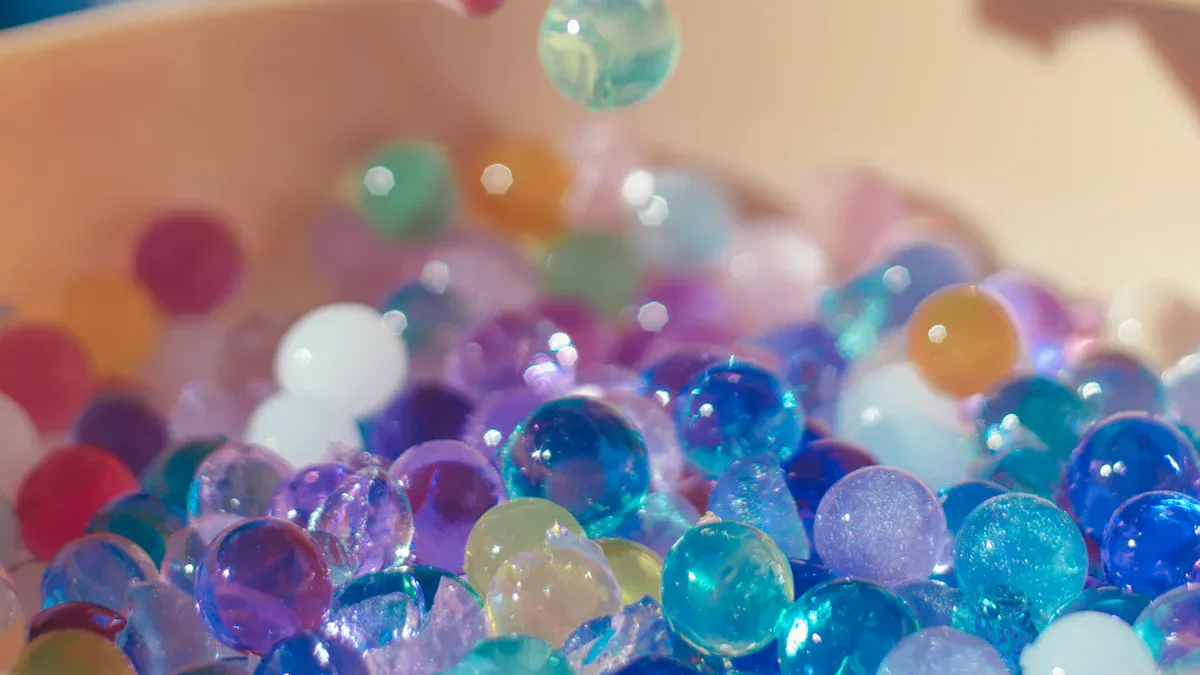
Kinetic sand and water beads are not just for little kids. Older kids like them too! These materials feel soft and squishy, which makes them great for sensory play. Your child can mold, squeeze, and shape kinetic sand into anything. Water beads feel cool and bouncy and keep hands busy.
Here’s why these activities matter:
Kinetic sand’s soft texture is fun to touch.
Playing with sand or beads over and over builds fine motor skills.
Your child gets better at hand-eye coordination and focus.
These activities use different muscles and help with coordination.
Both activities make small and big hand movements stronger.
You can set up a sensory station at home with trays of kinetic sand and bowls of water beads. Add scoops, molds, or small toys for extra fun. Your child will spend lots of time exploring, building, and relaxing.
Note: Change the tools and challenges sometimes. Ask your child to build a castle, sort beads by color, or make up a new game. This keeps play fun and new.
Adapting Activities to Your Child’s Interests
Every child is different. Some like art, others like music or building. You can help fine motor skills by following your child’s interests. If your child likes science, try building simple machines or models. If they like stories, let them make comic books or storyboards. The key is to give choices and let your child lead.
You can also mix activities. Try crafts with music or sensory play with building. This keeps your child interested and helps them learn many fine motor skills.
Try This: Ask your child what they want to make or play next. Offer new materials or ideas, but let them choose. Celebrate their creativity and hard work.
With these activities, you help your child keep learning and growing. Fine motor skills development keeps going as kids get older. You give your child tools for school, hobbies, and life.
You help your child build strong fine motor skills. Pick activities that fit your child’s age. This helps them do well in school and life. Try many activities and see how your child gets better. Doing different things often is important. You can use pencil grips or special utensils if your child needs them. Look at this table for ways to change activities:
Strategy Type | Description |
|---|---|
Adaptive Tools | Use button hooks or special scissors for hard tasks. |
Environmental Modifications | Make spaces that help with fine motor skills practice. |
Linking to Daily Routines | Add fine motor skills practice to daily life. |
Let your child pick what they like to do. You will notice their fine motor skills get better every day!
FAQ
What are fine motor skills and why do they matter?
Fine motor skills help your child use small muscles in their hands and fingers. These skills let your child draw, write, and button shirts. When you practice fine motor skills, you help your child get ready for school and daily life.
How can I tell if my child needs help with fine motor skills?
You might notice your child struggles with tasks like holding a pencil or using scissors. If your child avoids drawing or gets frustrated with zippers, they may need more practice with fine motor skills. You can talk to your child’s teacher or doctor.
What are easy ways to practice fine motor skills at home?
You can use playdough, building blocks, or simple crafts. Let your child pour water, pick up small objects, or use tweezers. These activities make practicing fine motor skills fun and part of your daily routine.
How often should my child work on fine motor skills?
Try to include fine motor skills activities every day. Short, playful sessions work best. You can add these activities during playtime, meals, or chores. The more your child uses their hands, the stronger their fine motor skills become.
Can sensory play help with fine motor skills?
Yes! Sensory play gives your child new textures and tools to explore. When your child squeezes, pours, or shapes materials, they build fine motor skills. Sensory play also helps your child focus and enjoy learning new things.
See Also
Engaging Sensory Experiences for Preschoolers to Discover
Top Sensory Toys for Toddlers Based on Growth Milestones
Essential Heavy Work Ideas for Kids' Sensory Needs in 2025
Comprehensive Evaluations of Popular Gross Motor Toys for Kids
