ASD sensory room trends teachers love in 2026
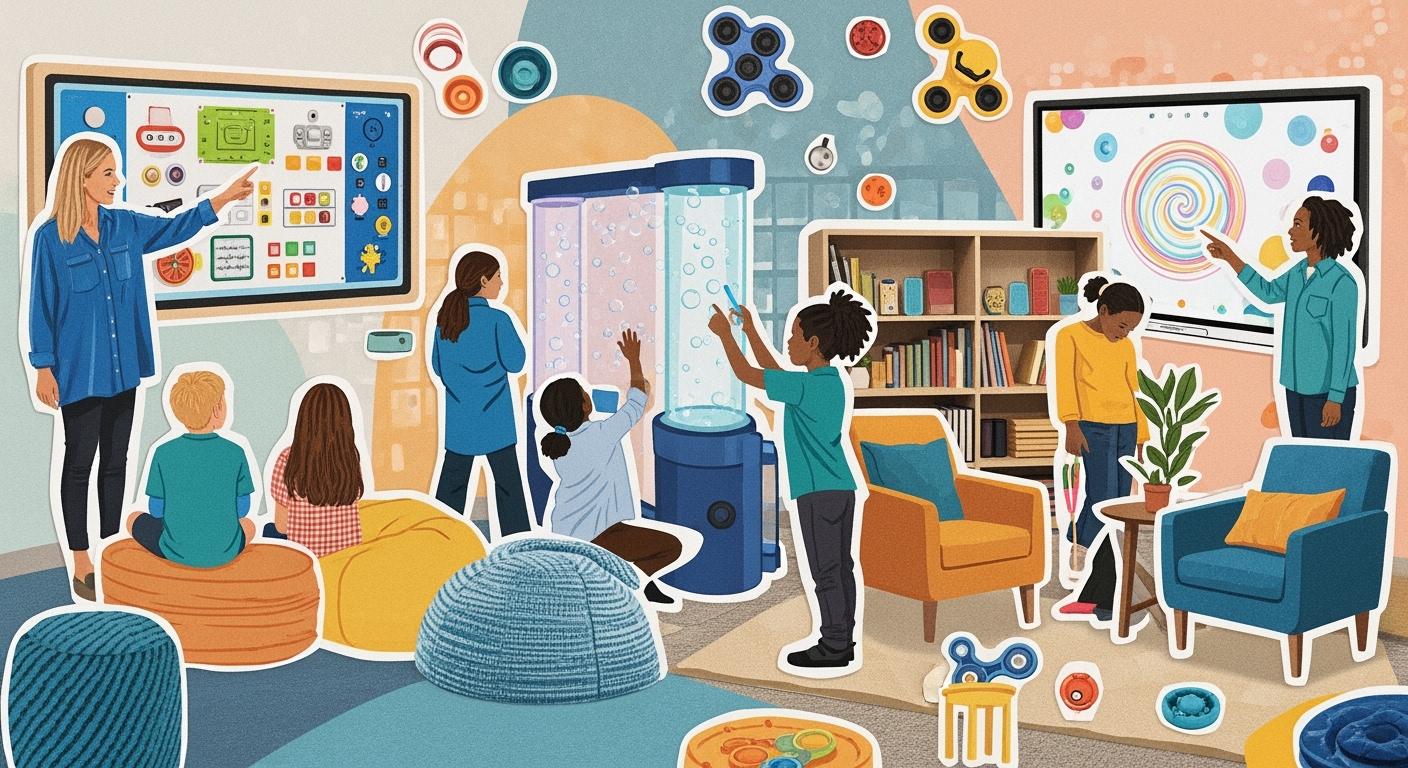
You see the best ASD sensory room trends in 2026 focus on comfort, sensory-friendly things, and emotional help for all students.
Schools use calming lights, soft chairs, and touchable objects to help students with different sensory needs.
Mobile sensory kits and weighted blankets can lower anxiety and help students control themselves.
Study | Findings | Outcome Measures |
|---|---|---|
Unwin et al. (2022) | Students pay better attention with active sensory changes | Task focus |
De Domenico et al. (2024) | Students react better to sensory input | Less sensory defensiveness |
Sawicki et al. (2024) | Fewer anxious behaviors |
When you use an asd sensory room, you help make a place that supports everyone and helps all students learn better.
Key Takeaways
ASD sensory rooms are made for comfort and support. They use calming lights and soft chairs to help students feel safe.
Flexible layouts let teachers change the room quickly. This helps the room fit what each student needs or likes.
There are different zones for calming, active, and quiet activities. These zones help students know where to go for how they feel.
Visual supports and interactive tools help students talk and do things on their own.
Technology like smart apps and wearables can help students with routines. These tools also help students handle their sensory needs better.
ASD sensory room zones
Flexible layouts
You can make an asd sensory room that fits many needs. Flexible layouts let you change the space fast. You might use chairs and tables that move. Lights can be made brighter or dimmer. Safety is very important. Make sure all things are safe and check for dangers. You can ask experts to help design the room for your students. Many schools use rooms with both calm and active areas. These rooms let students pick where to go. They can choose a spot based on how they feel.
Tip: Begin with a small space. You do not need a big room. A corner or a tent can work for flexible layouts.
Here are some things you see in new asd sensory room layouts:
Strong materials help keep everyone safe.
Lights that change help set the mood.
Mats and bins with different feels give choices to touch.
Swings and rockers help students who need to move.
Weighted blankets and crash pads give deep pressure.
Zoning for sensory needs
You can make different zones for different sensory needs. Each zone has its own job. Students know where to go to calm down or get energy. You can use easy rules to help students use each area.
Zone Type | Features | Purpose |
|---|---|---|
Calming Zone | Essential oil diffusers, textured wall panels, weighted products | Retreat from sensory overload |
Stimulating Zone | Swings, tactile media, fidget toys | Channel high energy levels |
Quiet Zones | Tools for relaxation | Retreat when overwhelmed |
Exploration Zone | Sensory walls with manipulable textures | Encourage creativity and exploration |
Focus Area | Organized space with storage solutions | Enhance focus by reducing distractions |
You can let students help pick colors and textures. Change items often. What students like can change as they grow. When you make clear zones in your asd sensory room, students feel safe and supported.
Innovative sensory tools
Visual supports
Visual supports help autistic students in class. Visual schedules and charts show clear steps. Picture cues tell students what to do next. These tools make talking easier. Students can share feelings without words. Visual instructions help students work alone. They finish tasks by themselves. Visual schedules help students handle changes. This lowers worry and builds confidence. Visual tools show social rules. They help students know how to act with others. Visual aids help students plan their day.
Tip: Use picture cards for daily routines. Students move cards as they finish each step.
Helping students talk better
Making students more independent
Helping students handle changes and feel less worried
Helping students understand how to act with others
Helping students plan and organize
Interactive panels
Interactive panels are common in asd sensory rooms. Panels have textures, lights, and sounds. Students touch or press parts of the panel. This gives sensory feedback and keeps students interested. Multi-sensory toys like Ark Therapeutic chewy toys, tunnels, crash pads, and Bilibo chairs help students focus. These toys also help students learn social skills. Teachers use Snoezelen multisensory rooms to make calm spaces. These rooms have soft lights, gentle sounds, and things to touch. Sensory corners have weighted items and headphones for breaks. Sensory play helps students learn and remember more.
Trending Equipment | How Teachers Use It |
|---|---|
Sensory corner | For breaks and calming |
Weighted items | To give deep pressure and comfort |
Chewy toys | For oral sensory needs |
Crash pads | For safe movement and relaxation |
Bilibo chair | For balance and sensory input |
Adaptive lighting
Adaptive lighting makes sensory rooms more comfortable. Dimmable and color-changing lights help stop sensory overload. Soft, steady lights help students focus. These lights lower distractions. Flickering lights can upset students. Many teachers use soft LED bulbs instead of harsh fluorescent lights. Lamps with adjustable brightness are helpful. Some schools use automation systems for daily transitions. This helps students handle routine changes. Adaptive lighting makes the room calm and safe for everyone.
Note: Change lighting for each student. Some need bright lights. Others like dimmer settings.
Technology integration
Smart apps
Smart apps can make your asd sensory room better for autistic students. These apps help with routines, feelings, and learning. Many teachers use apps that show visual schedules. Some apps help students share their feelings. Other apps teach calming skills and social skills. Here are some top apps in 2026:
Otsimo Special Education: Has speech therapy, games, and tracks progress.
Daniel Tiger’s Grr-ific Feelings: Teaches emotions with songs and games.
Emotionary: Helps students name and understand feelings with pictures.
Social Adventures: Shows students how to handle real-life social times.
Choiceworks: Makes morning routines and behavior charts.
First Then Visual Schedule: Uses pictures for step-by-step help.
Routine Factory: Gives scheduling tools and reminders for school and home.
Sensory App House: Has calming and focus apps.
Breathe, Think, Do with Sesame: Uses stories and cartoons to teach calming.
Tip: Try using visual schedule apps to help students move between activities.
Wearables
Wearables remind students and help them follow routines. You can use devices that tell students when to move or calm down. Some wearables track stress and location. This helps teachers support students in the sensory room. Vibrating toys are also common. They give gentle shakes that wake up the senses and help body awareness. These tools help students control their energy and make changes easier.
Wearable reminder devices give alerts for daily routines.
Location sensors and stress trackers help with sensory needs.
Vibrating toys get the body ready for stillness or movement.
These tools help students focus and feel calm or full of energy.
Responsive environments
Responsive environments change to fit what students need. You can use AI-powered sensory walls that change lights, sounds, and textures. Students stay interested longer and feel less overwhelmed in these rooms. Studies show that letting students control sensory things helps them focus and feel less worried. Interactive sensory walls help students think better and manage feelings. Sensory-adapted rooms help students feel safe and ready to learn.
Evidence Type | Description |
|---|---|
Comparative Evaluation | Sensory-responsive spaces meet unique play needs for autistic students. |
Theoretical Framework | Spatial design shapes social behaviors in autism-friendly rooms. |
Empirical Studies | Sensory-adapted rooms lower anxiety and help students join in. |
Note: Responsive environments help students feel more at ease and sure of themselves in the asd sensory room.
Support for autistic students: calming strategies
Calming corners
Calming corners help neurodivergent children when they feel overwhelmed. These spaces are quiet and let students relax and feel better. Calming corners usually have soft chairs, weighted blankets, and gentle lights. You can add things like swings or bubble tubes. These tools help neurodivergent children calm down by themselves. Calming corners give a safe place to handle big feelings and behavior.
Tip: Let neurodivergent children pick what goes in the calming corner. This makes them feel like the space belongs to them.
Here is a table that shows how calming corners help in ASD sensory rooms:
Study | Participants | Intervention | Outcome | Findings |
|---|---|---|---|---|
Novakovic et al. (2019) | Adolescents and adults with ASD | Snoezelen Room sessions (3 times/week for 3 months) | Childhood Autism Rating Scale (CARS) | Statistically significant decrease in CARS scores for treatment group compared to control group |
Calming corners help neurodivergent children feel less anxious and stop meltdowns. These spaces also help with a child’s feelings and make the sensory room work better.
Mindfulness stations
Mindfulness stations teach neurodivergent children how to control themselves. You can set up spots with meditation, breathing, and movement activities. These stations show neurodivergent children how to notice their thoughts and feelings. They learn not to react right away. Mindfulness stations help with feelings and body awareness. Students learn to notice their own feelings and handle too much sensory input. You can use pictures or audio guides for mindfulness routines.
Note: Mindfulness stations make the complete classroom safer for neurodivergent students. They help students pay attention and calm down.
Mindful movement activities mix sensory play and help with feelings. You can add yoga mats, balance boards, or easy stretches. These activities help neurodivergent children focus and learn. Mindfulness stations give neurodivergent children ways to handle sensory problems and behavior.
Meltdown support
You can help with meltdowns in ASD sensory rooms by using calming ideas and safe places. Neurodivergent children need a sensory-friendly spot to calm down. You can use deep-pressure moves or breathing to help with feelings. Teachers stay calm and help during meltdowns. You guide neurodivergent children to a quiet spot and help them calm down.
Use calming ideas like deep-pressure moves and breathing.
Stay calm, help, and guide neurodivergent children to their quiet spot.
You can change sensory ideas for each neurodivergent child. Interactive panels and sensory swings help students relax and explore. You watch how neurodivergent children react to different sensory things. This helps you make a plan just for them. You can ask occupational therapists or sensory experts for help.
Tip: Change routines and supports to fit what works best for each neurodivergent child.
Sensory rooms give a quiet place for neurodivergent children to relax. These rooms help lower anxiety and stop meltdowns. Calming tools like swings and bubble tubes help neurodivergent children handle big feelings on their own. Sensory rooms help with feelings by letting neurodivergent children explore their senses safely.
Teacher implementation tips
Easy setup advice
You can make an ASD sensory room with easy steps. Start by using things you already have. Pick warmer LED bulbs to make the light softer. Organize the space so there is less mess. Plan noisy activities so loud sounds do not surprise anyone. Choose fabrics that feel nice to touch. Use cleaning products without scents and keep air fresh. You can change the sensory room to fit your students. If you do not have a whole room, a sensory tent is a good choice. Decide if you want the space to calm, excite, or do both.
Tip: Put a stop and breathe sign at the door. Teach students to take deep breaths before they go in or out.
A sensory room helps students control their feelings, relax, or use up energy. You help students feel safe and ready to learn.
Success stories
Many teachers see good changes after making ASD sensory rooms. You can follow these steps to help your room work well:
Have students take off their shoes when they enter.
Use a sensory diet with a checklist and rating system.
Teach routines at the start of the year and reteach as needed.
Add check-ins during transitions or after lunch.
Keep rules the same so the room stays calm.
Teachers say students focus better and act less anxious. You can use these routines to help manage your classroom and make students feel comfortable.
Overcoming challenges
You may face problems when you set up an ASD sensory room. Teachers often feel like they do not know enough. Sometimes leaders do not give steady support. Not having enough resources makes it hard to get tools. Studies show a gap between teacher training and therapist training. This makes it hard to meet special sensory needs.
Challenge | Solution |
|---|---|
Work together and get more training | |
Not enough leader support | Get steady help from leaders |
Not enough resources | Change rules and share resources |
Different views | Talk more and agree on plans |
You can solve these problems by working with other staff, asking leaders for help, and sharing ideas. Talking with your team helps everyone stay on track and makes the sensory room work better.
Sensory rooms help autistic students relax and focus again. Tools like bubble tubes, sequin wall panels, and weighted blankets help students pay attention. These tools also help students feel less worried. Schools say there are fewer big problems and students handle feelings better. You can make sensory-friendly spaces with seats that move, sunlight, and quiet spots. Give students breaks and calming activities to help them reset and join in. Using these ideas helps students feel safe and supports their mental health. Your classroom becomes a safe place for everyone.
FAQ
What is an ASD sensory room?
An ASD sensory room helps autistic students with sensory input. The room has calming tools and visual supports. There are safe spaces for students to relax or focus. Students can also explore their senses in this room.
How do you set up a sensory room on a budget?
Start with things you already have at school or home. Use soft lights, simple mats, and bins with different textures. You can make your own visual supports. Let students help pick what goes in the room.
Which sensory tools work best for autistic students?
Weighted blankets and visual schedules help many students. Adaptive lighting is also helpful for most students. Swings, fidget toys, and interactive panels are good choices. Try different tools to see what works best.
How do you handle meltdowns in the sensory room?
Guide students to a calming corner when they need it. Use deep-pressure moves or breathing to help them calm down. Stay calm and support each student. Change routines if a student needs something different.
Can you use technology in sensory rooms?
You can use apps for visual schedules and tracking feelings. Wearables help students remember routines. Responsive environments change lights and sounds for students. Technology gives more ways to help autistic students.
See Also
Essential Elements for Effective ASD Sensory Spaces in Schools
Optimal Strategies for Implementing ASD Sensory Rooms in Education
Understanding Sensory Rooms: A 2025 Overview and History
Effective Sensory Room Concepts for Schools That Deliver Results
Best Advice for Crafting Functional Sensory Rooms in Schools
